
Direct answer
Plasterboard fitter jobs in Rotterdam are accessible to foreign workers, with EU/EEA and Swiss citizens able to work without permits, while non-EU nationals must secure valid residence and work permits before starting. These roles involve installing gypsum boards for walls, ceilings, and partitions across residential, commercial, and industrial projects in Rotterdam’s busy construction sector. Pay is competitive and often higher than in many other European countries, but it varies depending on experience, collective labor agreements (CAO), employer, and region. Housing arrangements depend on the placement or agency; with Haldu Groep, housing is typically well arranged and includes a private bedroom for the worker, easing relocation. Basic Dutch or English language skills are important for safety and communication. Overall, Rotterdam offers steady opportunities for skilled plasterboard fitters from abroad, provided they meet legal and practical requirements.
Key points
- EU/EEA/Swiss citizens can work without permits; non-EU workers need valid residence and work permits.
- Plasterboard fitters install gypsum boards for walls, ceilings, partitions, and insulation layers.
- Pay depends on experience, CAO agreements, employer policies, and region; always confirm pay details before accepting a job.
- Housing arrangements vary; agencies often provide furnished accommodation with private bedrooms.
- Basic Dutch or English language skills are important for safety and effective communication on site.
- Rotterdam’s construction market includes new builds, renovations, and industrial projects.
- Commuting options include public transport, cycling, and car; traffic congestion can occur during peak hours.
- VCA safety certification is often required or recommended for construction site work.
- Foreign workers should prepare a clear CV emphasizing plasterboard fitting skills and experience.
- Understanding Dutch labor laws and CAO agreements helps protect worker rights and ensures fair treatment.
- Working with reputable agencies like Haldu Groep can simplify job placement and housing arrangements.
- Physical fitness and ability to read technical drawings are important for this role.
Field expertise
Haldu Groep, active since 1999, specializes in placing skilled workers in construction and technical trades across the Netherlands, including plasterboard fitting in Rotterdam. The company understands local labor market conditions, CAO regulations, and housing options for foreign workers. Plasterboard fitting requires precision, knowledge of materials, and strict adherence to safety standards. Rotterdam’s construction sector is dynamic, with ongoing infrastructure, residential, and commercial projects demanding qualified fitters. Agencies like Haldu Groep assist foreign workers with legal requirements, contracts, and integration into Dutch work culture. Safety training such as VCA is standard to ensure compliance with Dutch regulations and workplace safety.
What should you know about plasterboard fitter jobs in Rotterdam: guide for foreign workers?
Plasterboard fitters play a vital role in modern construction by installing gypsum boards to form walls, ceilings, and partitions. In Rotterdam, this trade supports a wide variety of projects, including new residential developments, commercial buildings, and industrial facilities. Foreign workers should be aware that the Dutch construction industry emphasizes safety, quality workmanship, and teamwork. Physical fitness and manual dexterity are essential, as is the ability to read technical drawings and follow detailed instructions. Work environments can range from indoor apartments to large outdoor construction sites. Dutch labor laws protect workers’ rights, including fair pay, regulated working hours, and social security benefits. While language skills are not always mandatory, basic Dutch or English greatly improve communication and safety on site. EU/EEA and Swiss citizens enjoy easier access to jobs, whereas non-EU workers must meet permit requirements.
How does plasterboard fitter jobs in Rotterdam: guide for foreign workers work in practice?
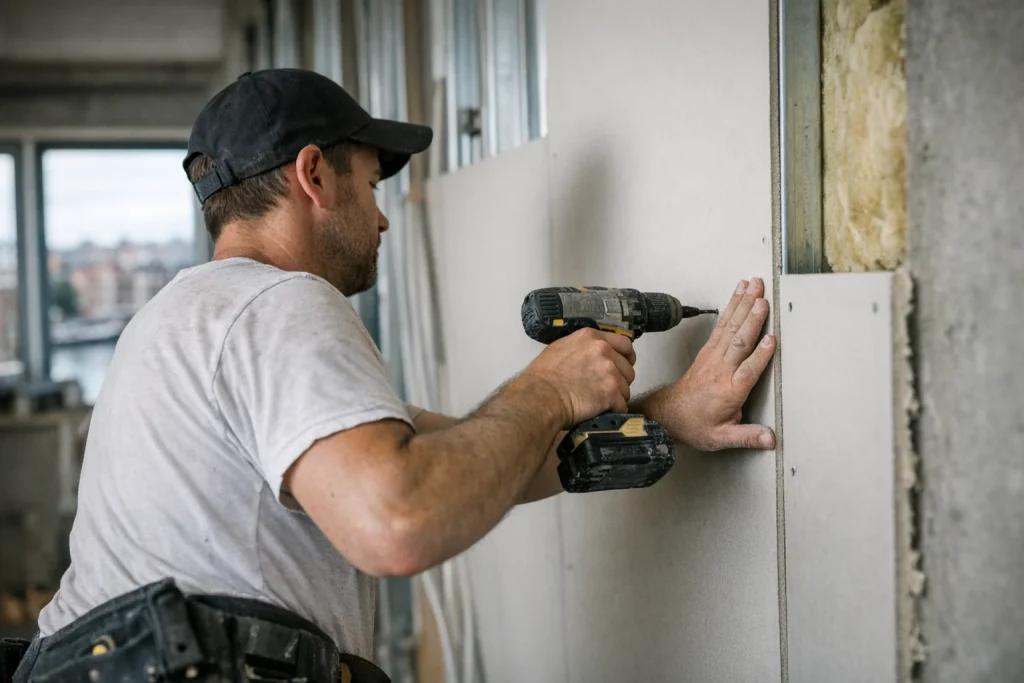
In practice, plasterboard fitters in Rotterdam typically receive assignments through construction companies or staffing agencies. Workdays often start early, with full shifts depending on project deadlines. Fitters measure, cut, and fix plasterboard sheets to metal or wooden frames, ensuring smooth surfaces ready for finishing. They may also install insulation materials behind the boards. Wearing safety gear such as helmets, gloves, and eye protection is mandatory. Coordination with other trades like electricians and plumbers is common to ensure project progress. Foreign workers usually sign contracts detailing wages, working hours, and conditions. Agencies often assist with paperwork, housing arrangements, and commuting advice. Daily communication with supervisors ensures quality and safety standards are maintained.
Which conditions apply for plasterboard fitter jobs in Rotterdam: guide for foreign workers?
Conditions for plasterboard fitter jobs in Rotterdam include compliance with Dutch labor laws and CAO agreements specific to the construction sector. Typical working hours are around 40 per week, with overtime compensated according to CAO rules. Pay scales vary based on experience, qualifications, and employer agreements. Workers must have valid identification, a social security number (BSN), and health insurance. Safety training such as VCA certification is often required or strongly recommended. Housing conditions depend on the agency or employer; some provide furnished rooms or shared apartments, while others expect workers to arrange their own accommodation. Non-EU workers must ensure their residence and work permits are valid. Workers should also be aware of workplace safety regulations and their rights under Dutch law.
Which mistakes are common around plasterboard fitter jobs in Rotterdam: guide for foreign workers?
- Failing to verify work permit requirements before applying, especially for non-EU citizens.
- Accepting job offers without a written contract or clear pay and working conditions.
- Underestimating the importance of safety training and protective equipment.
- Not confirming housing arrangements, leading to unexpected costs or poor living conditions.
- Neglecting to learn basic Dutch or English, which hampers communication and safety.
- Ignoring CAO agreements and labor rights, risking unfair treatment or pay.
- Submitting CVs without highlighting relevant plasterboard fitting experience.
- Overlooking commuting logistics, causing delays or extra expenses.
How do you proceed step by step?
- Check your eligibility to work in the Netherlands (EU/EEA/Swiss vs non-EU requirements).
- Prepare a clear CV focused on plasterboard fitting skills and experience.
- Search for jobs via reputable staffing agencies or direct employers in Rotterdam.
- Confirm job details, pay, working hours, and housing options before signing contracts.
- Complete necessary safety training such as VCA if required.
- Arrange housing—either through the agency or independently.
- Plan your commute to Rotterdam construction sites, considering public transport or cycling.
- Start work, follow safety protocols, and maintain good communication with supervisors.
- Keep records of pay slips, contracts, and working hours for legal protection.
- Consider learning Dutch or improving English to enhance job opportunities and integration.
What should you check before you start?
- Work permit and residence status (if non-EU).
- Written employment contract with clear pay and working conditions.
- Details about housing: location, cost, privacy, and facilities.
- Required safety training certificates like VCA.
- Health insurance coverage in the Netherlands.
- Commuting options and travel time to the job site.
- Tools and protective equipment provided or needed.
- Language requirements and communication methods on site.
- Contact details of your employer or agency for support.
- Understanding of Dutch labor laws and CAO agreements.
What does this look like in practice?
A foreign plasterboard fitter arriving in Rotterdam typically meets their agency or employer to review contracts and safety protocols. They receive a work schedule and are introduced to the construction site team. Daily tasks include measuring wall frames, cutting plasterboard sheets to size, and fixing them securely. Fitters often work indoors on apartments or offices, sometimes outdoors on larger commercial projects. Breaks and lunch are scheduled, and safety gear is mandatory. Housing provided by agencies usually includes a private bedroom in shared apartments near Rotterdam, with utilities included. Workers commute by bike or public transport. Pay is transferred monthly, with overtime and bonuses depending on CAO rules. Continuous communication with supervisors ensures quality and safety.
| Aspect | EU/EEA/Swiss Workers | Non-EU Workers |
|---|---|---|
| Work Permit | Not required | Required (residence + work permit) |
| Housing | Varies by agency; often provided | Often arranged by agency; may require deposit |
| Language | Dutch or English recommended | Dutch or English essential for safety |
| Pay | Depends on experience / CAO | Depends on experience / CAO |
| Safety Training | VCA recommended/required | VCA required |
| Job Type | Typical Tasks | Work Environment | Skills Needed |
|---|---|---|---|
| New Construction | Installing plasterboard walls and ceilings | Indoor/outdoor construction sites | Measuring, cutting, fixing, teamwork |
| Renovation | Replacing or repairing plasterboard | Occupied buildings, tight spaces | Precision, care, communication |
| Insulation Installation | Fitting insulation behind plasterboard | Varied sites, sometimes dusty | Safety awareness, manual skills |
| Housing Option | Facilities | Distance to Rotterdam City Center |
|---|---|---|
| Agency-provided shared apartment | Private bedroom, shared kitchen/bathroom, utilities often included | 10-20 minutes by public transport |
| Private rental | Varies by landlord | Varies, often 15+ minutes commute |
| Hostel or temporary housing | Shared rooms, limited facilities | Usually close to city center |
Frequently asked questions
Do I need a work permit to work as a plasterboard fitter in Rotterdam?
EU/EEA and Swiss citizens do not need a work permit. Non-EU nationals must have valid residence and work permits before starting.
What qualifications do I need to become a plasterboard fitter in Rotterdam?
Formal qualifications are helpful but not always mandatory. Experience, a strong CV, and safety training like VCA improve your chances.
How much can I expect to earn as a plasterboard fitter in Rotterdam?
Pay depends on experience, CAO agreements, employer, and region. It is generally competitive compared to many European countries but varies widely. Always confirm pay details with your employer or agency before accepting a job.
Is housing provided for foreign plasterboard fitters in Rotterdam?
Housing depends on the agency or employer. Some provide well-organized accommodation with private rooms; others expect workers to arrange their own. With Haldu Groep, housing is typically well arranged and includes a private bedroom.
Do I need to speak Dutch to work as a plasterboard fitter?
Basic Dutch or English is recommended for safety and communication. Some employers accept English-only speakers, but Dutch improves integration.
What safety training is required for plasterboard fitters?
VCA safety certification is often required or strongly recommended to work on Dutch construction sites.
How do I find plasterboard fitter jobs in Rotterdam?
Use reputable staffing agencies, online job portals, or apply directly to construction companies. Haldu Groep is a known agency in this field.
What are typical working hours for plasterboard fitters in Rotterdam?
Usually 40 hours per week, Monday to Friday, with possible overtime compensated according to CAO.
Can I commute daily if I live outside Rotterdam?
Yes, Rotterdam has good public transport and cycling infrastructure, but commuting times vary. Plan accordingly.
What should I include in my CV for plasterboard fitter jobs?
Highlight relevant experience, skills in measuring and fitting plasterboard, safety training, and any certifications.
Conclusion
Foreign workers interested in plasterboard fitter jobs in Rotterdam should first verify their work eligibility and prepare a detailed CV highlighting relevant skills. Using reputable agencies or direct employers helps secure fair pay, housing, and legal protections under Dutch labor laws and CAO agreements. Obtaining VCA safety certification and basic language skills improves job prospects and workplace safety. Housing options vary but are often arranged by agencies, easing relocation challenges. Rotterdam’s active construction market offers diverse projects and steady demand, making it a promising location for career growth in plasterboard fitting. Careful preparation and understanding of local conditions will help foreign workers succeed in this trade.
