
Direct answer
Foreign bricklayers from the EU, EEA, or Switzerland can work in Eindhoven without a work permit thanks to free movement rights. Non-EU bricklayers must secure a valid Dutch work permit before starting employment. Pay depends on experience, contract type, and collective labor agreements (CAO), and Dutch construction wages are often higher than in many Eastern European countries, though living costs vary by region. VCA safety certification is typically required to meet Dutch construction safety standards. Basic Dutch or English language skills improve communication and safety on site. Housing arrangements vary by employer or agency; with Haldu Groep, housing is usually well organized, offering private bedrooms near Eindhoven. The city’s construction sector includes residential, commercial, and infrastructure projects, with common commuting options such as public transport, bicycles, and carpooling.
Key points
- EU/EEA/Swiss bricklayers do not need work permits; non-EU workers require permits.
- Pay depends on experience, CAO agreements, and contract type.
- VCA safety certification is often mandatory or highly recommended.
- Basic Dutch or English language skills are important for safety and communication.
- Housing varies by agency; Haldu Groep usually arranges private bedrooms.
- Eindhoven’s construction projects include housing, commercial buildings, and infrastructure.
- Common tools: trowels, brick hammers, levels, masonry saws.
- Commuting options: public transport, bicycles, carpooling, living near worksites.
- Preparing a clear CV with relevant experience and certifications increases job chances.
- Understanding CAO Bouw & Infra agreements ensures fair wages and conditions.
- Safety equipment (PPE) like helmets, gloves, and boots is mandatory on site.
- Early housing arrangements reduce stress and improve living conditions.
Field expertise
Since 1999, Haldu Groep has specialized in placing skilled construction workers, including bricklayers, in the Eindhoven region. The company understands local labor market conditions, CAO agreements, and legal requirements for foreign workers. Haldu Groep supports candidates with housing and administrative guidance, ensuring compliance with Dutch labor law and safety standards such as VCA certification. The Eindhoven construction sector demands adaptable, certified bricklayers for a variety of projects, from residential developments to infrastructure upgrades.
What should you know about bricklayer jobs in Eindhoven: guide for foreign workers?
Foreign bricklayers should understand the legal framework, labor market, and practical realities of working in Eindhoven. The city’s construction industry is active, with projects including new housing developments, commercial buildings, and infrastructure improvements such as roads and public facilities. EU/EEA/Swiss nationals benefit from free movement rights, allowing work without permits. Non-EU workers must navigate stricter immigration and work authorization rules, often requiring employer sponsorship.
Dutch collective labor agreements (CAO Bouw & Infra) regulate wages, working hours, and conditions. Pay scales vary by experience and role, and are often higher than wages in many Eastern European countries. Safety is a priority on Dutch construction sites, with VCA certification (basic or VOL) often required. Language skills—at least basic Dutch or English—are essential for communication and safety compliance.
Housing is a key factor for foreign workers. Agencies like Haldu Groep often arrange accommodation, typically offering private bedrooms in shared housing near Eindhoven. Commuting options include public transport, cycling, and carpooling, with many workers living close to the city to reduce travel time and costs.
How does bricklayer jobs in Eindhoven: guide for foreign workers work in practice?
In practice, foreign bricklayers begin by securing a job offer or agency placement. EU/EEA/Swiss workers can start immediately after registering with the municipality and tax authorities. Non-EU workers must first obtain a work permit, requiring employer sponsorship and compliance with Dutch immigration rules.
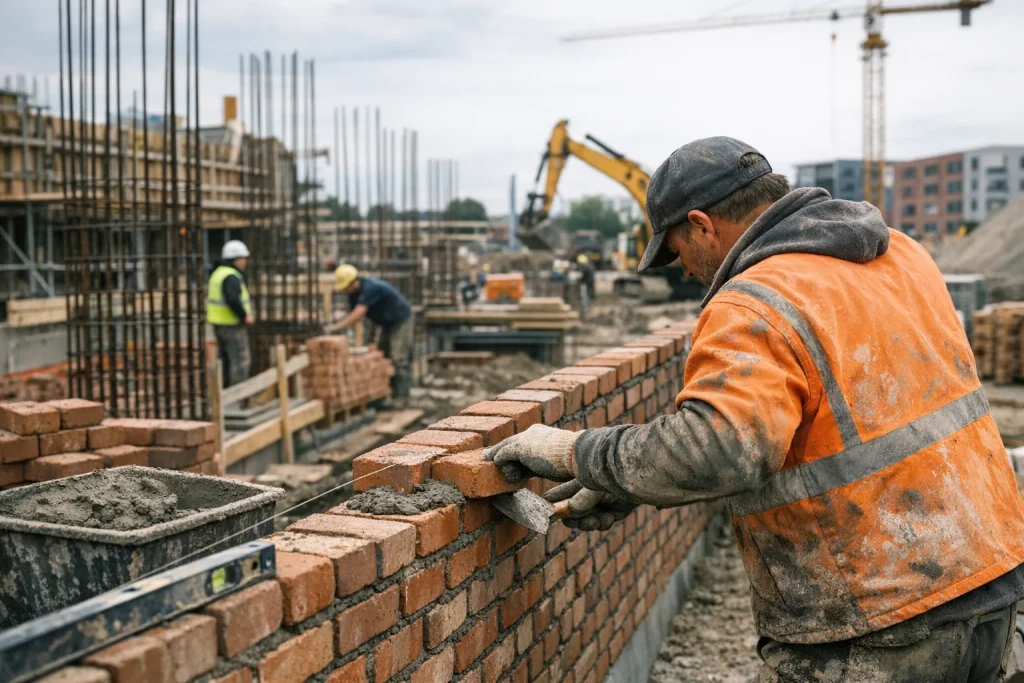
Once employed, bricklayers follow CAO agreements for wages, working hours, and benefits. Most contracts are full-time, with occasional overtime during busy periods. Safety training, including VCA certification, is mandatory or strongly encouraged. Workers use standard masonry tools and personal protective equipment (PPE) such as helmets, gloves, and safety boots.
Housing depends on the employer or agency. With Haldu Groep, workers typically receive well-organized housing near Eindhoven, often with private rooms and shared facilities. Commuting is mostly by bike or public transport, with carpooling common among workers living outside the city.
Which conditions apply for bricklayer jobs in Eindhoven: guide for foreign workers?
| Condition | Details |
|---|---|
| Work Authorization | EU/EEA/Swiss: No permit needed. Non-EU: Work permit required before employment. |
| Pay | Based on CAO Bouw & Infra, experience, and contract type; varies widely. |
| Working Hours | Typically 40 hours/week, with possible overtime during busy periods. |
| Safety Certification | VCA basic or VCA VOL often mandatory or highly recommended. |
| Language | Basic Dutch or English recommended for safety and communication. |
| Housing | Varies by employer/agency; Haldu Groep usually arranges private bedrooms. |
| Tools & PPE | Standard masonry tools plus helmet, gloves, boots, and high-visibility clothing. |
Which mistakes are common around bricklayer jobs in Eindhoven: guide for foreign workers?
- Starting work without proper permits (non-EU workers), risking legal consequences.
- Underestimating the importance of VCA certification for safety and employability.
- Failing to prepare a clear, relevant CV highlighting masonry experience and certifications.
- Ignoring language skills, leading to communication problems and safety risks.
- Not arranging housing early, causing stress or poor living conditions.
- Overlooking CAO agreements, resulting in accepting unfair wages or conditions.
- Neglecting personal protective equipment, risking injury and non-compliance.
- Assuming all construction jobs are the same; Eindhoven projects vary widely.
How do you proceed step by step?
- Check your nationality: EU/EEA/Swiss or non-EU to understand work permit requirements.
- Obtain or renew VCA certification if needed.
- Prepare a clear CV focused on masonry experience and certifications.
- Contact agencies like Haldu Groep or search online for bricklayer jobs in Eindhoven.
- Apply for jobs and secure a contract or placement offer.
- If non-EU, apply for a work permit with employer support.
- Arrange housing early through your agency or independently.
- Register with the Eindhoven municipality and tax authorities upon arrival.
- Attend safety briefings and start work with proper PPE and tools.
- Maintain communication with your employer and agency for support.
What should you check before you start?
- Confirm your legal right to work in the Netherlands (work permit if non-EU).
- Verify contract details: pay, hours, duration, and CAO coverage.
- Ensure you have or will obtain VCA certification.
- Clarify housing arrangements and costs.
- Check language requirements and consider basic Dutch or English courses.
- Understand commuting options and plan accordingly.
- Confirm tools and PPE you need to bring or will be provided.
- Know your rights under Dutch labor law and CAO agreements.
What does this look like in practice?
A foreign bricklayer arriving in Eindhoven typically registers with the municipality and tax office. They receive a contract aligned with CAO Bouw & Infra, offering competitive pay and social benefits. The worker attends a VCA safety course if not already certified. Housing arranged by the agency or employer provides a private bedroom in shared accommodation near the city center or construction sites.
Daily work involves using standard masonry tools—trowel, brick hammer, level—while wearing PPE such as helmet, gloves, and safety boots. Communication on site is often in Dutch or English; basic language skills help avoid accidents and misunderstandings. Commuting is usually by bike or public transport, with some workers carpooling from nearby towns.
Frequently asked questions
Do I need a work permit to work as a bricklayer in Eindhoven?
What is the typical pay for bricklayers in Eindhoven?
Is VCA certification mandatory for bricklayers?
What language skills do I need?
How do I find housing as a foreign bricklayer?
What tools do I need to bring?
What are the working hours for bricklayers?
Can I commute by bike in Eindhoven?
What challenges do foreign bricklayers face?
How can I improve my chances of getting hired?
Conclusion
Foreign bricklayers seeking work in Eindhoven should first clarify their work permit status and obtain necessary certifications like VCA. Preparing a clear CV and improving language skills are crucial for success. Housing arrangements vary but agencies like Haldu Groep typically provide well-organized accommodation with private rooms near the city. Eindhoven offers diverse construction projects with competitive pay under CAO agreements. Planning ahead, understanding local conditions, and using agency support will help foreign bricklayers integrate and thrive in this dynamic labor market.
