
Direct answer
Bricklayer jobs in Utrecht are accessible to foreign workers, with EU/EEA/Swiss citizens able to work without a permit, while non-EU nationals must obtain a valid work permit sponsored by an employer. Pay is competitive and regulated by Dutch collective labor agreements (CAO), reflecting experience and contract type. Most construction sites require VCA safety certification and basic Dutch or English language skills. Housing is often arranged by employers or agencies like Haldu Groep, typically offering private bedrooms. Projects range from historic restorations in Utrecht’s city center to new housing developments and infrastructure works. Understanding local labor laws, safety standards, and commuting options is essential for foreign bricklayers aiming to work successfully in Utrecht.
Key points
- EU/EEA/Swiss workers do not need a work permit; non-EU workers require employer-sponsored permits.
- Pay depends on experience, CAO agreements, and contract type; Utrecht offers competitive wages often higher than many other European countries, though living costs vary by region.
- VCA safety certification is usually mandatory on construction sites.
- Basic Dutch or English language skills improve safety and communication.
- Common projects include residential renovations, new builds, and infrastructure works.
- Standard workweek is about 40 hours, Monday to Friday, with possible overtime.
- Personal protective equipment (PPE) such as hard hats and safety boots is compulsory.
- Housing is often provided or arranged by agencies, usually with private rooms, especially when working with Haldu Groep.
- Apprenticeships and vocational training are available for skill development.
- Employment contracts comply with Dutch labor law and the Construction CAO.
- Commuting in Utrecht is mostly by bike or public transport due to excellent infrastructure.
- Haldu Groep has supported foreign bricklayers in Utrecht since 1999, including housing and job placement.
Field expertise
Haldu Groep, active since 1999, specializes in placing skilled foreign workers in Dutch construction, including bricklayers in Utrecht. The organization understands the local labor market, legal requirements, and housing needs of foreign workers. Bricklayer jobs in Utrecht require knowledge of Dutch building techniques such as traditional bricklaying, cavity walls, and reinforced masonry. Safety is a priority, with VCA certification and PPE use strictly enforced. The Dutch Construction CAO regulates wages, working hours, and conditions, ensuring fair treatment. Language skills, while not always mandatory, are highly recommended for effective communication and safety on site. Agencies like Haldu Groep often provide well-organized housing solutions, easing relocation challenges for foreign workers, typically including private bedrooms.
What should you know about bricklayer jobs in Utrecht: guide for foreign workers?
Foreign workers aiming for bricklayer jobs in Utrecht must understand several key aspects. EU/EEA/Swiss citizens have the right to work without a permit, but non-EU nationals need a valid work permit with employer sponsorship. Pay rates depend on experience, CAO agreements, and contract type, with Utrecht generally offering competitive wages compared to other Dutch cities and many European countries. VCA safety certification is commonly required, reflecting the high safety standards on Dutch sites. Basic Dutch or English language skills help with safety communication and integration. Housing is a major consideration; agencies like Haldu Groep typically arrange accommodation with private bedrooms, easing the transition. Common projects include residential renovations, new housing developments, and infrastructure upgrades, reflecting Utrecht’s urban growth and historic preservation.
How does bricklayer jobs in Utrecht: guide for foreign workers work in practice?
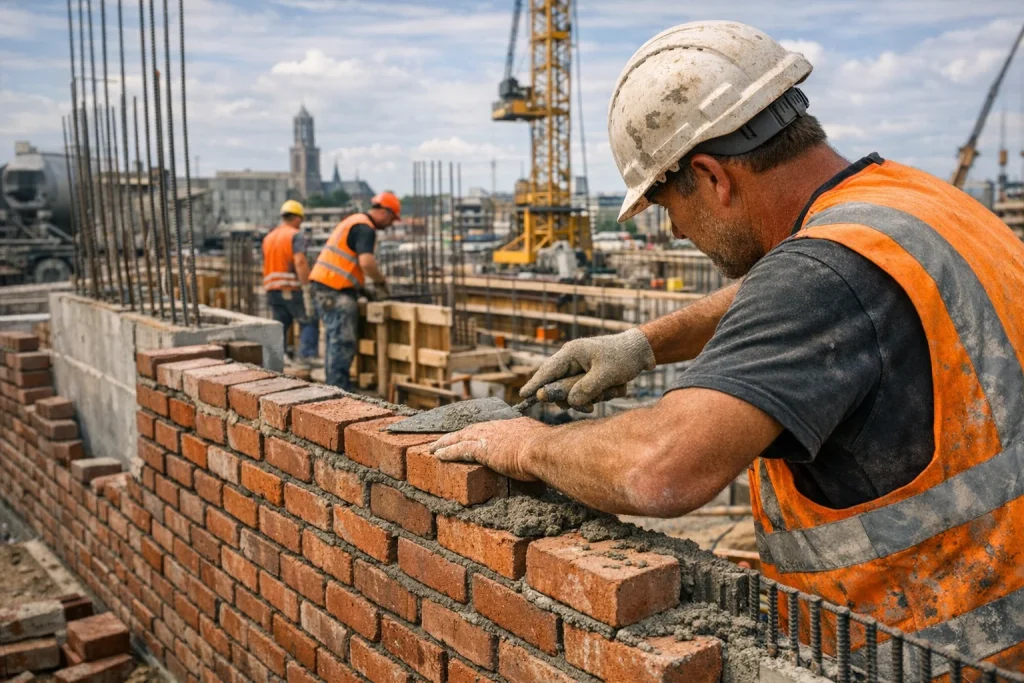
In practice, foreign bricklayers in Utrecht usually apply through recruitment agencies or direct employers. EU/EEA/Swiss workers can start immediately, while non-EU workers must complete permit procedures. Upon hiring, workers attend safety briefings and may need to obtain or validate VCA certification. Workdays generally run from early morning to mid-afternoon, with breaks and occasional overtime. Workers use PPE such as hard hats, safety boots, gloves, and high-visibility vests. Projects vary from restoring historic buildings in Utrecht’s city center to constructing new residential neighborhoods on the outskirts. Housing is often arranged before arrival, with private rooms in shared apartments or dormitories, especially when working with agencies like Haldu Groep. Commuting is mostly by bike or public transport, supported by Utrecht’s excellent infrastructure.
Which conditions apply for bricklayer jobs in Utrecht: guide for foreign workers?
Several conditions apply to bricklayer jobs in Utrecht for foreign workers:
- Work permits: Required for non-EU workers, issued by Dutch immigration authorities with employer sponsorship.
- Employment contracts: Must comply with Dutch labor law and the Construction CAO, detailing wages, hours, and rights.
- Safety certification: VCA certification is often mandatory to work on construction sites.
- Language skills: Basic Dutch or English is expected to ensure safety and communication.
- Working hours: Typically 40 hours per week, Monday to Friday, with possible overtime.
- PPE: Hard hats, safety boots, gloves, and high-visibility clothing are compulsory.
- Housing: Arranged by employer or agency; private bedrooms are common, especially with Haldu Groep placements.
Which mistakes are common around bricklayer jobs in Utrecht: guide for foreign workers?
Common mistakes foreign bricklayers make include:
- Starting work without a valid work permit if required, risking legal issues.
- Underestimating the importance of VCA safety certification and PPE compliance.
- Not learning basic Dutch or English, leading to communication problems and safety risks.
- Failing to confirm contract details such as pay, hours, and housing before starting.
- Ignoring local labor laws and collective agreements, which protect worker rights.
- Not planning housing early, resulting in higher costs or unsuitable accommodation.
- Assuming all construction projects are the same; Utrecht has specific building styles and regulations.
- Neglecting to register with the municipality (KvK) or tax authorities (Belastingdienst) when required.
How do you proceed step by step?
- Check eligibility: Confirm if you need a work permit based on your nationality.
- Prepare your CV: Highlight bricklaying experience, certifications, and language skills.
- Apply for jobs: Use recruitment agencies like Haldu Groep or online job platforms.
- Obtain VCA certification: Complete the safety course if not already certified.
- Secure housing: Arrange accommodation through your employer or agency.
- Sign contract: Review terms carefully, ensuring compliance with Dutch labor law and CAO.
- Register locally: Register with the municipality and tax authorities if staying long-term.
- Start work: Follow site safety rules, use PPE, and communicate clearly.
- Consider training: Explore apprenticeships or courses to improve skills and career prospects.
What should you check before you start?
Before starting a bricklayer job in Utrecht, check:
- Your work permit status and validity.
- VCA safety certification or plans to obtain it.
- Employment contract details: pay, hours, holiday, and termination conditions.
- Housing arrangements and costs.
- Language requirements and support for learning Dutch or English.
- Availability of personal protective equipment (PPE) or if you need to provide your own.
- Commuting options and travel time to the worksite.
- Health insurance and social security registration.
- Local labor laws and collective labor agreement (CAO) coverage.
What does this look like in practice?
In practice, a foreign bricklayer in Utrecht typically starts by contacting a recruitment agency or employer. After confirming eligibility and obtaining necessary permits, the worker attends a VCA safety course if needed. Housing is often arranged by the agency, with private bedrooms in shared apartments near the city or project sites. Daily work begins early, with a focus on safety and teamwork. Communication is often in simple Dutch or English, and PPE is worn at all times. Projects range from restoring Utrecht’s historic canal houses to building new suburban homes. Workers receive pay according to the CAO, with clear contracts and rights. Many bricklayers continue training through apprenticeships or vocational courses to advance their careers.
| Aspect | EU/EEA/Swiss Workers | Non-EU Workers |
|---|---|---|
| Work Permit | Not required | Required with employer sponsorship |
| VCA Certification | Often mandatory | Often mandatory |
| Housing | Often arranged by employer/agency, typically with private bedrooms | Often arranged by employer/agency, typically with private bedrooms |
| Language | Basic Dutch or English recommended | Basic Dutch or English recommended |
| Contract Type | Standard Dutch labor contracts | Standard Dutch labor contracts |
| Project Type | Description | Common in Utrecht? |
|---|---|---|
| Residential Renovations | Restoring and updating older homes, often in historic areas | Yes |
| New Housing Developments | Building new apartment complexes and suburban homes | Yes |
| Infrastructure Works | Bridges, roads, and public facilities requiring masonry | Yes |
| Commercial Buildings | Office buildings and retail spaces | Less common but available |
| Typical Work Schedule | Details |
|---|---|
| Hours | Usually 8:00 AM to 4:30 PM, Monday to Friday |
| Breaks | Mid-morning and lunch breaks |
| Overtime | Possible, paid according to CAO |
| Commute | Mostly by bike or public transport, short distances |
Frequently asked questions
Do I need a work permit to work as a bricklayer in Utrecht?
How much can I expect to earn as a bricklayer in Utrecht?
Is VCA certification mandatory for bricklayers in Utrecht?
What language skills do I need?
What types of projects will I work on?
Will housing be provided?
What personal protective equipment do I need?
Can I find apprenticeships or training in Utrecht?
How long is a typical workday?
What should I check in my employment contract?
Conclusion
Foreign workers interested in bricklayer jobs in Utrecht should start by confirming their work permit status and obtaining VCA certification. Securing housing early, preferably through agencies like Haldu Groep, helps ease relocation. Basic Dutch or English skills improve safety and communication on site. Understanding Dutch labor laws and CAO agreements ensures fair pay and working conditions. Utrecht offers diverse projects from historic renovations to new developments, with good commuting options. Careful preparation and adherence to local rules will support a successful bricklaying career in this vibrant city.
