
Direct answer
Concrete carpenter jobs in The Hague are accessible to foreign workers, with EU/EEA and Swiss citizens able to work without a permit, while non-EU citizens must obtain a valid Dutch work permit before starting. These jobs require relevant carpentry skills, VCA safety certification, and basic Dutch or English language proficiency. Pay depends on experience, collective labor agreements (CAO), contract type, and region. The Hague’s construction market includes residential, commercial, and infrastructure projects. Agencies like Haldu Groep often provide well-arranged housing with private rooms. The city’s excellent public transport and bike-friendly roads make commuting convenient. Preparing a clear CV and confirming contract and housing details beforehand are essential for foreign workers seeking concrete carpenter jobs in The Hague.
Key points
- EU/EEA/Swiss citizens can work in The Hague without a permit; non-EU citizens need a valid Dutch work permit.
- Pay varies by experience, CAO agreements, job role, contract type, and region; Dutch construction pay is often higher than in many other European countries, though living costs vary.
- VCA safety certification is usually mandatory or strongly recommended for concrete carpenters.
- Basic Dutch or English language skills are important for safety and communication on site.
- The Hague’s construction sector includes residential, commercial, and infrastructure projects.
- Personal protective equipment (PPE) such as helmets, boots, gloves, and vests is required.
- Housing arrangements depend on the employer or agency; Haldu Groep typically offers private bedrooms and well-managed accommodation.
- Commuting is easy due to The Hague’s public transport and bike-friendly infrastructure.
- Experience level influences pay, contract type, and job opportunities.
- Clear CVs highlighting skills and certifications improve job chances.
- Contracts can be temporary or permanent, with regulated working hours and overtime.
- Understanding Dutch labor laws and CAO agreements helps avoid misunderstandings.
Field expertise
Since 1999, Haldu Groep has specialized in placing skilled construction workers, including concrete carpenters, in Dutch cities such as The Hague. The company supports foreign workers by assisting with job placement, housing, and compliance with Dutch labor laws and safety standards. Concrete carpenters in The Hague typically work on formwork assembly, reinforcement tying, and concrete casting for residential, commercial, and infrastructure projects. The Dutch construction sector is regulated by collective labor agreements (CAOs), which define pay scales, working hours, and benefits. Safety certification such as VCA is a key requirement, reflecting the Dutch emphasis on workplace safety and quality.
What should you know about concrete carpenter jobs in The Hague: guide for foreign workers?
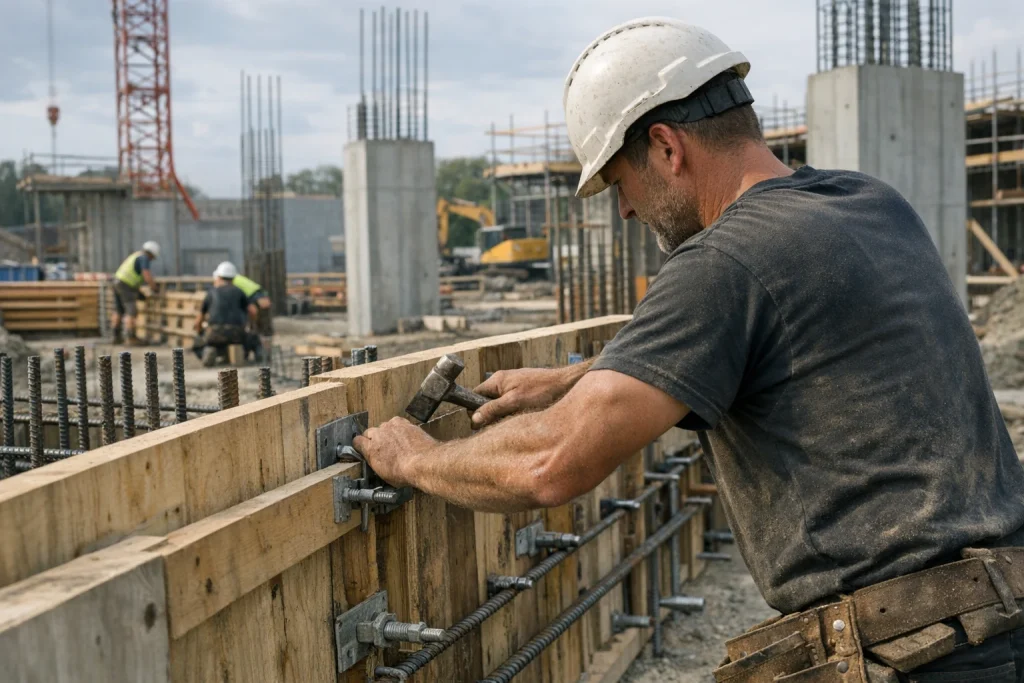
Concrete carpenters build and assemble formwork structures that shape concrete during construction. This role requires skills in reading blueprints, handling wood and steel reinforcement bars, and working safely on site. Foreign workers must understand Dutch labor laws, work permit rules, and safety regulations. The Hague’s construction projects include housing developments, commercial buildings, roads, and bridges. Language skills, safety training, and proper personal protective equipment (PPE) are essential for success. The city’s construction market is active, with ongoing projects requiring reliable carpenters.
How does concrete carpenter jobs in The Hague: guide for foreign workers work in practice?
In practice, concrete carpenters arrive on site early, prepare formwork using wood and steel materials, tie reinforcement bars, and assist with concrete pouring. They follow strict safety protocols, wear PPE, and communicate with supervisors and coworkers. Employers often require a VCA certificate to ensure safety awareness. Work contracts vary from temporary to permanent, with hours typically between 40 and 45 per week. Foreign workers may receive housing through their agency, easing relocation challenges. Daily tasks include measuring, cutting, assembling formwork, and ensuring structural accuracy.
Which conditions apply for concrete carpenter jobs in The Hague: guide for foreign workers?
Conditions include compliance with Dutch labor law and the relevant CAO, which governs pay, working hours, and benefits. EU/EEA/Swiss workers can start immediately, while non-EU workers must secure a work permit. VCA safety certification is often mandatory. Language requirements are usually basic Dutch or English to ensure safety communication. Housing is often arranged by the employer or agency, with private rooms common. Contracts can be fixed-term or permanent, with overtime and holiday pay regulated by law. Workers must use PPE and follow site safety rules.
Which mistakes are common around concrete carpenter jobs in The Hague: guide for foreign workers?
Common mistakes include starting work without the proper permit if non-EU, underestimating the importance of VCA certification, and lacking basic language skills. Some workers do not prepare a clear CV tailored to Dutch employers or fail to confirm contract details in writing. Others overlook the need for proper PPE or misunderstand commuting options. Housing arrangements can cause issues if not clarified before arrival. Finally, not understanding the CAO and pay scales can lead to confusion about earnings and rights.
How do you proceed step by step?
- Check your citizenship status to determine if you need a work permit.
- Obtain necessary certifications, especially VCA safety training.
- Prepare a clear CV highlighting relevant skills, experience, and certifications.
- Apply for jobs through agencies like Haldu Groep or directly with employers.
- Confirm contract terms, pay, and housing arrangements before accepting.
- Arrange travel and plan your commute in The Hague.
- Start work with proper PPE and follow safety protocols.
- Maintain communication with your employer and agency for support.
What should you check before you start?
- Valid work permit if you are a non-EU worker.
- VCA safety certification and any other required training.
- Clear understanding of your contract, pay scale, and working hours.
- Housing arrangements, including location and facilities.
- Language skills needed for site communication.
- Availability of PPE and safety equipment.
- Commuting options and travel time to the job site.
What does this look like in practice?
A foreign concrete carpenter in The Hague typically starts the day by checking the work plan and attending a safety briefing. They assemble formwork using wood and plywood, tie steel reinforcement bars, and assist with concrete casting. Communication with supervisors is often in English or basic Dutch. Workers wear helmets, safety boots, gloves, and high-visibility vests. After work, commuting by bike or public transport is common. Housing provided by agencies usually includes a private bedroom and shared kitchen facilities. Pay is received monthly and aligned with CAO agreements, varying by experience and contract.
| Aspect | EU/EEA/Swiss Workers | Non-EU Workers |
|---|---|---|
| Work Permit | Not required | Required before starting |
| VCA Certification | Usually mandatory | Usually mandatory |
| Language Requirements | Basic Dutch or English | Basic Dutch or English |
| Housing | Often arranged by agency/employer | Often arranged by agency/employer |
| Contract Types | Temporary or permanent | Temporary or permanent |
| Experience Level | Contract Type | Typical Working Hours |
|---|---|---|
| Entry Level (Less than 2 years) | Temporary | Around 40 hours/week |
| Mid Level (2–5 years) | Temporary or permanent | 40–45 hours/week |
| Senior Level (5+ years) | Permanent | 40–45 hours/week plus possible overtime |
| Housing Type | Typical Features | Cost Considerations |
|---|---|---|
| Agency-Provided Housing | Private bedroom, shared kitchen/bathroom, furnished | Costs vary; often included or deducted from salary depending on agency |
| Private Rental | Studio or apartment, self-arranged | Higher cost; requires deposit and contract |
| Shared Housing | Shared rooms or apartments with other workers | Lower cost; less privacy |
Frequently asked questions
Do I need a work permit to work as a concrete carpenter in The Hague?
What is the CAO and how does it affect my pay?
Is VCA certification mandatory for concrete carpenters?
What language skills do I need?
What types of projects employ concrete carpenters in The Hague?
How do I commute to construction sites in The Hague?
What housing options are available for foreign concrete carpenters?
How does experience affect my job opportunities and pay?
What personal protective equipment (PPE) do I need?
What tools do concrete carpenters use?
Conclusion
Foreign workers aiming for concrete carpenter jobs in The Hague should first confirm their work permit status and obtain VCA safety certification. Preparing a clear CV that highlights relevant skills and experience is crucial. Understanding the CAO, Dutch labor laws, and housing options improves job security and comfort. The Hague offers diverse construction projects and good commuting options, with agencies like Haldu Groep providing support for job placement and housing. Careful preparation and compliance with Dutch regulations increase the chances of a successful and safe working experience in The Hague’s construction sector.
