
Direct answer
Carpenter jobs in Rotterdam are accessible to foreign workers, with work permit requirements depending on nationality. EU/EEA and Swiss citizens can work freely without permits, while non-EU citizens must obtain a valid Dutch work permit before employment. Carpenter roles include joinery, formwork, and finishing carpentry, all regulated by the Dutch CAO Bouw & Infra collective agreement, which ensures fair wages and working conditions. VCA safety certification is commonly required on construction sites. Basic Dutch or English language skills are recommended for effective communication and safety. Housing arrangements depend on the placement or agency; with agencies such as Haldu Groep, housing is typically well arranged, often including a private bedroom in shared accommodations near project sites. Rotterdam’s compact urban layout, excellent public transport, and bike-friendly infrastructure make commuting practical for carpenters working on residential, commercial, and infrastructure projects.
Key points
- EU/EEA/Swiss citizens do not need a work permit; non-EU citizens must secure a valid Dutch work permit before starting work.
- Carpenter roles include joiner, formwork carpenter, and finishing carpenter, each with specific tasks and tools.
- Pay and working conditions follow the Dutch CAO Bouw & Infra collective agreement, with wages depending on role, experience, and contract.
- VCA safety certification is often mandatory for site access and safety compliance.
- Basic Dutch or English language skills are recommended for communication and safety.
- Housing arrangements vary; agencies like Haldu Groep typically provide private rooms in shared housing near job sites.
- Rotterdam’s public transport and bicycle infrastructure facilitate easy commuting.
- Typical working hours are around 40 hours per week, with possible overtime and shift work.
- Common projects include new housing developments, commercial buildings, and major infrastructure works like bridges and tunnels.
- Preparing a clear CV highlighting relevant skills and certifications improves job prospects.
- Understanding Dutch labor rights and CAO agreements is essential for fair treatment.
- Early planning for work permits and housing helps avoid common pitfalls.
Field expertise
Since 1999, Haldu Groep has specialized in placing skilled construction workers, including carpenters, across Rotterdam and the Netherlands. Their expertise covers Dutch labor law, collective agreements such as the CAO Bouw & Infra, and safety standards like VCA certification. Haldu Groep supports foreign carpenters with work permits, housing arrangements, and matching candidates to suitable projects. Their knowledge of Rotterdam’s construction market and urban infrastructure helps foreign workers integrate smoothly into local job sites and communities.
What should you know about carpenter jobs in Rotterdam: guide for foreign workers?
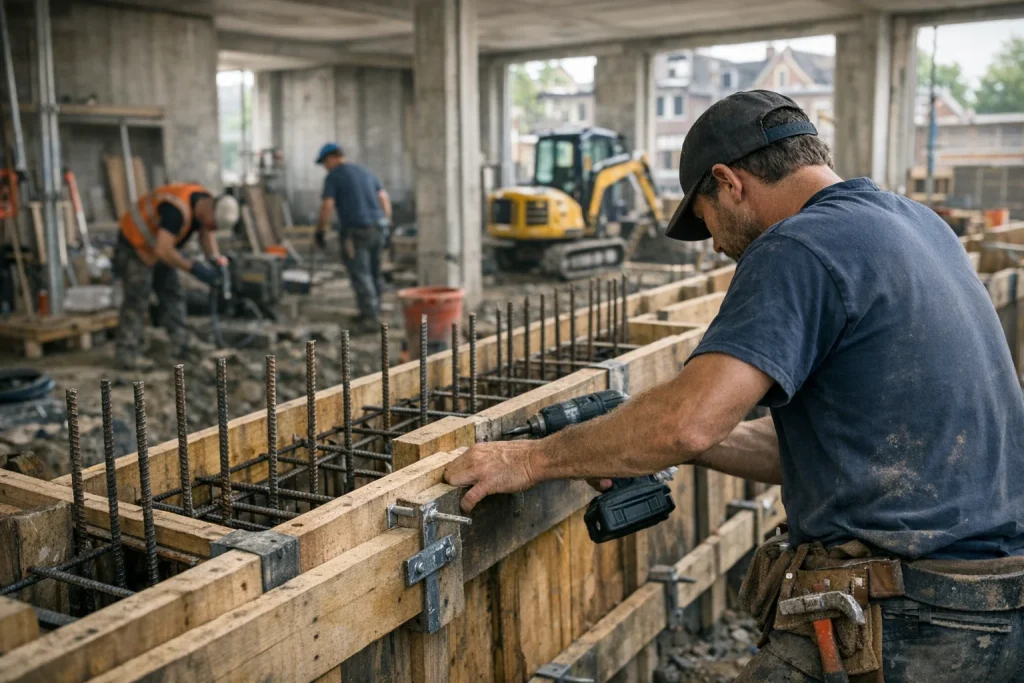
Carpenter jobs in Rotterdam encompass several specializations. Joiners focus on crafting furniture, doors, and windows, often working indoors or in workshops. Formwork carpenters build molds for concrete structures, a critical role in Rotterdam’s extensive infrastructure projects such as bridges, tunnels, and large commercial buildings. Finishing carpenters handle detailed woodwork, including installing trims, panels, and interior fixtures. Rotterdam’s construction sector is diverse and active, with ongoing residential developments, commercial projects, and major infrastructure works.
Foreign workers must understand the legal framework: EU/EEA/Swiss citizens enjoy unrestricted labor market access, while non-EU citizens require a valid work permit. The Dutch CAO Bouw & Infra collective agreement regulates wages, working hours, and benefits, ensuring fair treatment and standardized conditions. VCA safety certification is often mandatory to work on site, reflecting the Dutch emphasis on workplace safety. Language skills in Dutch or English are important for communication and safety, especially on busy construction sites. Housing availability varies depending on the placement or agency, but accommodations are often well organized with private bedrooms close to job sites, easing the transition for foreign workers.
How does carpenter jobs in Rotterdam: guide for foreign workers work in practice?
In practice, foreign carpenters begin by confirming their eligibility to work in the Netherlands. EU/EEA/Swiss citizens can apply directly for jobs without permits. Non-EU workers must secure a work permit, usually arranged by the employer or recruitment agency. Agencies like Haldu Groep assist with job matching, verifying qualifications, and ensuring legal compliance.
Employment contracts follow the CAO Bouw & Infra, governing pay, working hours, and conditions. Safety training, including VCA certification, is often required before starting on site. Housing is arranged either independently or through the agency, typically offering private rooms in shared apartments or houses near Rotterdam’s construction sites.
Commuting is facilitated by Rotterdam’s extensive public transport network, including trams, buses, and metro lines, as well as its bike-friendly infrastructure. Many carpenters use bicycles or public transport to reach job sites efficiently. Projects vary from new housing developments in neighborhoods like Kop van Zuid to large infrastructure projects near the port and industrial areas.
Which conditions apply for carpenter jobs in Rotterdam: guide for foreign workers?
Carpenter jobs in Rotterdam are subject to these conditions:
- Legal status: EU/EEA/Swiss citizens do not need work permits; non-EU workers must have valid permits before starting.
- Employment contracts: Must comply with Dutch labor law and the CAO Bouw & Infra collective agreement.
- Pay: Varies by experience, role, contract, and region; the CAO sets minimum wages and benefits. Dutch construction pay is often higher than in many other European countries, though living costs vary by location.
- Working hours: Typically 40 hours per week, with possible overtime and shift work.
- Safety: VCA certification is often mandatory; personal protective equipment (PPE) is required on site.
- Language: Basic Dutch or English is recommended for effective communication and safety.
- Housing: Depends on employer or agency; private rooms in shared housing are common, and with agencies like Haldu Groep, housing is typically well arranged.
- Commuting: Rotterdam’s public transport and bike infrastructure support daily travel.
Which mistakes are common around carpenter jobs in Rotterdam: guide for foreign workers?
Common mistakes foreign carpenters make include:
- Starting work without a valid work permit if non-EU, risking fines or job loss.
- Neglecting the importance of VCA safety certification and PPE compliance.
- Submitting unclear or incomplete CVs that do not highlight relevant skills and certifications.
- Ignoring language requirements, leading to safety risks and miscommunication on site.
- Failing to arrange housing early, causing last-minute accommodation difficulties.
- Accepting informal or undocumented contracts that do not comply with CAO rules.
- Not understanding Dutch labor rights such as paid holidays and working hours.
- Underestimating commuting time and transport options, affecting punctuality and job satisfaction.
How do you proceed step by step?
- Check eligibility: Determine if you need a work permit based on your citizenship.
- Prepare your CV: Emphasize carpentry skills, certifications (VCA), and relevant experience.
- Apply for jobs: Use recruitment agencies or online job portals specializing in Rotterdam construction.
- Secure work permit: If non-EU, arrange this through your employer or agency before starting work.
- Complete safety training: Obtain VCA certification if required.
- Arrange housing: Coordinate with your employer or agency; plan early to avoid last-minute issues.
- Understand your contract: Review pay, hours, and conditions under the CAO Bouw & Infra.
- Start work: Follow safety rules, communicate clearly, and adapt to Dutch workplace culture.
What should you check before you start?
Before starting a carpenter job in Rotterdam, verify the following:
- Your legal right to work in the Netherlands (work permit if needed).
- Validity of your VCA or other safety certifications.
- Employment contract details, including pay, hours, and benefits.
- Language skills required for communication and safety on site.
- Housing arrangements and proximity to your workplace.
- Availability of personal protective equipment (PPE) and safety training.
- Commuting options and estimated travel time to the construction site.
- Employer reputation and compliance with Dutch labor laws.
What does this look like in practice?
A foreign carpenter arriving in Rotterdam typically contacts a recruitment agency such as Haldu Groep, which assists with job placement, work permits, and housing. After submitting a CV and verifying qualifications, the carpenter receives a job offer aligned with the CAO Bouw & Infra. The carpenter completes VCA safety training if not already certified. Housing is arranged, often a private bedroom in a shared apartment near the city or project site.
Daily commuting is usually by bike or public transport, both widely used in Rotterdam. On site, the carpenter works alongside Dutch and international colleagues, using tools like circular saws, chisels, and hammers, while wearing PPE such as helmets and safety boots. Communication is mostly in Dutch or English, and work schedules follow Dutch construction norms, including possible overtime. Pay and benefits are provided according to the collective agreement.
| Aspect | EU/EEA/Swiss Citizens | Non-EU Citizens |
|---|---|---|
| Work Permit | Not required | Required before starting work |
| Employment Rights | Full Dutch labor rights | Full Dutch labor rights once permit granted |
| VCA Certification | Often required | Often required |
| Housing | Agency or self-arranged, often well arranged with private rooms | Agency typically arranges housing, usually well organized with private rooms |
| Language | Basic Dutch or English recommended | Basic Dutch or English recommended |
| Carpenter Role | Main Tasks | Typical Tools | Required Certification |
|---|---|---|---|
| Joiner | Building furniture, doors, windows | Chisel, hammer, measuring tape | VCA, vocational training |
| Formwork Carpenter | Constructing molds for concrete | Circular saw, hammer, level | VCA, Bouwpas (optional) |
| Finishing Carpenter | Installing trim, panels, finishing woodwork | Measuring tape, saw, nail gun | VCA, vocational training |
| Experience Level | Pay Range | Typical Contract | Working Hours |
|---|---|---|---|
| Entry Level | Depends on experience / CAO | Temporary or fixed-term | 40 hours/week, possible overtime |
| Experienced | Depends on experience / CAO | Permanent or long-term | 40 hours/week, possible shifts |
| Specialist / Supervisor | Depends on experience / CAO | Permanent | 40+ hours/week, overtime common |
Frequently asked questions
Do I need a work permit to work as a carpenter in Rotterdam?
What types of carpenter jobs are available in Rotterdam?
What qualifications do I need to work as a carpenter in Rotterdam?
How does the Dutch CAO affect carpenter pay?
Is VCA certification required for carpenters?
Do I need to speak Dutch to work as a carpenter?
What are typical working hours for carpenters in Rotterdam?
How do foreign carpenters find housing in Rotterdam?
What tools do carpenters commonly use in Rotterdam?
How do I prepare a CV for carpenter jobs in Rotterdam?
Conclusion
Foreign carpenters aiming to work in Rotterdam should first confirm their legal right to work and prepare a CV highlighting relevant skills and certifications like VCA. Understanding the Dutch CAO Bouw & Infra ensures fair pay and working conditions. Basic Dutch or English language skills improve safety and communication. Housing is often arranged by agencies, typically offering private rooms in shared accommodations near job sites. Rotterdam’s excellent transport infrastructure supports easy commuting. By following legal steps, securing proper certification, and working with trusted agencies, foreign carpenters can successfully build a career in Rotterdam’s dynamic construction sector.
