
Direct answer
Carpenters from EU/EEA countries and Switzerland can work in Maastricht without a work permit due to freedom of movement within the EU. Non-EU carpenters must secure a Dutch work permit before starting employment. Carpenter jobs in Maastricht include formwork, finishing, joinery, and site carpentry on residential, commercial, and infrastructure projects. Pay depends on experience, CAO agreements, contract type, and region, and is generally competitive compared to many European countries, though living costs should be considered. Housing arrangements vary by employer or agency; with Haldu Groep, housing is typically well arranged, often including a private bedroom with shared facilities. Basic Dutch language skills and VCA safety certification improve job prospects and site safety compliance. Commuting within Maastricht is convenient by bike, public transport, or carpooling, with many projects located in or near the city center.
Key points
- EU/EEA/Swiss carpenters do not require a work permit; non-EU carpenters must obtain one before starting work.
- Carpentry roles include formwork, finishing, joinery, and general site carpentry.
- Pay depends on experience, CAO Bouw & Infra agreements, contract type, and region.
- Housing is often provided or arranged, usually with private bedrooms and shared facilities, especially through agencies like Haldu Groep.
- Basic Dutch language skills and VCA safety certification are strongly recommended.
- Typical working hours follow Dutch construction standards, about 40 hours per week.
- Commuting options include public transport, cycling, and carpooling within Maastricht.
- Haldu Groep has supported foreign carpenters with job placement and housing since 1999.
- Contracts vary from temporary to permanent, with probation periods common.
- Understanding Dutch labor law and CAO agreements is essential for fair pay and conditions.
- Proper PPE and safety protocols are mandatory on construction sites.
- Apprenticeships and vocational training opportunities exist for career development.
Field expertise
Since 1999, Haldu Groep has specialized in connecting foreign construction workers, including carpenters, with jobs and housing in Dutch cities such as Maastricht. The company understands Dutch labor laws, collective labor agreements (CAO Bouw & Infra), and safety requirements like VCA certification. Carpenter jobs in Maastricht involve diverse projects including residential renovations, new housing developments, commercial buildings, and infrastructure work. The Dutch construction market is regulated to ensure fair wages, safe working conditions, and clear contracts. Foreign carpenters benefit from tailored support in CV preparation, language advice, and housing arrangements to facilitate a smooth transition into the Dutch workforce.
What should you know about carpenter jobs in Maastricht: guide for foreign workers?
Carpenter jobs in Maastricht cover a wide range of tasks such as timber framing, formwork, joinery, and finishing carpentry. The city’s construction sector is active with ongoing residential projects, commercial developments, and infrastructure upgrades. Foreign carpenters must understand the Dutch labor market, legal requirements, and safety standards. EU/EEA/Swiss citizens enjoy freedom of movement and do not require work permits, while non-EU workers must secure a valid permit before employment. Basic Dutch language skills help with communication and safety on site. VCA safety certification is often required by employers to ensure compliance with health and safety regulations. Housing is generally arranged by employers or recruitment agencies, offering options from shared accommodations to private rooms, depending on the placement.
How does carpenter jobs in Maastricht: guide for foreign workers work in practice?
Foreign carpenters usually apply for jobs through recruitment agencies or directly with construction companies in Maastricht. Once a job offer is secured, non-EU workers must arrange a work permit with employer assistance. Housing is frequently organized by the employer or agencies like Haldu Groep, often providing private bedrooms and shared kitchen or bathroom facilities. Carpenters work on various projects, including new builds, renovations, and infrastructure, often specializing in formwork, finishing, or site carpentry. Daily tasks include measuring, cutting, assembling wood structures, and installing fixtures. Safety protocols require personal protective equipment (PPE) and often VCA certification. Commuting is convenient via Maastricht’s public transport system or by bicycle.
Which conditions apply for carpenter jobs in Maastricht: guide for foreign workers?
Carpenter jobs in Maastricht are governed by Dutch labor law and collective labor agreements (CAO Bouw & Infra). Workers have rights to fair pay, safe working conditions, and regulated working hours, typically 40 hours per week. Pay scales depend on experience, role, CAO agreements, and contract type. Contracts can be temporary or permanent, often including probation periods. Foreign carpenters must comply with Dutch tax and social security regulations. VCA safety certification is commonly mandatory. Housing conditions vary but usually meet Dutch standards, providing private bedrooms and shared amenities, especially when arranged through agencies like Haldu Groep. Language skills influence communication and safety compliance on site.
Which mistakes are common around carpenter jobs in Maastricht: guide for foreign workers?
Common mistakes include starting work without the required permit (for non-EU workers), neglecting to obtain VCA certification, and lacking basic Dutch language skills. Some carpenters fail to carefully review contract terms and pay conditions according to CAO agreements. Housing arrangements can cause issues if not clarified beforehand, leading to overcrowding or unsatisfactory living conditions. Another frequent error is submitting a CV that does not meet Dutch standards or fails to highlight relevant skills. Lastly, unfamiliarity with Dutch labor rights and safety rules can result in misunderstandings or unsafe situations on site.
How do you proceed step by step?
- Check your nationality: EU/EEA/Swiss workers do not need a work permit; non-EU workers must apply for one.
- Prepare a clear CV emphasizing your carpentry skills and experience.
- Obtain VCA safety certification if possible before applying.
- Search for jobs through agencies or online platforms specializing in construction jobs in Maastricht.
- Secure a job offer and carefully review the contract, including pay, working hours, and duration.
- Arrange housing through your employer or agencies like Haldu Groep.
- Learn basic Dutch phrases to improve communication and safety on site.
- Register with Dutch tax authorities and social security once employed.
- Start work with proper PPE and follow all site safety protocols.
What should you check before you start?
- Verify your work permit status if you are a non-EU worker.
- Confirm employment contract details: pay, hours, duration, and CAO coverage.
- Ensure you have or will obtain VCA safety certification.
- Check housing arrangements and living conditions.
- Understand commuting options and travel times.
- Know your rights regarding taxes, social security, and health insurance.
- Prepare necessary documents such as ID, CV, and certificates.
- Learn basic Dutch safety and work-related vocabulary.
What does this look like in practice?
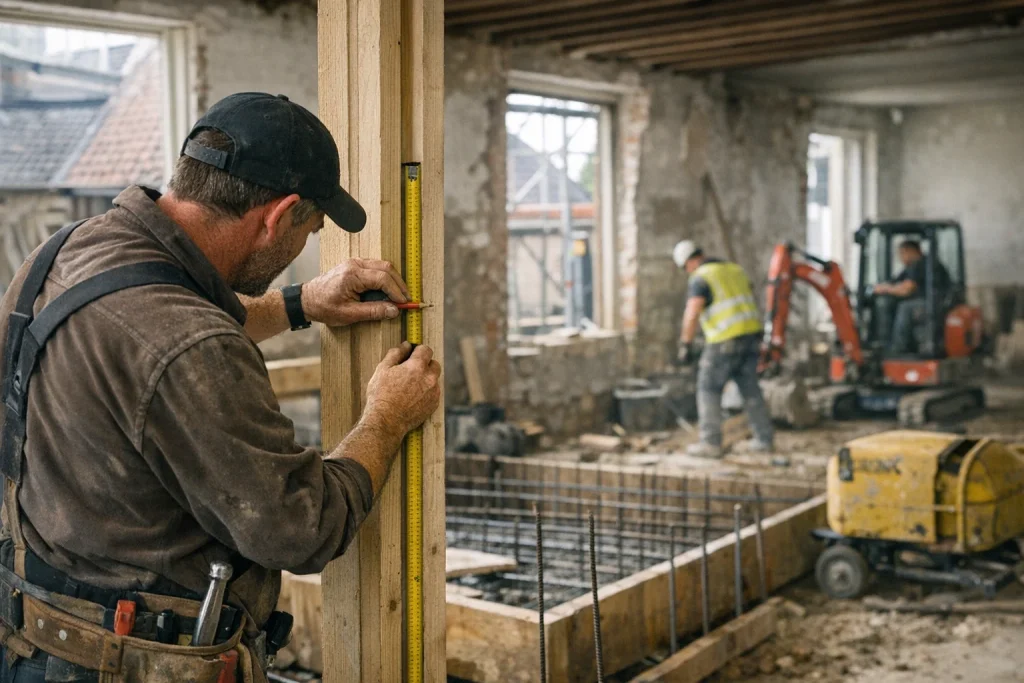
A foreign carpenter arriving in Maastricht usually contacts a recruitment agency or employer first. After confirming eligibility and work permits, the carpenter receives a contract aligned with CAO Bouw & Infra standards. Housing is arranged, often including a private bedroom and shared kitchen or bathroom. On site, the carpenter wears PPE such as a helmet, gloves, boots, and a high-visibility vest. Daily work involves measuring timber, cutting, assembling frames, and finishing wood surfaces. Communication with Dutch colleagues is supported by basic Dutch or English. Commuting is often by bike or public transport, with flexible hours depending on the project phase.
| Aspect | EU/EEA/Swiss Workers | Non-EU Workers |
|---|---|---|
| Work Permit | Not required | Required before starting work |
| VCA Certification | Recommended or required by employer | Recommended or required by employer |
| Housing | Often arranged by employer or agency | Often arranged by employer or agency |
| Pay | Depends on experience, CAO, and contract | Depends on experience, CAO, and contract |
| Language Skills | Basic Dutch recommended | Basic Dutch recommended |
| Carpenter Job Type | Description | Common Projects in Maastricht |
|---|---|---|
| Formwork Carpenter | Builds temporary molds for concrete structures | Infrastructure, commercial buildings |
| Finishing Carpenter | Installs doors, windows, flooring, and trim | Residential renovations, new homes |
| Site Carpenter | General carpentry tasks on construction sites | Mixed residential and commercial projects |
| Joiner | Works in workshop producing wood components | Custom woodwork for interiors |
| Working Hours | Typical Schedule | Notes |
|---|---|---|
| Standard | About 40 hours per week, Monday to Friday | May vary by project phase |
| Overtime | Possible with extra pay or time off | Depends on contract and employer |
| Breaks | Mandatory breaks during shifts | Usually 30 minutes to 1 hour |
Frequently asked questions
Do I need a work permit to work as a carpenter in Maastricht?
What types of carpenter jobs are available in Maastricht?
How much do carpenters earn in Maastricht?
Is VCA certification mandatory for carpenters?
What Dutch language skills do I need?
How is housing arranged for foreign carpenters?
What are typical working hours for carpenters in Maastricht?
Can I commute easily within Maastricht?
Are there training or apprenticeship opportunities?
How does the Dutch CAO affect my job?
Conclusion
Foreign carpenters aiming to work in Maastricht should first confirm their work permit requirements based on nationality. Preparing a clear CV, obtaining VCA certification, and learning basic Dutch will enhance job prospects. Housing is often arranged by employers or agencies like Haldu Groep, easing relocation challenges. Understanding Dutch labor laws and CAO agreements ensures fair pay and working conditions. With good commuting options and a variety of carpenter roles available, Maastricht offers solid opportunities for skilled foreign carpenters willing to prepare and adapt carefully.
