
Direct answer
Foreign carpenters from the EU, EEA, or Switzerland can work in Groningen without a work permit thanks to free movement rights. Non-EU carpenters must obtain a valid Dutch work permit before starting employment. Carpenter jobs in Groningen cover residential, commercial, and infrastructure projects, with pay depending on experience, collective labor agreements (CAOs), and contract type. Basic English is often sufficient initially, but learning Dutch improves job prospects and integration. Safety certification such as VCA is commonly required. Housing arrangements depend on the placement or agency; with agencies like Haldu Groep, housing is typically well arranged and usually includes a private bedroom for the worker. Groningen’s compact city layout enables short commutes by bike or public transport. Foreign qualifications may require validation or additional training to meet Dutch standards.
Key points
- EU/EEA/Swiss carpenters can work in Groningen without a permit; non-EU workers need one.
- Pay depends on experience, CAO agreements, role, and contract type; generally competitive and aligned with Dutch standards.
- Common projects include residential renovations, commercial buildings, and infrastructure works.
- Basic English is often sufficient initially; Dutch language skills improve integration and opportunities.
- VCA safety certification is frequently required on construction sites.
- Housing is often provided or arranged by agencies, typically with private bedrooms.
- Groningen’s small size allows convenient commuting by bike or public transport.
- Foreign carpentry qualifications may need validation or supplementary training.
- CAO Bouw & Infra is the main collective labor agreement for carpenters in Groningen.
- Personal protective equipment (PPE) such as helmets, gloves, and boots is mandatory.
- Career advancement opportunities exist through training and experience.
- Seasonal fluctuations affect job availability but Groningen’s market is relatively stable.
Field expertise
Since 1999, Haldu Groep has specialized in placing skilled construction workers, including carpenters, in the Netherlands. They assist foreign workers by arranging housing, helping with legal requirements, and ensuring compliance with Dutch labor laws and safety standards. The carpentry sector in Groningen reflects broader Dutch construction trends, emphasizing safety certifications like VCA, adherence to CAO agreements, and a focus on sustainable building practices. Foreign carpenters benefit from structured integration pathways, including language courses and skills validation, to meet local standards. Groningen’s construction market is diverse, offering roles from joinery to framework installation across residential, commercial, and infrastructure projects.
What should you know about carpenter jobs in Groningen: guide for foreign workers?
Carpenter jobs in Groningen are part of a dynamic construction sector with projects ranging from residential renovations to commercial buildings and infrastructure development. Foreign workers from the EU/EEA/Switzerland can work without a permit, while non-EU carpenters must secure a valid work permit. Groningen’s compact size supports short commutes, often by bike or public transport, making daily travel convenient. Although Dutch language skills are not mandatory at first, they are highly recommended for better communication and career advancement. Safety certification, especially VCA, is essential for site access. Housing is usually arranged by employment agencies, often including private bedrooms. Carpenter pay depends on experience and collective labor agreements, with Groningen offering competitive wages relative to other Dutch cities.
How does carpenter jobs in Groningen: guide for foreign workers work in practice?
Foreign carpenters typically apply through agencies or directly to employers. EU/EEA/Swiss workers can start immediately, while non-EU workers require a work permit, often arranged by the employer or agency. Upon arrival, carpenters usually receive safety training, including VCA certification if not already held. Housing is often provided or facilitated by the agency, with private bedrooms common. Daily tasks include measuring, cutting, assembling, and installing wood structures on various projects. Commuting is usually short, with many carpenters cycling or using public transport. Pay and working hours follow the CAO Bouw & Infra or similar agreements, ensuring fair conditions and regulated overtime.
Which conditions apply for carpenter jobs in Groningen: guide for foreign workers?
Carpenters in Groningen must comply with Dutch labor laws and CAO agreements, particularly CAO Bouw & Infra. Personal protective equipment (PPE) such as helmets, gloves, safety boots, and high-visibility vests is mandatory on sites. VCA safety certification is often required. Contracts vary from temporary to permanent, with pay based on experience, role, and CAO scales. Working hours follow Dutch standards, including regulated overtime and holiday pay. Foreign carpenters should ensure their qualifications are recognized or supplemented with local training. Housing conditions depend on the agency or employer but generally meet Dutch standards, often including private bedrooms and shared facilities.
Which mistakes are common around carpenter jobs in Groningen: guide for foreign workers?
Common mistakes include starting work without the proper permit if non-EU, underestimating the importance of VCA certification, and neglecting Dutch language learning, which limits job opportunities. Some workers overlook the need to validate foreign qualifications, causing difficulties in career progression. Misunderstanding CAO terms can lead to confusion about pay and working hours. Assuming housing is automatically arranged can cause last-minute problems; early planning is essential. Ignoring mandatory PPE rules risks safety violations or site bans. Lastly, not preparing for seasonal work fluctuations may affect income stability.
How do you proceed step by step?
- Check your nationality: EU/EEA/Swiss workers do not need a permit; non-EU workers must apply for a work permit.
- Prepare your CV highlighting carpentry skills and experience.
- Apply through agencies like Haldu Groep or directly to employers in Groningen.
- Obtain or renew VCA safety certification if required.
- Arrange housing early, either via the agency or independently.
- Plan your travel and commuting options within Groningen.
- Attend any required safety and site-specific training.
- Start work under a contract aligned with CAO Bouw & Infra.
- Consider enrolling in Dutch language courses to improve communication.
- Validate your foreign carpentry qualifications if needed for career growth.
What should you check before you start?
- Confirm your work permit status and legal right to work in the Netherlands.
- Verify your VCA certification validity or plan to obtain it.
- Understand your contract terms, including pay, hours, and benefits under CAO.
- Check housing arrangements and living costs in Groningen.
- Ensure you have the necessary personal protective equipment (PPE).
- Assess your Dutch language skills and consider courses if needed.
- Validate your carpentry qualifications or prepare for additional training.
- Plan your daily commute and transport options.
- Familiarize yourself with Dutch workplace culture and safety rules.
What does this look like in practice?
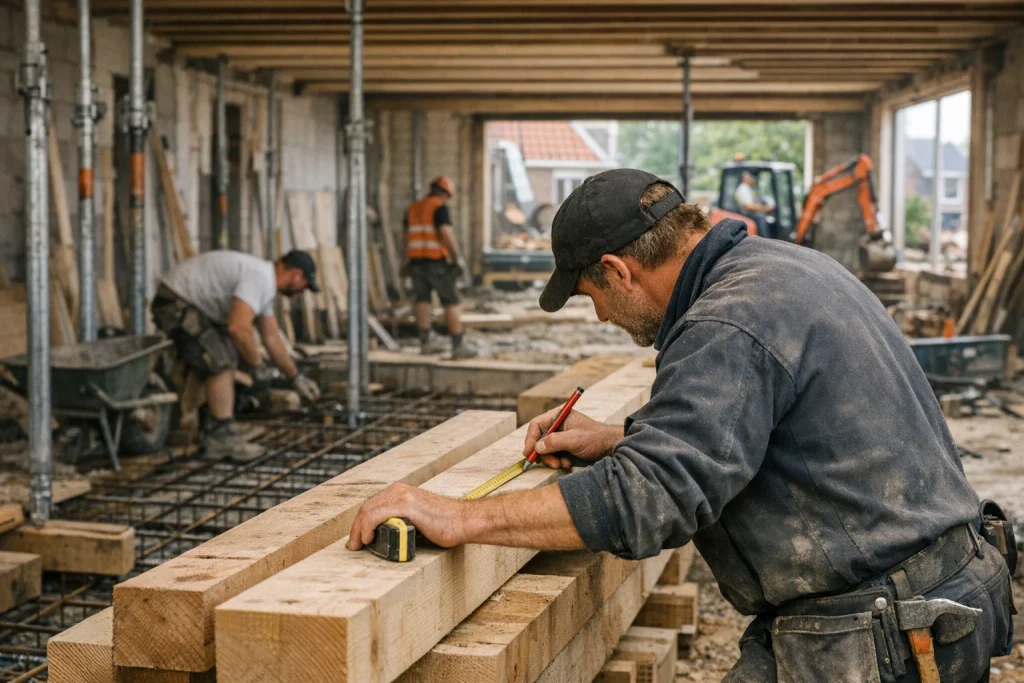
A foreign carpenter arriving in Groningen typically starts by confirming legal work status. If from outside the EU/EEA/Switzerland, the employer or agency often assists with the work permit. Upon arrival, the carpenter attends safety training and obtains or verifies VCA certification. Housing is usually arranged by the agency, providing a private bedroom in shared accommodation or a small apartment. Daily work involves measuring timber, cutting with saws, assembling frameworks, and installing finishes on residential or commercial sites. The commute is often by bike or bus, with Groningen’s compact layout making travel easy. Pay follows CAO standards, with clear contracts and regular hours. Over time, carpenters can improve Dutch language skills and pursue further qualifications to advance their careers.
| Aspect | EU/EEA/Swiss Carpenters | Non-EU Carpenters |
|---|---|---|
| Work Permit | Not required | Required before starting work |
| VCA Certification | Often required | Often required |
| Housing | Usually arranged by agency | Usually arranged by agency |
| Language | Basic English sufficient initially | Basic English sufficient initially |
| Qualification Recognition | May require validation | May require validation |
| Project Type | Description | Common in Groningen? |
|---|---|---|
| Residential Renovations | Updating homes, installing woodwork | Yes |
| Commercial Buildings | Office and retail construction | Yes |
| Infrastructure | Public works, bridges, and facilities | Yes |
| CAO Bouw & Infra Pay Scale | Experience Level | Pay Level |
|---|---|---|
| Entry Level | 0–2 years | Depends on experience / CAO |
| Mid Level | 3–5 years | Depends on experience / CAO |
| Experienced | 5+ years | Depends on experience / CAO |
Frequently asked questions
Do I need a work permit to work as a carpenter in Groningen?
How much do carpenters earn in Groningen compared to other Dutch cities?
What types of carpentry projects are common in Groningen?
Is Dutch language knowledge mandatory for carpenter jobs?
What certifications do I need to work as a carpenter in Groningen?
How is housing arranged for foreign carpenters in Groningen?
Are there collective labor agreements (CAOs) for carpenters in Groningen?
What is the typical commute like for carpenters in Groningen?
How can I validate my foreign carpentry qualifications in the Netherlands?
What personal protective equipment (PPE) is required on Groningen construction sites?
Conclusion
Carpenter jobs in Groningen offer diverse opportunities for foreign workers, especially those from the EU/EEA/Switzerland who can work without permits. Success depends on understanding legal requirements, obtaining necessary certifications like VCA, and preparing for local working conditions. Housing is often well arranged by agencies, easing the transition. Learning Dutch and validating qualifications enhance career prospects. Groningen’s compact city layout supports easy commuting, and the construction market offers stable work across residential, commercial, and infrastructure projects. Careful planning and adherence to CAO agreements ensure fair pay and safe working conditions.
