
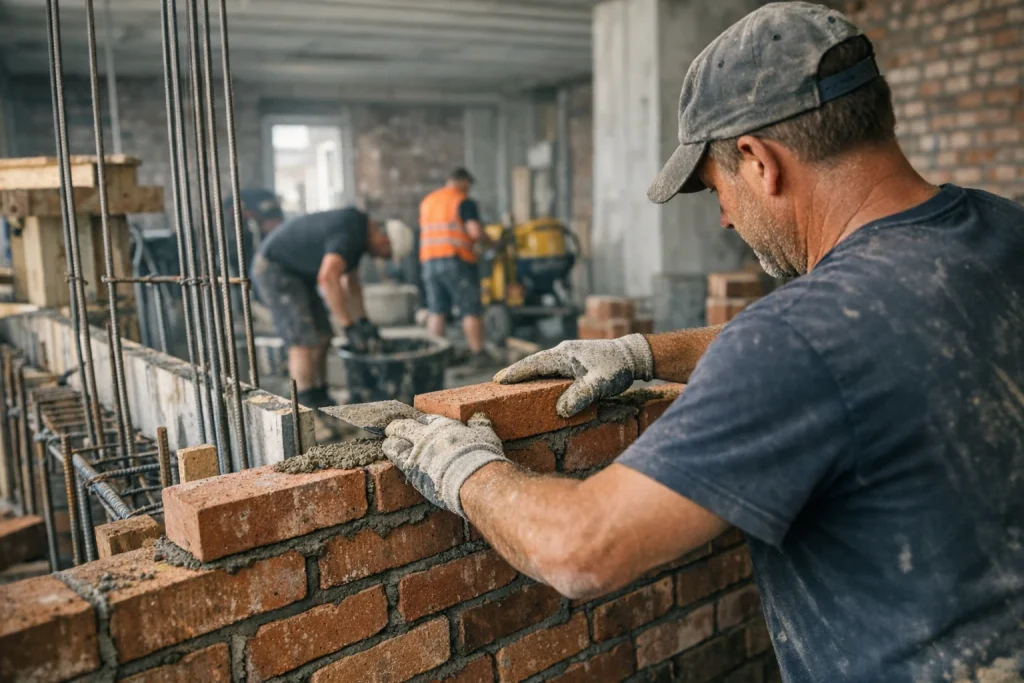
Direct answer
Foreign bricklayers from EU/EEA/Swiss countries can work in The Hague without a work permit, while non-EU nationals must obtain a valid Dutch work permit before starting. Pay depends on experience, role, contract type, and applicable collective labor agreements (CAOs), generally offering competitive wages compared to many European countries, balanced against The Hague’s higher living costs. Employers often require safety certifications such as VCA and basic Dutch or English language skills for effective communication and safety. Housing arrangements vary by employer or agency; Haldu Groep typically provides well-maintained housing with private bedrooms. The Hague’s construction sector includes residential, commercial, and infrastructure projects, offering diverse opportunities. Recognition of foreign qualifications and vocational training can improve job prospects. Public transport is efficient, but living near worksites is recommended to reduce commute times.
Key points
- EU/EEA/Swiss bricklayers can work in The Hague without a permit; non-EU workers require a valid Dutch work permit.
- Pay depends on experience, role, contract, and CAO agreements; generally competitive within Dutch construction.
- Common projects include residential developments, commercial buildings, renovations, and public infrastructure.
- Basic Dutch or English language skills are important for safety and communication on site.
- Recognition of foreign qualifications may be necessary; apprenticeships and training improve prospects.
- Typical working hours are 36-40 hours per week with possible overtime, following Dutch labor law and CAO.
- Housing varies by employer or agency; Haldu Groep usually offers private bedrooms in well-maintained accommodations.
- VCA safety certification is often mandatory or strongly recommended for bricklayers.
- Standard tools include trowels, brick hammers, spirit levels; personal protective equipment (PPE) includes helmets, gloves, and steel-toe boots.
- The Hague has good public transport and bike infrastructure; living near worksites reduces commute times.
- Common challenges include language barriers, qualification recognition, and adapting to Dutch work culture.
- Haldu Groep supports foreign bricklayers with job placement, housing, and integration assistance.
Field expertise
Since 1999, Haldu Groep has specialized in placing skilled foreign workers in Dutch construction roles, including bricklayers in The Hague. The company understands the local labor market, CAO agreements, and legal requirements for foreign workers. They assist with work permits, housing, and safety certification compliance such as VCA. The Hague’s construction sector is diverse, with ongoing projects in residential building, commercial real estate, and infrastructure upgrades. Employers seek bricklayers with practical skills, safety awareness, and basic communication abilities. Recognition of foreign qualifications is often necessary to meet Dutch standards. Haldu Groep’s experience helps foreign bricklayers navigate these requirements and find suitable jobs with fair contracts and housing solutions.
What should you know about bricklayer jobs in The Hague: guide for foreign workers?
Foreign bricklayers should be aware of the legal framework governing work eligibility in The Hague. EU/EEA/Swiss nationals have the right to work without a permit, while non-EU workers must secure a valid Dutch work permit. Pay is influenced by experience, role, and collective labor agreements such as CAO Bouw & Infra or CAO Woningcorporaties, which set minimum wages, working hours, and benefits. Language skills in Dutch or English are important for safety and effective teamwork on site. The Hague’s construction market includes new housing projects, renovations, commercial buildings, and public infrastructure, providing a variety of job opportunities. Safety certification, particularly VCA, is often mandatory or highly recommended. Housing availability depends on the employer or agency; some provide accommodation with private rooms. Recognition of foreign qualifications and additional vocational training can enhance employment prospects.
How does bricklayer jobs in The Hague: guide for foreign workers work in practice?
In practice, foreign bricklayers apply through recruitment agencies or directly to construction companies. EU/EEA/Swiss nationals can start work immediately, while non-EU nationals must first obtain a valid work permit. Upon hiring, workers receive contracts compliant with Dutch labor laws and CAO agreements, specifying pay, working hours, and benefits. Safety training and VCA certification may be arranged or required before starting work. Employers or agencies typically provide necessary tools and personal protective equipment (PPE). Housing can be self-arranged or provided by the employer or agency; Haldu Groep is known for offering well-maintained housing with private bedrooms. Workers commonly commute by bike, public transport, or car, with many choosing to live near worksites to reduce travel time.
Which conditions apply for bricklayer jobs in The Hague: guide for foreign workers?
Conditions include legal eligibility to work, adherence to CAO-based pay and working hours, safety certification, and language requirements. EU/EEA/Swiss nationals do not need work permits; non-EU nationals must have a valid permit. Pay and benefits follow collective labor agreements such as CAO Bouw & Infra, which regulate minimum wages, overtime, and holiday entitlements. Contracts are typically full-time, with 36-40 hours per week and possible overtime. VCA safety certification is often mandatory. Basic Dutch or English skills are required to understand instructions and safety protocols. Housing conditions depend on the employer or agency; some provide accommodation with private rooms and utilities included.
| Condition | EU/EEA/Swiss Workers | Non-EU Workers |
|---|---|---|
| Work Permit | Not required | Required before starting work |
| Pay | Depends on experience / CAO | Depends on experience / CAO |
| Safety Certification (VCA) | Often mandatory | Often mandatory |
| Language Skills | Basic Dutch or English recommended | Basic Dutch or English recommended |
| Housing | Varies; agency/employer may provide | Varies; agency/employer may provide |
Which mistakes are common around bricklayer jobs in The Hague: guide for foreign workers?
Common mistakes include:
- Starting work without verifying legal eligibility or necessary permits.
- Accepting jobs without a clear written contract outlining pay, hours, and conditions.
- Underestimating the importance of safety certification like VCA.
- Ignoring language skills, which can cause safety risks and communication problems.
- Failing to check housing arrangements before arrival, leading to unexpected costs or poor living conditions.
- Not recognizing the need to validate foreign qualifications or pursue local training.
- Overlooking local labor agreements (CAOs) that affect wages and rights.
- Neglecting to plan commuting logistics, resulting in long travel times or transport difficulties.
How do you proceed step by step?
- Check your legal eligibility to work in The Hague (EU/EEA/Swiss or non-EU with permit).
- Prepare a clear CV highlighting your bricklaying experience and qualifications.
- Apply for jobs through agencies like Haldu Groep or directly with construction companies.
- Confirm the job offer includes a written contract compliant with Dutch labor law and CAO agreements.
- Arrange or verify housing options; ask if accommodation is provided or supported.
- Obtain necessary safety certifications, especially VCA, before starting work.
- Improve language skills in Dutch or English to ensure safety and communication on site.
- Plan your commute, considering public transport or bike routes in The Hague.
- Start work with proper tools and personal protective equipment (PPE).
- Consider further training or apprenticeships to enhance your skills and career prospects.
What should you check before you start?
Before starting a bricklayer job in The Hague, verify:
- Your legal right to work and valid work permit if required.
- The written employment contract detailing pay, hours, and benefits.
- Whether VCA or other safety certifications are needed and if you have them.
- Housing arrangements and costs, including utilities and privacy.
- Language requirements and your ability to communicate safely on site.
- Tools and personal protective equipment provided or needed.
- Work schedule, overtime policies, and holiday entitlements under CAO.
- Recognition of your foreign qualifications or need for additional training.
- Commuting options and travel times to the worksite.
- Health and safety rules on the construction site.
What does this look like in practice?
In practice, a foreign bricklayer arriving in The Hague typically starts by confirming legal work status and securing a job through an agency or employer. They receive a contract aligned with Dutch labor law and CAO agreements, often including a clear pay scale and working hours. The worker obtains or confirms VCA safety certification and receives necessary tools and PPE. Housing is arranged either by the employer, agency, or independently; Haldu Groep often provides private bedrooms in shared housing. The bricklayer commutes by bike or public transport, common in The Hague. On site, communication is in Dutch or English, and workers follow strict safety protocols. Career development may involve apprenticeships or language courses. Challenges like language barriers or qualification recognition are addressed with support from agencies or training programs.
| Step | Action | Details |
|---|---|---|
| 1 | Legal eligibility check | Verify nationality and work permit requirements |
| 2 | Job application | Submit CV to agencies or employers |
| 3 | Contract confirmation | Ensure written contract complies with CAO and Dutch law |
| 4 | Safety certification | Obtain or verify VCA certification |
| 5 | Housing arrangement | Confirm accommodation details with employer or agency |
| 6 | Language preparation | Improve Dutch or English skills |
| 7 | Commute planning | Plan transport options and living location |
| 8 | Start work | Use proper tools and PPE, follow safety rules |
Frequently asked questions
Do I need a work permit to work as a bricklayer in The Hague?
How much can I expect to earn as a bricklayer in The Hague?
What language skills do I need for bricklayer jobs in The Hague?
Is VCA certification required for bricklayers in The Hague?
Will my foreign bricklaying qualifications be recognized in The Hague?
What types of construction projects hire bricklayers in The Hague?
Are working hours and contracts standardized for bricklayers in The Hague?
Does Haldu Groep provide housing for foreign bricklayers in The Hague?
What tools and protective equipment do bricklayers use in The Hague?
How do I commute to construction sites in The Hague?
Conclusion
Foreign bricklayers aiming to work in The Hague should first confirm their legal eligibility and obtain any necessary work permits. Understanding local CAO agreements, pay scales, and safety requirements like VCA certification is essential. Basic Dutch or English language skills improve safety and teamwork on site. Housing options vary, with agencies like Haldu Groep often providing well-organized accommodations. The Hague’s diverse construction market offers opportunities in residential, commercial, and infrastructure projects. Planning your commute and carefully reviewing contracts will help ensure a smooth start. Pursuing vocational training or apprenticeships can enhance your skills and career prospects in the Dutch construction sector.
