
Direct answer
Carpenters from the EU, EEA, or Switzerland can work in the Netherlands without a work permit, while non-EU carpenters must obtain a valid Dutch work permit before starting employment. Carpenter jobs include formwork, finishing, joinery, and general woodworking tasks on construction sites. Pay depends on experience, region, contract type, and collective labor agreements (CAO), generally offering competitive wages compared to many European countries. Basic Dutch language skills improve communication and safety but are not always mandatory. Safety certification such as VCA is typically required. Housing arrangements vary by employer or agency; many, including Haldu Groep, provide well-organized housing with private bedrooms. Contracts are mostly full-time and regulated by Dutch labor law and CAO Bouw & Infra.
Key points
- EU/EEA/Swiss carpenters do not need a work permit; non-EU carpenters must obtain one before working.
- Carpenter roles include formwork, finishing, joinery, and general woodworking.
- Pay depends on experience, region, contract type, and CAO agreements; Dutch pay is generally competitive.
- Basic Dutch language skills improve job prospects and safety but are not always mandatory.
- VCA safety certification is often required or strongly recommended.
- Housing varies by agency and employer; Haldu Groep typically arranges good housing with private bedrooms.
- Working hours and conditions are regulated by Dutch labor law and CAO Bouw & Infra.
- Recruitment agencies play a key role in job placement and support for foreign carpenters.
- Contracts can be temporary or permanent, mostly full-time.
- Health and safety regulations are strictly enforced on construction sites.
- Career advancement is possible with experience and additional training.
- Recognition of foreign qualifications may be required for some roles.
Field expertise
The Dutch construction sector is well-organized and regulated, with carpenters playing a vital role in building and infrastructure projects. Since 1999, Haldu Groep has specialized in placing skilled carpenters and other construction workers, assisting foreign workers with permits, housing, and integration. The sector follows strict safety and labor regulations, including the CAO Bouw & Infra collective labor agreement, which sets standards for wages, working hours, and conditions. Carpenters often need VCA certification to demonstrate knowledge of safety rules. The sector offers various specializations, such as formwork carpentry, finishing carpentry, and joinery, with opportunities for career growth and skills development.
What should you know about de carpenter jobs in the netherlands?
Carpenter jobs in the Netherlands cover a broad range of woodworking activities, from building structural frameworks to installing doors, windows, and interior finishes. The construction market is active year-round, with demand driven by new builds, renovations, and infrastructure projects. Dutch labor law and collective agreements ensure fair pay, regulated working hours, and safe conditions. EU/EEA/Swiss carpenters can work without permits, while non-EU workers must secure a valid work permit. Basic Dutch language skills are helpful for communication and safety but not always mandatory, especially when working with international teams or agencies that provide language support. VCA safety certification is commonly required to work on construction sites.
How does de carpenter jobs in the netherlands work in practice?
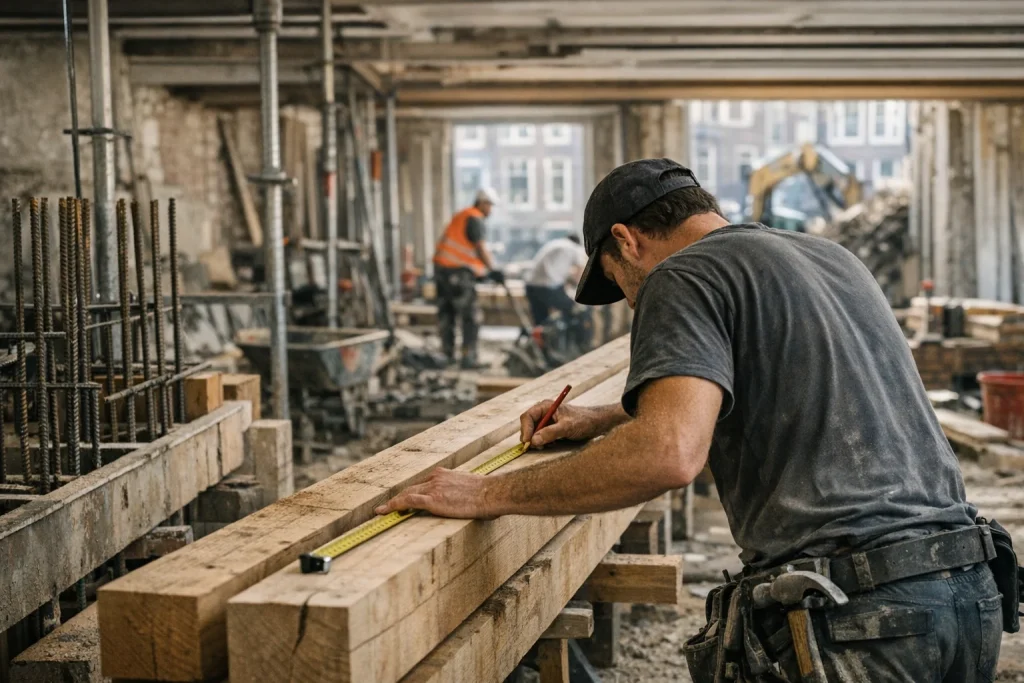
In daily practice, carpenters read blueprints, measure and cut wood, assemble frameworks, and finish surfaces. They use tools such as hammers, saws, drills, chisels, and levels, and must wear personal protective equipment including helmets, gloves, and safety boots. Most carpenters work full-time under contracts governed by CAO Bouw & Infra, which defines working hours, overtime pay, and holidays. Recruitment agencies often handle job placement and housing, especially for foreign workers. Work sites vary from urban projects in Amsterdam or Rotterdam to smaller towns and infrastructure sites. Safety training and VCA certification are typically prerequisites before starting work.
Which conditions apply for de carpenter jobs in the netherlands?
Conditions include compliance with Dutch labor law and the CAO Bouw & Infra collective agreement. Non-EU/EEA/Swiss workers must have valid work permits. VCA safety certification is usually required. Contracts may be temporary or permanent, with full-time hours generally between 36 and 40 per week. Pay depends on experience, region, and CAO agreements. Housing is often arranged by employers or agencies and can range from shared accommodations to private rooms. Basic Dutch is recommended for communication but not always mandatory. Workers must follow health and safety rules and use required protective equipment.
Which mistakes are common around de carpenter jobs in the netherlands?
- Not securing the correct work permit if coming from outside the EU/EEA/Switzerland.
- Underestimating the importance of VCA safety certification for employability.
- Failing to clarify housing arrangements before accepting a job.
- Assuming Dutch language skills are unnecessary; communication problems can affect safety and teamwork.
- Not verifying contract terms and pay conditions based on CAO Bouw & Infra.
- Ignoring the need for personal protective equipment on site.
- Overlooking the role of recruitment agencies in providing support and legal compliance.
How do you proceed step by step?
- Check your nationality and work permit requirements.
- Obtain necessary qualifications and VCA safety certification.
- Prepare a clear CV highlighting relevant carpentry experience.
- Contact recruitment agencies specializing in construction jobs, such as Haldu Groep.
- Discuss housing options and contract details before accepting a job.
- Learn basic Dutch phrases to improve communication on site.
- Ensure you have or acquire the required personal protective equipment.
- Start work with a clear understanding of your rights under Dutch labor law and CAO.
What should you check before you start?
- Your work permit status and legal right to work.
- That you have or will obtain VCA safety certification.
- Contract details including pay, working hours, and duration.
- Housing arrangements and living costs in the job location.
- Language requirements and communication support.
- Health and safety rules on the work site.
- Tools and personal protective equipment provided or required.
- Support services from your recruitment agency or employer.
What does this look like in practice?
A carpenter in the Netherlands typically starts the day reviewing blueprints and safety instructions. They use saws, drills, hammers, and levels to cut and assemble wood structures. Safety gear such as helmets, gloves, and boots is worn at all times. The workday usually lasts eight hours with breaks, under a contract regulated by CAO Bouw & Infra. Communication with supervisors and colleagues may be in Dutch or English. Housing arranged by the agency or employer often includes a private bedroom and shared kitchen. Pay is transferred monthly, with deductions for taxes and social security. Career progression is possible through gaining experience and additional certifications.
| Aspect | EU/EEA/Swiss Carpenters | Non-EU Carpenters |
|---|---|---|
| Work permit | Not required | Required before starting work |
| VCA Certification | Recommended/Required | Recommended/Required |
| Language | Basic Dutch recommended | Basic Dutch recommended |
| Housing | Often arranged by agency/employer | Often arranged by agency/employer |
| Pay | Depends on experience and CAO | Depends on experience and CAO |
| Type of Carpenter Job | Main Tasks | Typical Tools | Safety Gear |
|---|---|---|---|
| Formwork Carpenter | Building concrete molds, assembling frameworks | Hammer, saw, drill, level | Helmet, gloves, boots, glasses |
| Finish Carpenter | Installing doors, windows, trim, cabinetry | Chisel, saw, measuring tape, drill | Helmet, gloves, boots |
| Joiner | Woodworking, furniture making, detailed assembly | Chisel, plane, saw, measuring tools | Helmet, gloves |
| General Carpenter | Various wood construction and repairs | Hammer, saw, drill, measuring tape | Helmet, gloves, boots |
| Region | Job Availability | Typical Pay Level | Housing Cost |
|---|---|---|---|
| Amsterdam | High | Depends on experience and CAO | High |
| Rotterdam | High | Depends on experience and CAO | Medium-High |
| Eindhoven | Medium | Depends on experience and CAO | Medium |
| Groningen | Medium | Depends on experience and CAO | Lower |
Frequently asked questions
Do EU carpenters need a work permit to work in the Netherlands?
What qualifications do I need to work as a carpenter in the Netherlands?
Is Dutch language proficiency mandatory for carpenter jobs?
How much do carpenters earn in the Netherlands compared to other European countries?
What types of carpenter jobs are available?
Are there career advancement opportunities for carpenters?
What is VCA certification and why is it important?
How is housing arranged for foreign carpenters?
What working hours and contracts are typical for carpenters?
Can I validate my foreign carpentry qualifications in the Netherlands?
Conclusion
Carpenter jobs in the Netherlands offer competitive pay and stable working conditions, especially for EU/EEA/Swiss workers who do not need permits. Non-EU carpenters must secure permits and safety certifications like VCA. Basic Dutch skills and clear agreements on housing and contracts improve success. Recruitment agencies such as Haldu Groep provide valuable support with job placement, permits, and housing. Understanding Dutch labor laws and CAO agreements ensures fair treatment. Prepare your qualifications, verify requirements carefully, and plan your move to maximize opportunities in the Dutch construction sector.
