
Direct answer
Utility plumber jobs in Tilburg are accessible to foreign workers, with EU/EEA and Swiss citizens able to work without permits, while non-EU nationals must obtain a valid work permit before employment. Pay depends on experience, role, contract type, and Dutch CAO agreements, often offering competitive wages compared to many European countries. Housing is frequently arranged by recruitment agencies, typically providing private bedrooms in shared apartments near public transport or bike routes. Proficiency in Dutch or English and VCA safety certification are commonly required. Plumbing work in Tilburg covers residential renovations, commercial installations, and municipal infrastructure projects, supported by efficient local transport and bike-friendly commuting options.
Key points
- EU/EEA/Swiss plumbers do not require work permits; non-EU plumbers must obtain one.
- Pay varies by experience, role, contract type, and Dutch CAO agreements.
- Housing is often provided by agencies, usually with private bedrooms in shared accommodations.
- Language skills in Dutch or English improve job prospects and workplace safety.
- VCA safety certification is commonly mandatory for site work.
- Projects include residential renovations, commercial buildings, and municipal water systems.
- Tilburg offers good public transport and extensive bike routes for commuting.
- Haldu Groep has placed utility plumbers in Tilburg since 1999.
- Dutch CAO governs pay, working hours, holidays, and safety standards.
- Clear, Dutch-style CVs help foreign plumbers stand out to employers.
- Personal protective equipment (PPE) standards are strictly enforced on sites.
- Contract types vary: temporary, permanent, full-time, or part-time.
Field expertise
Since 1999, Haldu Groep has specialized in placing skilled installation trades workers, including utility plumbers, in Tilburg and throughout the Netherlands. The Dutch construction CAO regulates wages, working hours, and safety standards such as VCA certification, which is often required on construction sites. Utility plumbers in Tilburg work on water supply, drainage, and heating systems for residential, commercial, and municipal projects. Housing and commuting are important practical considerations for foreign workers, with agencies frequently assisting in these areas. Language proficiency and recognized certifications are essential for safety, communication, and career development.
What should you know about utility plumber jobs in Tilburg: guide for foreign workers?
Tilburg is a mid-sized city in the southern Netherlands with a steady demand for skilled utility plumbers. The city’s economy includes residential construction, commercial development, and municipal infrastructure projects, all requiring plumbing expertise. Plumbing work involves renovating older homes, installing systems in new commercial buildings, and maintaining water and heating infrastructure for the municipality. EU/EEA/Swiss citizens can work without permits, but non-EU workers must obtain a valid work permit and may need recognized vocational qualifications. The Dutch CAO sets minimum pay and working conditions, which are generally favorable compared to many European countries. Language skills in Dutch or English are important for safety and effective teamwork on site. Housing support is often available through agencies, easing relocation challenges. Tilburg’s compact size and good transport links make commuting manageable for foreign workers.
How does utility plumber jobs in Tilburg: guide for foreign workers work in practice?
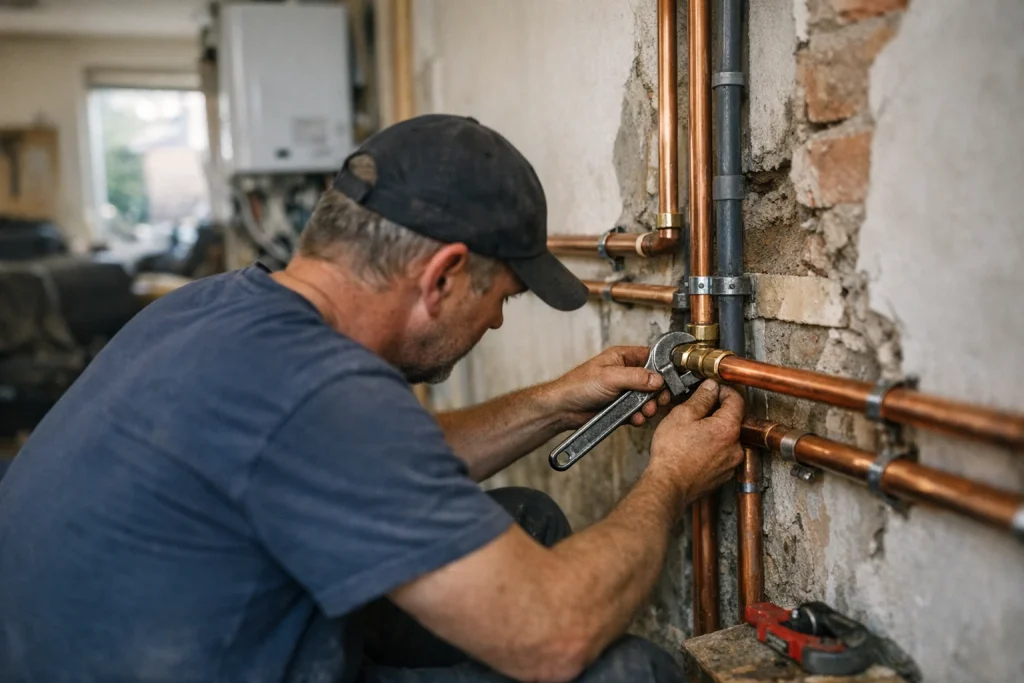
Foreign utility plumbers typically apply through recruitment agencies or directly to companies operating in Tilburg. Agencies like Haldu Groep often arrange housing, providing shared apartments with private bedrooms near public transport or bike routes. The work involves installing and repairing water pipes, fittings, and heating systems using materials such as copper, PVC, and steel. VCA safety certification and safety training are usually required before starting. Tilburg’s bike-friendly streets and public transport network make commuting straightforward. Contracts range from temporary to permanent and full-time to part-time, with working hours regulated by Dutch labor law and CAO agreements. Daily tasks include reading technical drawings, fitting pipes, and testing installations.
Which conditions apply for utility plumber jobs in Tilburg: guide for foreign workers?
Conditions include compliance with Dutch labor laws and the construction CAO, which governs pay, working hours, overtime, and holidays. Safety standards require VCA certification and personal protective equipment (PPE) such as gloves, safety glasses, and work boots. EU/EEA/Swiss plumbers do not need work permits, but non-EU plumbers must obtain one. Employers may require proof of vocational education or Dutch plumbing certification. Language skills are often a condition to ensure safety and teamwork. Housing arrangements depend on the employer or agency, with many offering well-maintained accommodations. Contracts specify pay scales, which vary by experience and role, and include social benefits like holiday pay and sick leave.
Which mistakes are common around utility plumber jobs in Tilburg: guide for foreign workers?
Common mistakes include failing to verify work permit requirements for non-EU workers, underestimating the importance of language skills, and neglecting to obtain VCA certification before starting. Some plumbers do not clarify contract terms or pay details upfront, leading to misunderstandings. Others overlook the need for proper PPE or do not prepare a CV tailored to Dutch employers. Housing arrangements can cause issues if not confirmed early. Additionally, some workers neglect to research local commuting options, which can affect punctuality and job satisfaction. Not understanding Dutch labor rights or CAO rules can also lead to problems with pay or working hours.
How do you proceed step by step?
- Check if you need a work permit (EU/EEA/Swiss workers do not; non-EU workers do).
- Prepare a clear CV highlighting your plumbing experience and certifications.
- Apply for jobs via agencies or companies specializing in installation trades in Tilburg.
- Obtain or verify your VCA safety certification and relevant vocational diplomas.
- Confirm housing arrangements with your employer or agency before arrival.
- Learn basic Dutch or English to improve communication on site.
- Understand your contract terms, pay scale, and working hours based on the Dutch CAO.
- Prepare necessary personal protective equipment or confirm it is provided.
- Plan your commute using Tilburg’s public transport or bike infrastructure.
- Start work and follow safety and quality standards on site.
What should you check before you start?
- Work permit status and legal right to work in the Netherlands.
- Recognition of your plumbing qualifications or need for Dutch certification.
- VCA safety certification validity.
- Contract details: pay, hours, duration, and benefits under Dutch CAO.
- Housing arrangements and costs if provided by the employer or agency.
- Language requirements and availability of language courses.
- Availability and condition of personal protective equipment.
- Commuting options and travel time to the worksite.
- Insurance coverage and health and safety policies.
What does this look like in practice?
A foreign utility plumber arriving in Tilburg typically receives a clear job offer with contract details aligned with the Dutch construction CAO. If placed by an agency like Haldu Groep, housing is arranged in shared apartments with private bedrooms, close to public transport or bike routes. The plumber starts work on projects such as installing water systems in new residential buildings or repairing municipal pipelines. Daily communication is in Dutch or English, and VCA-certified workers follow strict safety protocols wearing gloves, helmets, and boots. Working hours are usually full-time with occasional overtime, and pay reflects experience and CAO scales. Commuting by bike or bus is common, making daily travel efficient.
| Aspect | EU/EEA/Swiss Workers | Non-EU Workers |
|---|---|---|
| Work Permit Required? | No | Yes |
| Typical Contract Types | Temporary, Permanent | Temporary, Permanent (with permit) |
| Housing Support | Usually Provided by Agencies | Usually Provided by Agencies |
| Language Requirement | Dutch or English Recommended | Dutch or English Recommended |
| VCA Certification | Often Required | Often Required |
| Experience Level | Typical Pay Range | Contract Type | Common Projects |
|---|---|---|---|
| Entry Level | Depends on experience / CAO | Temporary or Apprenticeship | Residential Renovations |
| Skilled Plumber | Depends on experience / CAO | Permanent or Temporary | Commercial Installations |
| Experienced Technician | Depends on experience / CAO | Permanent | Municipal Infrastructure |
| Housing Type | Typical Features | Proximity to Work | Cost Considerations |
|---|---|---|---|
| Shared Apartment | Private bedroom, shared kitchen and bathroom | Near public transport or bike routes | Often included in contract or agency fees |
| Private Studio | Own bathroom and kitchenette | Varies, sometimes farther from city center | Higher rent, less common for agency placements |
| Employer-Provided Housing | Varies, often shared rooms or dormitory style | Close to project sites | May be subsidized or included in contract |
Frequently asked questions
Do I need a work permit to work as a utility plumber in Tilburg?
What certifications are required for plumbing jobs in Tilburg?
How much can I expect to earn as a utility plumber in Tilburg?
Is housing provided for foreign plumbers in Tilburg?
Are language skills necessary for plumbing jobs in Tilburg?
What types of plumbing projects are common in Tilburg?
Is VCA certification mandatory for plumbers in Tilburg?
What are typical working hours for utility plumbers in Tilburg?
How do I prepare my CV for plumbing jobs in Tilburg?
What commuting options are available for plumbers in Tilburg?
Conclusion
Foreign utility plumbers aiming to work in Tilburg should first confirm their work permit status and prepare a clear, Dutch-style CV. Obtaining VCA certification and verifying housing arrangements before arrival are essential steps. Language skills in Dutch or English improve safety and communication on site. Understanding the Dutch CAO ensures fair pay and working conditions. Tilburg offers diverse plumbing projects and convenient commuting options, making it a practical location for skilled foreign plumbers. Recruitment agencies like Haldu Groep provide valuable support in job placement and housing, helping foreign workers integrate smoothly into the local labor market.
