
Direct answer
Housing construction plumber jobs in Eindhoven are open to foreign workers, with EU/EEA/Swiss nationals able to work without a permit, while non-EU plumbers must secure appropriate work authorization such as a residence permit or EU Blue Card. Competitive pay depends on experience, CAO agreements, and contract type. VCA safety certification and recognized plumbing qualifications are commonly required. Housing is often arranged by employers or agencies, typically offering private bedrooms and shared facilities. Good Dutch or English language skills are important for effective communication on site. Eindhoven’s housing construction sector includes new builds, renovations, and multi-family projects, supported by efficient commuting options and strict safety standards.
Key points
- EU/EEA/Swiss plumbers can work in Eindhoven without a work permit; non-EU plumbers require proper authorization.
- Pay depends on experience, CAO agreements, contract type, and project complexity; generally higher than many EU countries.
- Common projects include new housing developments, renovations, and multi-family apartment buildings.
- VCA certification is often mandatory or highly recommended for safety compliance.
- Housing may be provided by employers or agencies; Haldu Groep typically arranges private bedrooms.
- Dutch or English language skills are important for effective communication on site.
- Working hours usually follow Dutch construction CAO, with standard shifts and occasional overtime.
- Commuting in Eindhoven is convenient via public transport, cycling, or car.
- Personal protective equipment (PPE) like helmets, gloves, and safety footwear is standard.
- Staffing agencies assist foreign plumbers with job placement, housing, and integration support.
- Understanding Dutch labor laws and CAO agreements is essential for fair working conditions.
- Planning housing early is advised due to Eindhoven’s growing population and housing demand.
Field expertise
Since 1999, Haldu Groep has specialized in placing skilled workers in Dutch installation trades, including plumbers in housing construction. The company understands the technical, legal, and practical requirements for foreign workers, such as work permits, CAO compliance, and VCA safety certification. Haldu Groep supports foreign plumbers by facilitating housing arrangements, ensuring proper documentation, and providing guidance on Dutch labor laws and site expectations. Eindhoven’s housing construction sector is active, with steady demand for qualified plumbers to work on new builds, renovations, and multi-family housing projects. Employers value candidates with vocational plumbing training, practical skills in pipe installation, and knowledge of Dutch safety standards.
What should you know about housing construction plumber jobs in Eindhoven: guide for foreign workers?
Foreign plumbers aiming to work in Eindhoven should be aware of several important factors. Nationals from the EU/EEA and Switzerland have the right to work without permits, while non-EU plumbers must apply for work authorization through the Dutch Immigration Service (IND). The housing construction sector in Eindhoven focuses on residential projects, including new housing developments, renovations, and multi-family buildings. Safety is a priority, with VCA certification often required to access construction sites. Language skills in Dutch or English help with communication and safety compliance. Housing availability varies; some employers or agencies provide accommodation, often with private bedrooms and shared facilities. Eindhoven’s compact size and good public transport and cycling infrastructure make commuting straightforward.
How does housing construction plumber jobs in Eindhoven: guide for foreign workers work in practice?
In practice, foreign plumbers usually start by securing a job offer or agency placement. EU/EEA/Swiss plumbers can begin work immediately, while non-EU plumbers must obtain the necessary permits before starting. Employers typically require proof of VCA certification and relevant plumbing qualifications. Upon arrival, many foreign plumbers live in housing arranged by the employer or agency, usually offering private rooms with shared kitchens and bathrooms. Daily tasks include installing water systems, pipe fitting, soldering, and leak testing on residential construction sites. Work hours generally follow Dutch construction CAO standards, with shifts from early morning to mid-afternoon. Communication on site is in Dutch or English, and personal protective equipment is mandatory. Commuting by bike or public transport is common, keeping travel times manageable.
Which conditions apply for housing construction plumber jobs in Eindhoven: guide for foreign workers?
Conditions for plumbers working in Eindhoven include compliance with Dutch labor laws and collective labor agreements (CAO) specific to construction and installation trades. Employment contracts may be temporary or permanent, with pay scales set according to experience and CAO guidelines. VCA safety certification is often required for site access. Working hours usually range between 36 and 40 hours per week, with overtime compensated according to CAO rules. Employers must provide necessary PPE such as helmets, gloves, and safety shoes. Housing conditions vary but are generally decent when arranged through agencies like Haldu Groep. Language proficiency in Dutch or English is expected to ensure safety and efficiency on site.
Which mistakes are common around housing construction plumber jobs in Eindhoven: guide for foreign workers?
Common mistakes include starting work without proper work authorization, especially for non-EU plumbers. Lack of VCA certification can limit job opportunities or cause site access denial. Insufficient language skills may lead to miscommunication and safety risks. Some foreign plumbers fail to clarify housing arrangements before arrival, resulting in unexpected costs or poor living conditions. Another mistake is not understanding the Dutch CAO, leading to confusion about pay, working hours, and rights. Neglecting to prepare a tailored CV that highlights relevant skills and certifications reduces chances of employment. Finally, underestimating commuting times or local costs can cause practical difficulties.
How do you proceed step by step?
- Check your nationality: EU/EEA/Swiss or non-EU.
- If non-EU, apply for a work permit or EU Blue Card via the Dutch Immigration Service (IND).
- Obtain or verify VCA certification and relevant plumbing qualifications.
- Prepare a CV tailored to Dutch construction employers, emphasizing experience and certifications.
- Contact staffing agencies like Haldu Groep for job placement and housing support.
- Secure a job offer and confirm contract terms, including pay, working hours, and housing.
- Arrange housing, either through the employer, agency, or independently.
- Plan your travel and commuting options within Eindhoven.
- Start work, following safety protocols and CAO conditions.
- Maintain communication with your employer and agency for ongoing support.
What should you check before you start?
- Validity of your work permit or right to work in the Netherlands.
- Possession of VCA certification and any Dutch plumbing qualifications.
- Details of your employment contract, including pay, hours, and duration.
- Housing arrangements and costs, ensuring suitable living conditions.
- Required PPE and safety training for the job site.
- Language requirements and communication expectations.
- Commuting options and estimated travel times to the work site.
- Contact details for your employer and staffing agency.
What does this look like in practice?
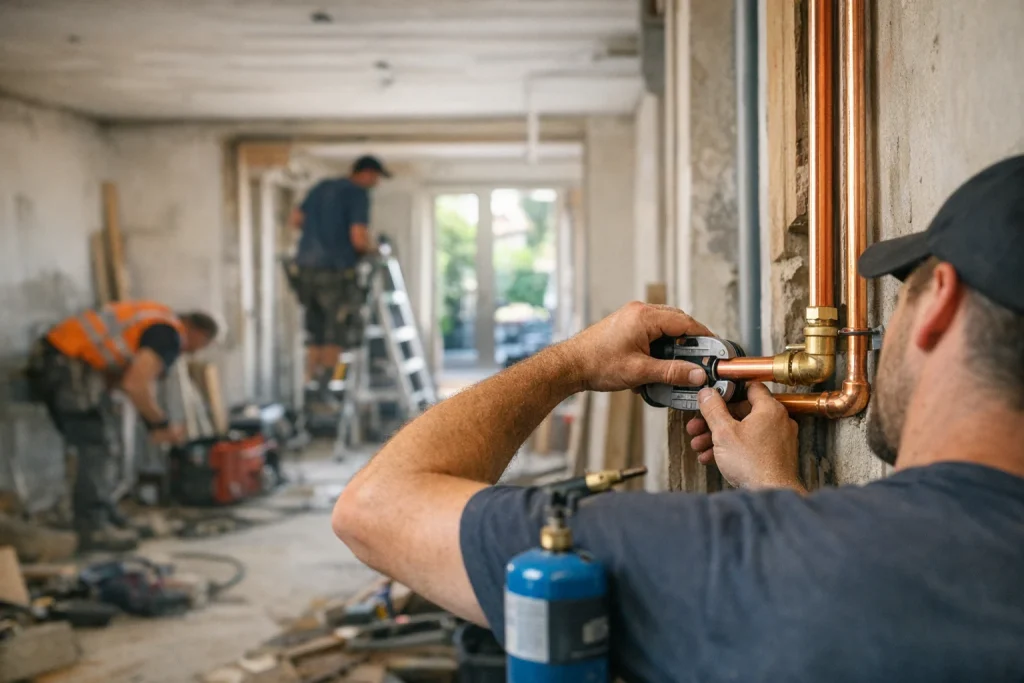
A foreign plumber arriving in Eindhoven typically starts with an orientation to the work site and safety procedures. They wear standard PPE such as a safety helmet, gloves, and protective footwear. Daily tasks include installing copper or PVC pipes, soldering joints, fitting water systems, and conducting leak tests. Communication with Dutch supervisors and colleagues is often in English or basic Dutch. Work hours usually begin early morning and end mid-afternoon, with breaks regulated by CAO. Housing arranged by the agency offers a private bedroom with shared kitchen and bathroom facilities. Commuting is often by bike or public transit, with short travel times. Regular contact with the agency ensures support for any issues.
| Aspect | EU/EEA/Swiss Plumbers | Non-EU Plumbers |
|---|---|---|
| Work Permit | Not required | Required (IND application) |
| VCA Certification | Often required | Often required |
| Housing | Varies; agency often provides | Usually agency-provided or employer-arranged |
| Language | Dutch or English recommended | Dutch or English recommended |
| Pay | Depends on experience / CAO | Depends on experience / CAO |
| Common Housing Construction Projects in Eindhoven | Description |
|---|---|
| New Housing Developments | Large-scale residential neighborhoods with single-family homes and apartments. |
| Renovations | Updating plumbing in existing houses and apartments to modern standards. |
| Multi-Family Buildings | Installation of plumbing systems in apartment complexes and social housing. |
| Typical Working Hours for Plumbers in Eindhoven | Details |
|---|---|
| Regular Shifts | Usually standard daytime hours, Monday to Friday |
| Overtime | Paid according to CAO; occasional weekend or evening work |
| Breaks | Lunch break around midday; short breaks during shifts |
Frequently asked questions
Do EU/EEA/Swiss plumbers need a work permit to work in Eindhoven?
What work authorization do non-EU plumbers need?
Is VCA certification mandatory for plumbers in Eindhoven?
What language skills are needed for plumbers in Eindhoven?
Are housing accommodations provided for foreign plumbers?
How does pay for plumbers in Eindhoven compare to other European cities?
What types of housing construction projects are common in Eindhoven?
What are typical working hours for plumbers in Eindhoven?
What personal protective equipment is required?
How can foreign plumbers improve their chances of employment?
Conclusion
Foreign plumbers seeking housing construction jobs in Eindhoven should verify their work authorization and obtain necessary certifications like VCA. Preparing a clear CV, improving language skills, and connecting with staffing agencies such as Haldu Groep can ease job placement and housing arrangements. Understanding Dutch labor laws and CAO agreements ensures fair pay and working conditions. Eindhoven offers a vibrant construction market with diverse projects and good commuting options. Planning ahead for housing and work permits will help foreign plumbers integrate smoothly and succeed in this dynamic sector.
