
Direct answer
Utility electrician jobs in Nijmegen are accessible to foreign workers, with EU/EEA and Swiss nationals able to work without a permit, while non-EU citizens must secure a valid Dutch work and residence permit before starting. These jobs require recognized vocational qualifications comparable to Dutch MBO Elektrotechniek and safety certifications such as VCA. Pay is competitive and regulated by collective labor agreements (CAO), varying by experience and contract type. Housing is often arranged by employers or agencies, typically offering private bedrooms. Basic English is usually sufficient on site, but Dutch language skills improve communication and safety. Work involves installation, maintenance, and troubleshooting of electrical utility infrastructure, with commuting commonly done by bike or public transport due to Nijmegen’s compact city layout and excellent infrastructure.
Key points
- EU/EEA/Swiss nationals can work without permits; non-EU workers need valid Dutch work and residence permits.
- Recognized vocational qualifications equivalent to Dutch MBO Elektrotechniek and safety certificates (e.g., VCA) are essential.
- Pay depends on experience, CAO agreements, contract type, and role; Nijmegen offers competitive wages within the Dutch market.
- Housing is often provided or arranged by employers or agencies, usually with private bedrooms and shared facilities.
- Dutch language skills improve safety and communication but basic English is often accepted on site.
- Work involves installation, maintenance, inspection, and repair of utility electrical systems like power distribution and street lighting.
- Standard working hours are about 40 per week, with possible shifts or overtime depending on projects.
- Strict safety standards apply; VCA certification is commonly mandatory, alongside PPE use.
- Commuting is mostly by bike or public transport, supported by Nijmegen’s excellent infrastructure and compact size.
- Collective labor agreements regulate pay, working hours, and conditions, ensuring fair treatment.
- Preparing a CV with Dutch-relevant qualifications and experience improves job chances.
- Career growth is possible through specialization and additional certifications.
Field expertise
Since 1999, Haldu Groep has specialized in connecting foreign technical workers with Dutch employers in installation trades, including utility electricians. Their expertise covers Dutch work permit regulations, certification requirements, and housing arrangements in cities like Nijmegen. Utility electricians in Nijmegen typically work on infrastructure projects involving low and high voltage systems, cable installation, panel wiring, and system testing. Safety certifications such as VCA and NEN 3140 are standard requirements. Employment conditions are regulated by collective labor agreements like CAO Bouw & Infra or CAO Metaal & Techniek. Haldu Groep also supports foreign workers in understanding Dutch labor laws and workplace culture, facilitating smooth integration into the local workforce.
What should you know about utility electrician jobs in Nijmegen: guide for foreign workers?
Utility electrician jobs in Nijmegen focus on installing, maintaining, and repairing electrical systems for utilities such as power distribution networks, street lighting, and public infrastructure. EU/EEA and Swiss nationals can work freely without permits, while non-EU workers must obtain valid Dutch work and residence permits. Employers require vocational qualifications equivalent to Dutch MBO Elektrotechniek and safety certificates like VCA. While Dutch language skills improve communication and safety, many employers accept basic English on site. Pay is competitive but varies by experience, contract type, and collective labor agreements (CAO). Housing is often arranged by employers or agencies, typically providing private bedrooms. Nijmegen’s small size and excellent public transport make commuting straightforward, with many workers cycling or using buses and trains.
How does utility electrician jobs in Nijmegen: guide for foreign workers work in practice?
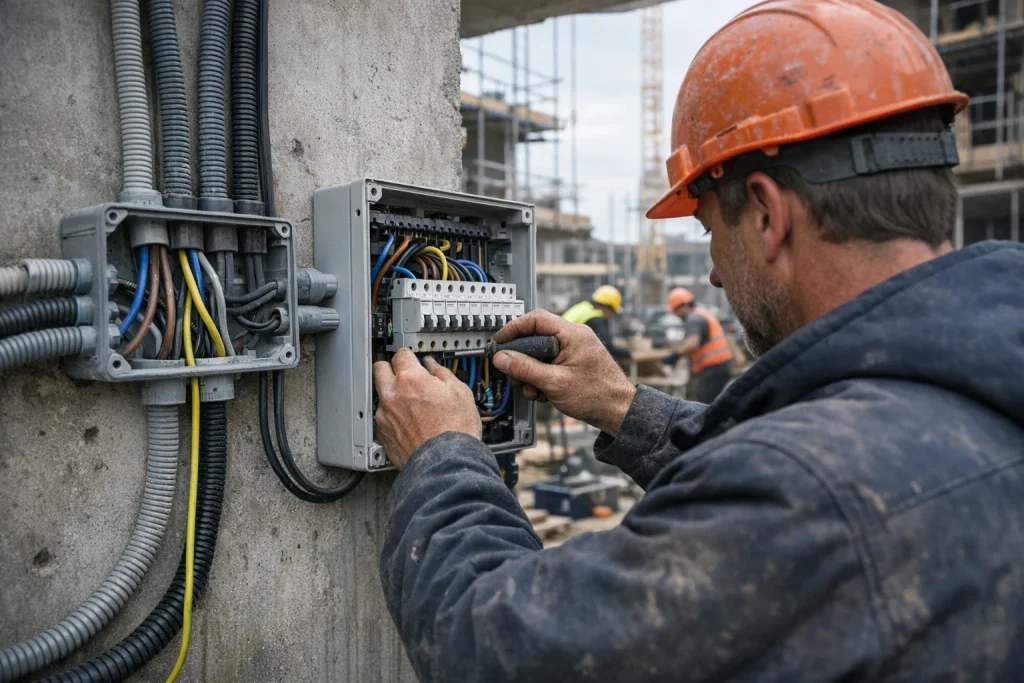
In practice, utility electricians in Nijmegen perform tasks such as cable laying, panel wiring, fault detection, electrical testing, and system commissioning on infrastructure projects. Work schedules generally follow CAO rules, with about 40 hours per week and occasional shifts or overtime depending on project demands. Safety is a top priority, requiring VCA certification and the use of personal protective equipment (PPE) like insulated gloves, helmets, and high-visibility clothing. Foreign workers often find jobs through recruitment agencies that assist with permits, housing, and onboarding. Daily commuting is usually by bike or public transport, thanks to Nijmegen’s compact layout and well-developed infrastructure. Communication on site is often bilingual, with Dutch and English used depending on the team.
Which conditions apply for utility electrician jobs in Nijmegen: guide for foreign workers?
- Work rights: EU/EEA/Swiss nationals do not need work permits; non-EU workers require valid Dutch work and residence permits.
- Qualifications: Vocational training equivalent to MBO Elektrotechniek and safety certificates like VCA and NEN 3140 are required.
- Contracts: Fixed-term or permanent contracts regulated by CAO Bouw & Infra or CAO Metaal & Techniek.
- Working hours: Typically 40 hours per week, with possible shifts or overtime based on project needs.
- Safety: Compliance with Dutch Working Conditions Act (Arbowet) and mandatory use of PPE.
- Pay: Based on CAO scales, experience, and role; Nijmegen pay is competitive but always confirm in writing.
- Housing: Often arranged by employer or agency, usually with private bedrooms and shared facilities.
Which mistakes are common around utility electrician jobs in Nijmegen: guide for foreign workers?
- Starting work without verifying permit requirements, especially for non-EU workers.
- Overlooking the need for safety certifications such as VCA before starting.
- Submitting CVs without emphasizing Dutch-relevant qualifications and experience.
- Neglecting basic Dutch language skills, which can hinder safety and communication on site.
- Failing to confirm housing arrangements before arrival, leading to last-minute difficulties.
- Accepting pay or working conditions below CAO standards due to lack of knowledge.
- Improper use or misunderstanding of required PPE and safety procedures.
- Underestimating commuting times or transport options in Nijmegen’s urban environment.
How do you proceed step by step?
- Determine your nationality and check if you need a Dutch work permit.
- Obtain or validate vocational qualifications and safety certificates (VCA, NEN 3140).
- Prepare a CV tailored to Dutch utility electrician jobs, highlighting relevant skills and certificates.
- Apply for jobs through agencies or employers experienced with foreign workers.
- Review and confirm employment contract details, pay, and CAO coverage before signing.
- Arrange housing early through your employer or trusted agencies like Haldu Groep.
- Learn basic Dutch phrases related to safety and work communication.
- Confirm PPE provisions or prepare to bring your own if required.
- Plan your commute using Nijmegen’s bike paths or public transport options.
- Begin work following all safety and legal requirements, maintaining communication with your employer and agency.
What should you check before you start?
- Legal right to work and possession of valid permits if required.
- Recognition of vocational qualifications and safety certificates by Dutch standards.
- Employment contract details including pay, working hours, and CAO coverage.
- Housing arrangements and proximity to your workplace.
- Language requirements and communication expectations on site.
- Safety training completion and availability of personal protective equipment (PPE).
- Commuting options and estimated travel time to the worksite.
- Contact information for your employer and any supporting recruitment agency.
What does this look like in practice?
A foreign utility electrician in Nijmegen typically cycles or takes public transport to a nearby infrastructure site. After a safety briefing conducted in Dutch or English, they inspect electrical panels, lay cables, or troubleshoot faults under supervision. PPE such as helmets, insulated gloves, and high-visibility clothing are mandatory. Communication often mixes simple Dutch with English to ensure clarity. Lunch breaks usually occur on site or at nearby facilities. Work hours follow CAO rules, generally ending mid-afternoon unless overtime is required. After work, the electrician returns to agency-arranged housing, often a shared apartment with private bedrooms and communal living spaces.
| Aspect | Nijmegen | Amsterdam | Rotterdam |
|---|---|---|---|
| Average Pay Level | Competitive, depends on experience and CAO | Generally higher due to city size and demand | Similar to Nijmegen, with port industry focus |
| Housing Cost | Moderate; agency-arranged housing common and typically well organized | High, with limited affordable options | Moderate to high, varies by neighborhood |
| Commute Options | Excellent bike paths and public transport | Good public transport, less bike-friendly | Good public transport and bike infrastructure |
| Job Market Size | Medium, infrastructure and utilities focus | Large, diverse construction projects | Large, port and industrial projects |
| Certification | Purpose | Required for Utility Electricians? |
|---|---|---|
| VCA (Safety Certification) | Workplace safety awareness and compliance | Yes, often mandatory |
| NEN 3140 | Electrical safety for low voltage systems | Yes, recommended and sometimes required |
| VOP (Operator Certificate) | Operation of specific electrical equipment | Sometimes required depending on employer |
| VEV (Electrical Installation Safety) | Knowledge of electrical installation safety | Recommended for career development |
| Tool / PPE | Use | Mandatory? |
|---|---|---|
| Multimeter | Measure voltage, current, and resistance | Yes |
| Insulated gloves | Electrical protection against shocks | Yes |
| Safety helmet | Head protection on site | Yes |
| High-visibility clothing | Visibility and safety on site | Yes |
| Fall protection harness | Protection when working at heights | When applicable |
Frequently asked questions
Do I need a work permit to work as a utility electrician in Nijmegen?
What qualifications do I need to work as a utility electrician in Nijmegen?
Is Dutch language proficiency mandatory for utility electrician jobs?
How much can I expect to earn as a utility electrician in Nijmegen?
What safety certifications are required?
Are housing arrangements provided for foreign utility electricians?
What are typical working hours for utility electricians in Nijmegen?
How do I prepare my CV for utility electrician jobs in Nijmegen?
Are there local unions or worker organizations for utility electricians?
What tools and PPE should I expect to use?
Conclusion
Foreign workers interested in utility electrician jobs in Nijmegen should first verify their legal work status and obtain necessary certifications like VCA. Preparing a CV tailored to Dutch standards and arranging housing early through agencies can ease relocation. Basic Dutch language skills improve safety and communication but are not always mandatory. Nijmegen offers competitive pay and manageable commuting, with work focused on infrastructure projects requiring strict safety compliance. Understanding collective labor agreements and local work culture helps ensure fair conditions. With proper preparation and support, foreign electricians can build a successful career in Nijmegen’s utility sector.
