
Direct answer
Utility plumber jobs in Rotterdam are accessible to foreign workers, with EU/EEA/Swiss citizens able to work without a permit, while non-EU citizens must obtain a Dutch work permit before starting. These jobs involve installing, maintaining, and repairing water, heating, and gas systems in residential, commercial, and industrial buildings. Basic Dutch or English language skills are important for safety and communication on site. Pay depends on experience, contract type, collective labor agreements (CAO), region, and employer; always confirm the written offer. Housing arrangements depend on the placement or agency; with Haldu Groep, housing is typically well arranged, often including a private bedroom for the worker. VCA safety certification is commonly required to meet Dutch health and safety standards. Rotterdam’s excellent public transport and bike infrastructure support easy commuting for plumbers.
Key points
- EU/EEA/Swiss citizens can work in Rotterdam without a work permit; non-EU citizens must secure one before employment.
- Utility plumbers install, maintain, and repair water, heating, and gas systems in various building types.
- Basic Dutch or English language skills improve safety and communication on site.
- Pay varies by experience, CAO agreements, contract type, project complexity, and region; always verify details in your contract.
- VCA safety certification is often required to comply with Dutch safety regulations.
- Housing arrangements depend on employer or agency; private rooms are common with Haldu Groep.
- Rotterdam’s public transport and cycling infrastructure make commuting practical and affordable.
- Common projects include residential renovations, commercial buildings, and industrial facilities.
- Contracts can be temporary or permanent, regulated by CAO Bouw & Infra or CAO Metaal en Techniek.
- Recognition of foreign qualifications may require additional Dutch training or certification.
- Personal protective equipment (PPE) is mandatory on Dutch construction sites.
- Employers usually provide safety training aligned with VCA standards.
Field expertise
Since 1999, Haldu Groep has connected foreign workers with installation trade jobs in the Netherlands, including utility plumber roles in Rotterdam. The company assists with work permits, housing, and compliance with Dutch labor laws and safety standards. Utility plumbers in Rotterdam work under collective labor agreements (CAO), which regulate wages, working hours, and benefits. The VCA safety certification is widely recognized and often required, reflecting the Dutch focus on workplace safety. Rotterdam’s diverse construction market offers opportunities in residential, commercial, and industrial sectors, demanding skills in various plumbing systems and materials. Language proficiency and understanding local work culture are essential for success.
What should you know about utility plumber jobs in Rotterdam: guide for foreign workers?
Utility plumber jobs in Rotterdam focus on installing and maintaining water, heating, and gas systems in buildings and infrastructure. EU/EEA/Swiss citizens can work without a permit, but non-EU citizens must secure a Dutch work permit before starting. Employers typically require VCA safety certification to ensure compliance with Dutch health and safety standards. Basic Dutch or English language skills are important for understanding instructions and communicating safely on site. Pay and working conditions are governed by Dutch collective labor agreements (CAO), which set minimum wages, working hours, and benefits. Housing is often arranged by employers or agencies, with Haldu Groep providing well-organized accommodations including private bedrooms. Rotterdam’s excellent public transport and bike-friendly environment facilitate commuting.
How does utility plumber jobs in Rotterdam: guide for foreign workers work in practice?
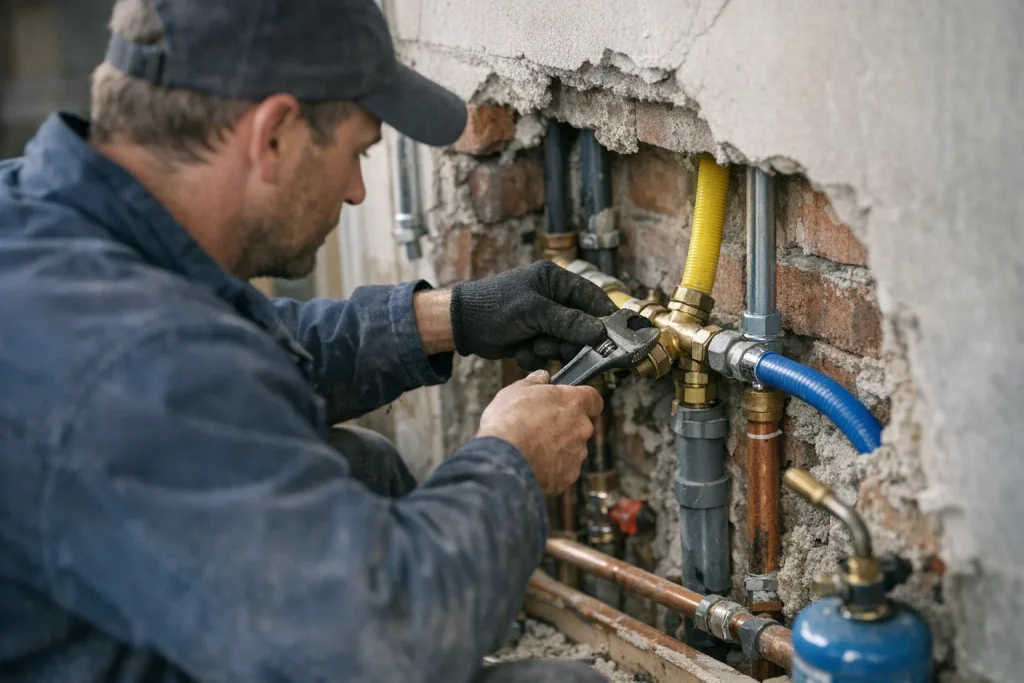
In practice, utility plumbers in Rotterdam work on projects ranging from residential renovations to new commercial and industrial buildings. Daily tasks include installing pipes, detecting leaks, maintaining systems, and pressure testing. Tools used include pipe wrenches, cutters, and pressure gauges. Workers wear personal protective equipment (PPE) such as helmets, gloves, and safety boots. Foreign workers often start with temporary contracts arranged through agencies like Haldu Groep, which also assist with housing and permits. Communication on site is usually in Dutch or English, so basic language skills are necessary. CAO agreements regulate working hours, overtime, and pay. Safety training and VCA certification are essential prerequisites.
Which conditions apply for utility plumber jobs in Rotterdam: guide for foreign workers?
Conditions include legal authorization to work in the Netherlands, compliance with Dutch labor laws, and adherence to collective labor agreements (CAO). EU/EEA/Swiss citizens do not require work permits; non-EU citizens must obtain one before employment. VCA safety certification is often mandatory. Employment contracts vary from temporary to permanent and specify wages, working hours, and benefits according to CAO Bouw & Infra or CAO Metaal en Techniek. Housing is usually arranged by the employer or agency, with private bedrooms common. Workers must follow Dutch health and safety regulations, use required PPE, and maintain clear communication with supervisors and colleagues. Basic Dutch or English language skills are strongly recommended.
Which mistakes are common around utility plumber jobs in Rotterdam: guide for foreign workers?
Common mistakes include starting work without the proper work permit for non-EU citizens, accepting verbal job offers without written contracts, and neglecting VCA certification. Insufficient language skills can cause safety risks and misunderstandings on site. Some workers fail to verify housing arrangements beforehand, leading to accommodation issues. Not understanding CAO agreements may result in accepting lower pay or poor working conditions. Additionally, neglecting to bring or use required PPE risks injury and non-compliance with Dutch safety laws. Proper preparation, verification, and communication are essential to avoid these pitfalls.
How do you proceed step by step?
- Determine if you need a work permit: EU/EEA/Swiss citizens do not; non-EU citizens must apply via Dutch immigration.
- Obtain or verify your VCA safety certification, often required before starting work.
- Prepare a clear CV highlighting your plumbing experience and certifications.
- Apply for jobs through agencies like Haldu Groep or directly with Rotterdam employers.
- Confirm job offers with written contracts detailing pay, hours, and CAO coverage.
- Arrange housing in advance through employer, agency, or private rental.
- Learn basic Dutch or English to improve communication and safety on site.
- Prepare or confirm provision of personal protective equipment (PPE).
- Plan your commute using Rotterdam’s public transport or bike infrastructure.
- Start work aware of Dutch labor laws, safety rules, and workplace culture.
What should you check before you start?
- Work permit status and legal right to work in the Netherlands.
- Validity of your VCA safety certification or plans to obtain it.
- Employment contract details: pay, working hours, and CAO coverage.
- Housing arrangements: location, privacy, and cost.
- Language requirements and your ability to communicate on site.
- Availability of PPE and safety training.
- Commuting options and travel time to the worksite.
- Understanding of Dutch labor laws and worker rights.
- Recognition or equivalence of your foreign plumbing qualifications.
- Contact details of your employer or agency for support.
What does this look like in practice?
A foreign utility plumber arriving in Rotterdam typically confirms work permit and VCA certification first. They receive a contract aligned with Dutch CAO agreements, often through an agency like Haldu Groep, which also arranges housing with private bedrooms near the city or project sites. On the job, they install or repair piping systems using tools such as pipe cutters and pressure gauges, wearing PPE like helmets and gloves. Communication is mostly in Dutch or English, so basic language skills help avoid mistakes. Daily commutes are usually by bike or public transport, supported by Rotterdam’s extensive infrastructure. Pay and hours comply with CAO rules, ensuring fair treatment and workplace safety.
| Aspect | EU/EEA/Swiss Citizens | Non-EU Citizens |
|---|---|---|
| Work Permit | Not required | Required before starting work |
| VCA Certification | Usually required | Usually required |
| Housing | Often arranged by employer or agency | Often arranged by employer or agency |
| Language Skills | Basic Dutch or English recommended | Basic Dutch or English recommended |
| Contract Type | Temporary or permanent | Temporary or permanent |
| Common Plumbing Tasks | Tools Used | Personal Protective Equipment (PPE) |
|---|---|---|
| Pipe installation | Pipe wrench, pipe cutter | Helmet, gloves, safety boots |
| Leak detection | Pressure gauge, plumbing snake | Protective eyewear, gloves |
| System maintenance | Welding, soldering tools | Helmet, gloves |
| Pressure testing | Pressure gauge, valves | Helmet, gloves, safety boots |
| CAO Agreement | Influence on Job | Typical Benefits |
|---|---|---|
| CAO Bouw & Infra | Construction and installation trades | Minimum wages, overtime pay, holiday allowance |
| CAO Metaal en Techniek | Metal and technical installation | Wage scales, pension schemes, training opportunities |
Frequently asked questions
Do EU citizens need a work permit to work as utility plumbers in Rotterdam?
How can non-EU workers obtain a work permit for plumbing jobs in Rotterdam?
What are the main duties of a utility plumber in Rotterdam?
Is VCA certification mandatory for utility plumbers in Rotterdam?
What language skills do I need to work as a plumber in Rotterdam?
How does the pay for utility plumbers in Rotterdam compare to other European cities?
What housing options are available for foreign utility plumbers in Rotterdam?
What types of projects do utility plumbers work on in Rotterdam?
What personal protective equipment is required for plumbers in Rotterdam?
Are foreign plumbing qualifications recognized in the Netherlands?
Conclusion
Foreign workers aiming for utility plumber jobs in Rotterdam should first confirm their work permit status and obtain VCA certification. Understanding Dutch collective labor agreements and securing a written contract are essential for fair pay and working conditions. Housing is often arranged by agencies like Haldu Groep, providing private rooms near job sites. Basic Dutch or English skills improve communication and safety. Rotterdam’s strong public transport and bike infrastructure support daily commuting. Preparing a clear CV and applying through trusted agencies can ease entry into the local plumbing job market. Familiarity with Dutch labor laws and safety standards will help ensure a successful and safe work experience.
