
Direct answer
Utility plumber jobs in Eindhoven are accessible to foreign workers, with EU/EEA and Swiss nationals able to work without a permit, while non-EU citizens must obtain a valid work and residence permit before employment. Employers require recognized plumbing qualifications, mandatory VCA safety certification, and basic Dutch or English language skills for effective communication and safety compliance. Pay is competitive and depends on experience, role, CAO agreements, and contract specifics. Housing arrangements vary by placement and agency; with Haldu Groep, housing is typically well arranged, often including a private bedroom for the worker. Eindhoven’s plumbing work includes utility infrastructure, residential, commercial, and smart city projects, supported by excellent cycling and public transport for commuting within the city and surrounding areas.
Key points
- EU/EEA/Swiss citizens can work without a permit; non-EU workers need a valid permit.
- Recognized plumbing qualifications and VCA safety certification are essential.
- Basic Dutch or English language skills improve safety and workplace communication.
- Pay depends on experience, role, CAO agreements, and contract; Eindhoven offers competitive wages.
- Work covers utility infrastructure, residential, commercial, and smart city plumbing projects.
- Housing arrangements depend on employer or agency; private rooms are common, especially with Haldu Groep.
- Working hours and conditions follow Dutch labor laws and collective agreements.
- Commuting is mainly by bike or public transport due to Eindhoven’s excellent infrastructure.
- Understanding Dutch labor laws and CAO agreements is crucial for fair treatment.
- Haldu Groep supports foreign plumbers with job placement, housing, and integration guidance.
- Safety standards require use of PPE and adherence to VCA protocols on site.
- Projects often involve sustainable and smart water systems aligned with Eindhoven’s innovation focus.
Field expertise
Since 1999, Haldu Groep has specialized in placing foreign skilled workers, including utility plumbers, in Dutch installation trades. The company understands the sector’s requirements, including the need for VCA safety certification and compliance with Dutch labor laws and CAO agreements. Utility plumbers in Eindhoven work on a variety of projects involving pipe installation, leak detection, and system maintenance using materials such as copper, PVC, and PEX. Strict safety standards require personal protective equipment (PPE) like gloves, helmets, and boots. Haldu Groep also assists foreign workers with housing arrangements and guidance on Dutch workplace culture and legal regulations.
What should you know about utility plumber jobs in Eindhoven: guide for foreign workers?
Utility plumber jobs in Eindhoven involve installing, maintaining, and repairing water, gas, and heating systems across residential, commercial, and utility infrastructure projects. Foreign workers should be aware that Dutch employers expect recognized plumbing qualifications and mandatory VCA safety certification. Language skills in Dutch or English are important for understanding instructions and safety requirements. EU/EEA/Swiss nationals can work without permits, but non-EU workers need valid work and residence permits. Eindhoven’s economy supports many plumbing projects related to smart city development and sustainable building. Housing arrangements vary but are often provided or supported by recruitment agencies or employers, which helps ease relocation challenges.
How does utility plumber jobs in Eindhoven: guide for foreign workers work in practice?
In practice, foreign utility plumbers usually apply through specialized agencies or directly to employers. Employers verify qualifications and certifications, often requiring VCA certification and language proficiency. Upon hiring, workers receive contracts aligned with Dutch labor laws and CAO agreements, covering pay, working hours, and conditions. Most plumbers work full-time with standard shifts, sometimes including overtime or weekend work depending on project demands. Housing is often arranged before arrival, with private bedrooms common in shared accommodations. Commuting is usually by bike or public transport, supported by Eindhoven’s excellent infrastructure.
Which conditions apply for utility plumber jobs in Eindhoven: guide for foreign workers?
Conditions for utility plumbers in Eindhoven are regulated by Dutch labor law and the Construction or Installation Trades CAO. These set standards for wages, working hours, holidays, and safety. Workers must have valid employment contracts specifying terms and conditions. VCA certification and use of PPE such as gloves, helmets, and boots are mandatory. Language skills are important for safety and communication. EU/EEA/Swiss workers do not need work permits, but non-EU citizens must obtain one before starting. Housing conditions vary but are often included or supported by employers or agencies. Social security and health insurance are compulsory under Dutch law.
Which mistakes are common around utility plumber jobs in Eindhoven: guide for foreign workers?
Common mistakes include underestimating the importance of language skills, which can cause communication and safety issues on site. Some foreign plumbers fail to verify if their qualifications are recognized in the Netherlands, causing delays. Non-EU workers sometimes start work without proper permits, risking legal consequences. Others neglect to clarify housing arrangements in advance, leading to accommodation problems. Misunderstanding Dutch labor laws and CAO provisions can cause disputes over pay or working hours. Ignoring the need for VCA certification may disqualify candidates from many jobs in Eindhoven’s construction sector.
How do you proceed step by step?
- Check if you need a work permit based on your nationality (EU/EEA/Swiss vs non-EU).
- Verify your plumbing qualifications and consider obtaining Dutch-recognized certifications.
- Obtain VCA safety certification, mandatory for most construction sites.
- Improve your Dutch or English language skills for better communication.
- Search for jobs via specialized agencies like Haldu Groep or online job portals.
- Confirm housing arrangements with your employer or agency before relocating.
- Sign a contract compliant with Dutch labor law and CAO agreements.
- Prepare for commuting by bike or public transport in Eindhoven.
- Understand workplace safety rules and use required PPE on site.
- Adapt to Dutch work culture and labor practices for smooth integration.
What should you check before you start?
- Confirm your legal right to work (work permit if non-EU).
- Ensure your plumbing qualifications and certifications are recognized.
- Have a valid VCA safety certificate.
- Clarify your employment contract details, including pay, hours, and benefits.
- Verify housing arrangements and costs.
- Check commuting options and travel time to the worksite.
- Understand the required PPE and safety protocols.
- Prepare basic Dutch or English language skills.
- Know your rights under Dutch labor law and CAO.
What does this look like in practice?
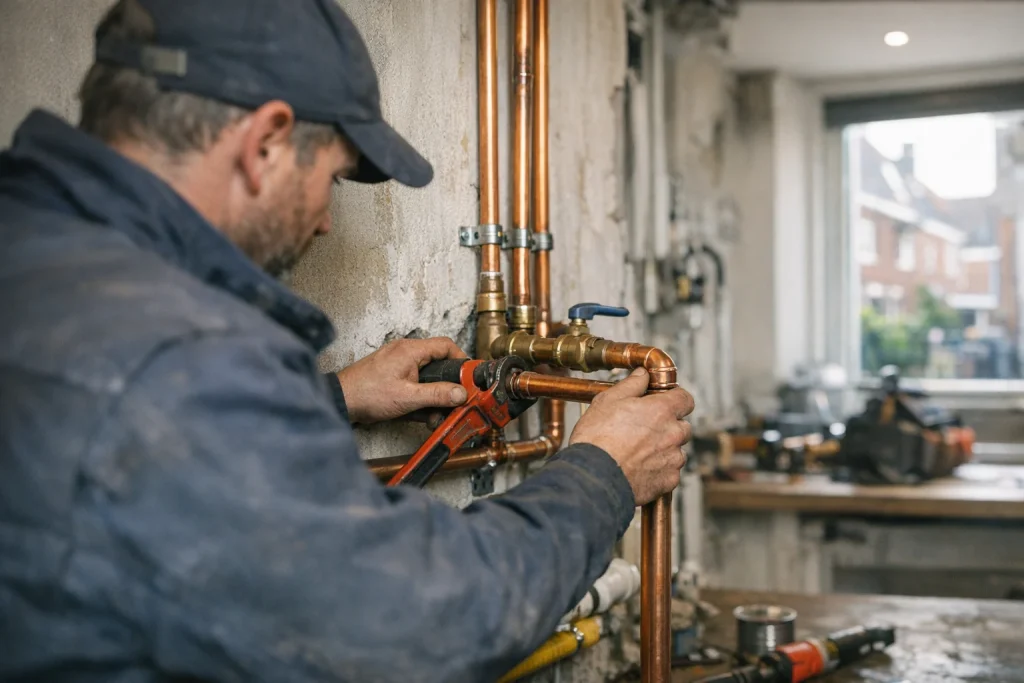
A foreign utility plumber arriving in Eindhoven typically meets with the employer or agency to finalize paperwork and housing. They receive an introduction to the worksite, including safety briefings and PPE distribution. Plumbing tasks may include installing copper or PVC pipes, soldering joints, or maintaining water supply systems in new residential buildings or utility networks. Workdays usually run from early morning to late afternoon with breaks. Communication is often in Dutch or English, and colleagues help new workers adapt to local procedures. After work, many plumbers cycle home or use public transit, benefiting from Eindhoven’s compact city layout.
| Aspect | Details |
|---|---|
| Work Permit | Not required for EU/EEA/Swiss; required for non-EU workers |
| Certifications | VCA mandatory; Dutch plumbing qualifications preferred |
| Language | Dutch or English recommended |
| Pay | Depends on experience, CAO, role, and contract; competitive in Eindhoven |
| Housing | Often arranged by employer or agency; private rooms common, especially with Haldu Groep |
| Working Hours | Typically full-time, regulated by CAO |
| Commuting | Bike or public transport preferred |
| Common Plumbing Projects in Eindhoven | Description |
|---|---|
| Utility Infrastructure | Installation and maintenance of water and gas supply networks |
| Residential Plumbing | New builds, renovations, and repairs in homes and apartments |
| Commercial Projects | Plumbing for offices, retail, and industrial buildings |
| Smart City Installations | Integration of sustainable and smart water systems |
| Typical PPE for Utility Plumbers in Eindhoven | Purpose |
|---|---|
| Safety Gloves | Protect hands from cuts and chemicals |
| Protective Eyewear | Shield eyes from debris and splashes |
| Work Boots | Provide foot protection and grip |
| Hearing Protection | Reduce noise exposure on busy sites |
| Helmet | Protect head from falling objects |
Frequently asked questions
Do I need a work permit to work as a utility plumber in Eindhoven?
What qualifications do I need to work as a plumber in Eindhoven?
Is VCA certification necessary for all plumbing jobs?
What language skills are needed for utility plumber jobs?
How much can I expect to earn as a utility plumber in Eindhoven?
Will my employer provide housing in Eindhoven?
What are typical working hours for plumbers in Eindhoven?
How do I find utility plumber jobs in Eindhoven?
What commuting options are available for plumbers in Eindhoven?
Are Dutch labor laws favorable for foreign plumbers?
Conclusion
Foreign workers interested in utility plumber jobs in Eindhoven should verify their qualifications, obtain VCA certification, and improve language skills before applying. Understanding Dutch labor laws and CAO agreements ensures fair pay and working conditions. Housing arrangements vary but are often provided or supported by employers or agencies, with Haldu Groep offering reliable support. Eindhoven offers diverse plumbing projects and excellent commuting options, making it an attractive city for skilled plumbers. Careful preparation and awareness of local requirements will help foreign plumbers succeed and integrate smoothly into the Dutch installation trades sector.
