
Direct answer
Housing construction plumber jobs in the Netherlands are accessible to foreign workers, with key differences depending on nationality. EU/EEA and Swiss citizens can work freely without permits, benefiting from freedom of movement and employment rights. Non-EU nationals must obtain a work and residence permit, typically sponsored by a Dutch employer. The Dutch housing construction sector has a consistent demand for skilled plumbers, especially in major cities like Amsterdam, Rotterdam, and Utrecht. Foreign plumbers need recognized qualifications and usually must complete VCA safety certification. Basic Dutch language skills are strongly advised for safety and communication. Salaries for plumbers in the Netherlands are generally higher than in many European countries, though housing costs near job sites can be significant and vary by region. Understanding Dutch labor laws, collective agreements, and safety standards is essential for success in this field. Always confirm salary and housing details with your employer or agency before accepting an offer.
Key points
- EU/EEA/Swiss plumbers can work without permits; non-EU plumbers require employer-sponsored permits.
- Strong demand for qualified plumbers in Dutch housing construction, especially in Amsterdam, Rotterdam, Utrecht, Eindhoven, and The Hague.
- Recognition of foreign plumbing diplomas or certificates is mandatory for legal employment.
- VCA safety certification is often required to access construction sites.
- Basic Dutch language skills improve safety and workplace communication.
- Plumber salaries in the Netherlands are generally higher than many European countries, but housing costs are also higher and vary by location.
- Collective labor agreements (CAOs) regulate wages, working hours, and employment conditions.
- Typical working hours range from 36 to 40 hours per week, with overtime possible.
- Personal protective equipment (PPE) such as helmets, gloves, and boots is mandatory on site.
- Apprenticeships and training programs help foreign plumbers meet Dutch standards.
- Registration with Dutch tax authorities and social security is required based on contract and residency.
- Housing arrangements depend on the placement or agency; with Haldu Groep, housing is typically well arranged, often including a private bedroom for the worker.
Field expertise
Since 1999, Haldu Groep has specialized in connecting skilled workers with Dutch construction employers, including plumbers in housing construction. The Dutch construction sector is well-organized, with clear labor agreements and strict safety standards. Foreign plumbers benefit from structured recognition processes for diplomas and certifications, as well as access to training programs to meet Dutch requirements. The sector’s demand for qualified plumbers remains stable due to ongoing housing projects and renovations. Understanding local regulations, safety certifications like VCA, and collective labor agreements such as CAO Bouw & Infra is key for foreign workers to integrate successfully. Housing provided through Haldu Groep is typically well arranged, often including private bedrooms, though arrangements can vary by placement.
What should you know about housing construction plumber jobs in the netherlands for foreign workers?
Foreign plumbers aiming to work in Dutch housing construction must navigate legal, professional, and practical requirements. EU/EEA and Swiss citizens enjoy unrestricted access to the labor market, while non-EU nationals face permit requirements. The demand for plumbers is steady, driven by new housing developments and renovation projects in major cities. Employers require recognized vocational qualifications and often insist on VCA safety certification. Basic Dutch language skills are important for safety and effective communication on site. Plumbers typically install and maintain water, drainage, and heating systems in residential buildings, using modern materials and techniques. Understanding the Dutch labor market, safety culture, and housing situation is crucial for a successful job search and employment. Housing availability and costs vary by region; workers should plan ahead and confirm housing arrangements with their employer or agency.
How does housing construction plumber jobs in the netherlands for foreign workers work in practice?
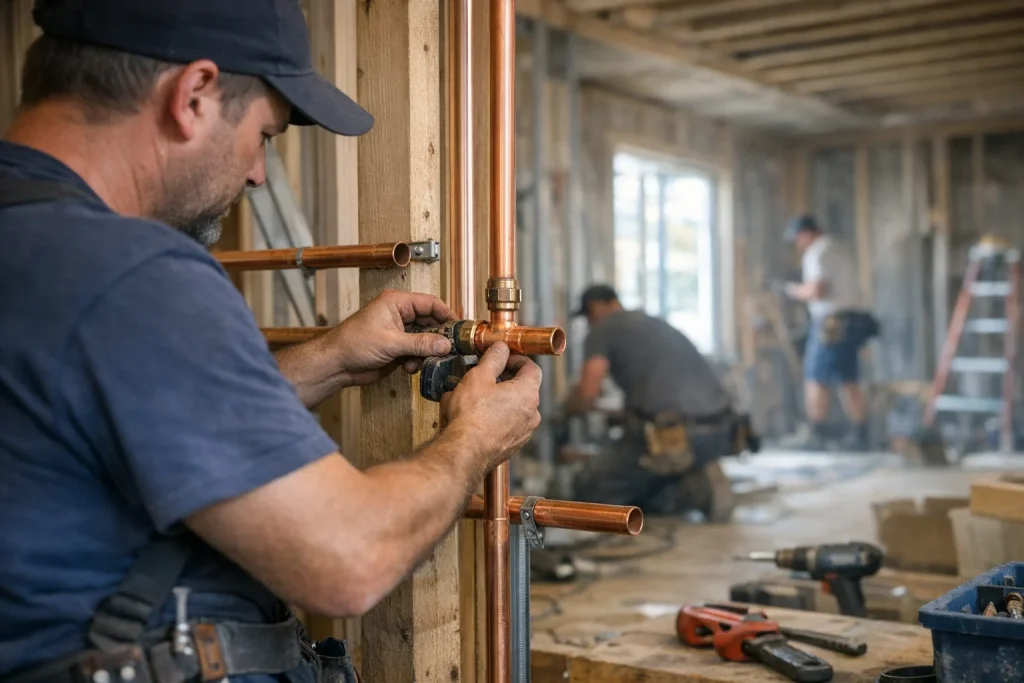
In practice, foreign plumbers usually start by securing a job offer from a Dutch employer or recruitment agency. Non-EU workers require their employer to apply for a work and residence permit through the Dutch Immigration and Naturalisation Service (IND). Upon arrival, plumbers must comply with Dutch labor laws, including working hours, safety regulations, and collective agreements. On construction sites, plumbers install piping systems using copper, PVC, and PEX materials, applying techniques like soldering, press fitting, and welding. Wearing personal protective equipment (PPE) such as helmets, gloves, and boots is mandatory. Many plumbers work under collective labor agreements (CAOs) that regulate wages and conditions. Foreign plumbers often complete VCA safety training and may attend Dutch language courses to improve communication and teamwork. Housing arrangements depend on the employer or agency; with Haldu Groep, housing is typically well arranged, often including a private bedroom.
Which conditions apply for housing construction plumber jobs in the netherlands for foreign workers?
Key conditions include valid work authorization, recognized qualifications, and adherence to Dutch labor laws. EU/EEA/Swiss plumbers do not need permits, but non-EU plumbers must obtain residence and work permits. The CAO Bouw & Infra typically governs wages, working hours (usually 36-40 hours/week), holiday allowances, and overtime rules. Safety standards require VCA certification and use of personal protective equipment. Employers may require health checks and proof of relevant experience. Housing near construction sites is arranged depending on the placement or agency; with Haldu Groep, housing is typically well arranged, often including a private bedroom for the worker. Taxes and social security contributions depend on residency status and contract type.
Which mistakes are common around housing construction plumber jobs in the netherlands for foreign workers?
Common mistakes include:
- Non-EU plumbers working without a valid permit, risking fines or deportation.
- Failing to have foreign qualifications recognized, leading to job rejection or illegal work.
- Ignoring the need for VCA safety certification, which can bar access to construction sites.
- Underestimating the importance of basic Dutch language skills for safety and teamwork.
- Not understanding collective labor agreements, resulting in accepting unfair wages or conditions.
- Overlooking the cost and availability of housing near job sites.
- Not using required personal protective equipment, risking injury and legal issues.
- Skipping registration with Dutch tax authorities and social security systems.
How do you proceed step by step?
- Check your nationality: EU/EEA/Swiss or non-EU.
- Verify your plumbing qualifications and start the recognition process if needed.
- Search for housing construction plumber jobs via agencies or direct employers.
- For non-EU workers, secure a job offer and apply for a work permit through the employer.
- Obtain VCA safety certification and basic Dutch language skills.
- Arrange housing near the job site, considering cost and commute; confirm if housing is provided or supported by your employer or agency.
- Sign an employment contract aligned with CAO regulations.
- Register with the Dutch tax office (Belastingdienst) and social security.
- Start work with proper PPE and follow safety rules.
- Consider further training or apprenticeships to improve skills and career prospects.
What should you check before you start?
- Validity and recognition of your plumbing diploma or certificate in the Netherlands.
- Work permit requirements based on your nationality.
- Whether the employer provides a contract compliant with CAO Bouw & Infra or other relevant agreements.
- VCA safety certification status and if you need to complete training.
- Basic Dutch language proficiency or availability of language support.
- Details about working hours, overtime, and salary (confirm with employer or agency).
- Availability and cost of housing near the construction site; check if housing is provided or supported.
- Registration with Dutch authorities for tax and social security.
- Required personal protective equipment and tools.
- Health and safety policies on the construction site.
What does this look like in practice?
A foreign plumber from Poland, for example, can move to the Netherlands without a work permit and start applying for housing construction jobs. After securing a job, they confirm their diploma is recognized by Dutch authorities or take supplementary courses. They complete VCA safety training and attend basic Dutch lessons. The plumber signs a contract under CAO Bouw & Infra, which guarantees fair wages and working conditions. They rent an apartment near Amsterdam, where housing costs are high, and commute to various construction sites. On site, they wear safety helmets, gloves, and boots, install copper and PEX piping, and communicate with Dutch colleagues in simple Dutch. Taxes and social security contributions are handled through payroll. Housing arrangements vary, but with Haldu Groep, housing is typically well arranged, often including a private bedroom.
Salary and working conditions comparison
| Country | Salary Range | Typical Working Hours/Week | Housing Cost Index (Relative) |
|---|---|---|---|
| Netherlands | Depends on experience, role, CAO, and region | 36 – 40 | High |
| Poland | Depends on experience and region | 40 | Low |
| Germany | Depends on experience and region | 38 – 40 | Medium |
| Spain | Depends on experience and region | 40 | Medium |
Work permit requirements by nationality
| Nationality | Work Permit Needed? | Residence Permit Needed? | Permit Sponsor |
|---|---|---|---|
| EU/EEA/Switzerland | No | No | Not applicable |
| Non-EU (e.g., Ukraine, India) | Yes | Yes | Employer |
Common plumbing qualifications and recognition routes
| Qualification Type | Recognition Process | Issuing Authority | Typical Duration |
|---|---|---|---|
| Vocational Plumbing Diploma (EU) | Diploma validation via Dutch Qualification Framework (NLQF) | DUO (Education Executive Agency) | 1-3 months |
| Non-EU Plumbing Certificate | Formal recognition and possible supplementary training | IND and relevant trade bodies | 3-6 months |
| VCA Safety Certification | Training and exam | VCA certified training centers | 1-2 weeks |
Frequently asked questions
Can EU/EEA/Swiss citizens work as plumbers in Dutch housing construction without a permit?
What are the work permit requirements for non-EU plumbers?
Which Dutch cities have the highest demand for housing construction plumbers?
What qualifications and certifications are required to work as a plumber in Dutch housing construction?
How much do plumbers in Dutch housing construction typically earn compared to other European countries?
Is knowledge of Dutch language mandatory for foreign plumbers?
What safety certifications like VCA are needed?
How can foreign plumbers validate their professional experience and diplomas?
What are the typical working conditions and hours?
Are there specific Dutch collective labor agreements (CAOs) for plumbers?
Conclusion
Foreign plumbers interested in housing construction jobs in the Netherlands should first determine their work permit requirements based on nationality. Recognizing qualifications, obtaining VCA certification, and learning basic Dutch improve job prospects and safety. The sector offers steady demand and competitive wages, particularly in major cities, but housing costs require careful planning and vary by location. Understanding Dutch labor laws, collective agreements, and safety standards ensures a smooth start. Early preparation, including paperwork, language skills, and housing arrangements, helps foreign plumbers integrate successfully and build a stable career in the Dutch construction industry. Housing arrangements depend on the placement or agency; with Haldu Groep, housing is typically well arranged, often including a private bedroom for the worker.
