
Direct answer
TIG welder jobs in Amsterdam are accessible to foreign workers, with EU/EEA/Swiss nationals allowed to work without permits, while non-EU welders must secure a Dutch work permit before employment. Amsterdam offers competitive wages for TIG welders, generally higher than in many European countries, but the city’s high living costs and tight housing market require careful planning. Employers expect recognized certifications such as EN ISO 9606-1 and VCA safety certificates. Dutch labor laws protect foreign welders’ rights, and although Dutch language skills are advantageous, many companies accept English-speaking welders. Common projects include infrastructure, shipbuilding, and industrial maintenance, with commuting mainly by bike or public transport due to city traffic and parking constraints.
Key points
- EU/EEA/Swiss TIG welders can work in Amsterdam without a permit; non-EU welders need a Dutch work permit.
- Amsterdam offers generally higher TIG welder pay than many European countries, balanced against high living costs.
- Recognized certifications like EN ISO 9606-1 and VCA safety certificates are often mandatory.
- Amsterdam’s housing market is competitive and expensive, impacting foreign workers’ accommodation options; with Haldu Groep, housing is typically well arranged, including a private bedroom.
- Typical working hours range from 36 to 40 hours per week, sometimes including shift work.
- Dutch language skills are helpful but not always required; English is commonly used on worksites.
- Common TIG welding projects include infrastructure, shipbuilding, and industrial maintenance.
- Dutch labor law and collective labor agreements (CAO) protect foreign welders’ rights and working conditions.
- Commuting is mainly by bike or public transport; traffic congestion and parking are challenging for welders with cars.
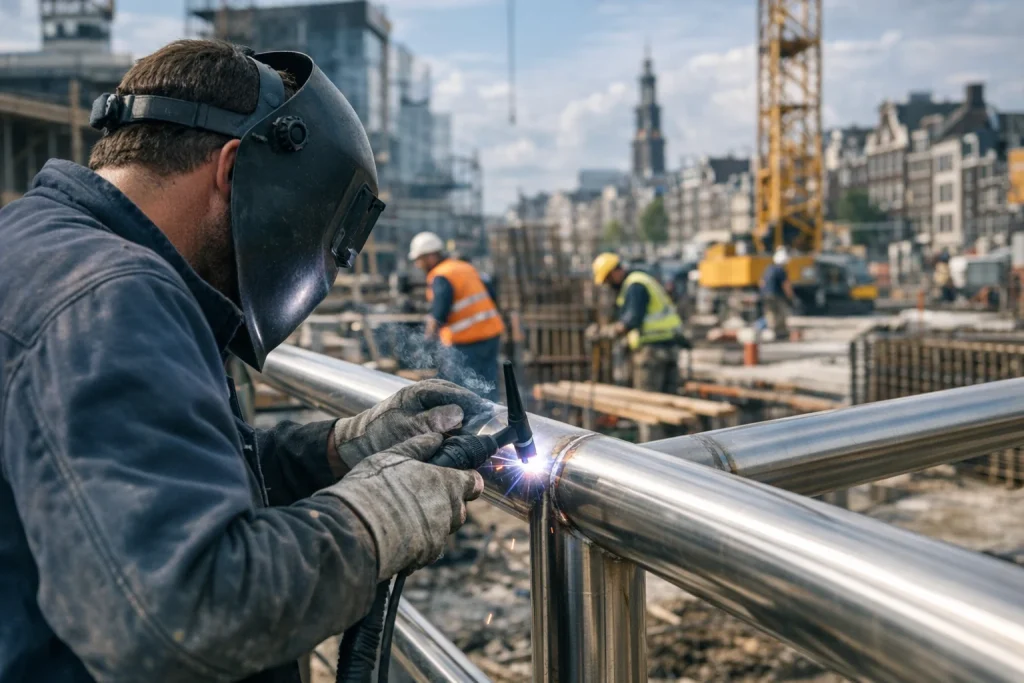
- Mandatory personal protective equipment (PPE) includes welding helmets, fire-resistant gloves, protective clothing, and safety boots.
- Non-EU welders must secure work permits before employment; starting without permits risks legal consequences.
- Employers often provide safety training and expect compliance with strict Dutch safety standards.
Field expertise
Since 1999, Haldu Groep has specialized in connecting skilled technical workers, including TIG welders, with employers across the Netherlands. Their expertise covers legal requirements for foreign welders, certification recognition, and the practical challenges of relocating to Amsterdam. Haldu Groep understands the demand for TIG welders in sectors such as shipbuilding, infrastructure, and industrial maintenance. They emphasize the importance of safety certifications like VCA and assist welders in navigating Dutch labor laws, housing markets, and commuting options. This reflects broader Dutch labor market trends where qualified welders with proper documentation and training are in demand.
What should you know about tig welder jobs in amsterdam: guide for foreign workers?
TIG welding jobs in Amsterdam require technical skill and compliance with Dutch regulations. EU/EEA/Swiss nationals can work without permits, while non-EU welders must obtain a Dutch work permit before employment. Employers prioritize welders with recognized certifications such as EN ISO 9606-1, which verifies welding competence according to European standards. VCA certification, focusing on safety, is also highly valued. Amsterdam’s construction and industrial sectors frequently hire TIG welders for projects involving stainless steel, aluminum, and carbon steel fabrication. The city’s high living costs and limited housing availability can affect foreign welders’ quality of life, so early accommodation planning is essential.
Quick take: Amsterdam’s TIG welding jobs demand certified skills and legal work status, with strong safety focus and competitive pay.
How does tig welder jobs in amsterdam: guide for foreign workers work in practice?
In practice, TIG welders in Amsterdam work on diverse projects such as infrastructure development, shipbuilding, and industrial maintenance. Employment contracts follow Dutch labor law and collective labor agreements (CAO), ensuring fair wages and working conditions. Work hours usually range from 36 to 40 hours per week, sometimes with shift patterns depending on project deadlines. Safety regulations require welders to use personal protective equipment (PPE) including welding helmets, gloves, and protective clothing. Many employers accept English-speaking welders, but learning basic Dutch improves communication and integration. Commuting is often by bike or public transport due to Amsterdam’s traffic and parking limitations.
Quick take: Work conditions in Amsterdam emphasize safety, fair contracts, and practical commuting options for TIG welders.
Which conditions apply for tig welder jobs in amsterdam: guide for foreign workers?
Conditions include legal eligibility to work, possession of recognized welding and safety certifications, and compliance with Dutch labor laws. EU/EEA/Swiss welders do not need work permits, while non-EU welders must apply for a Dutch work permit before employment. Employers require certifications like EN ISO 9606-1 for welding skills and VCA for safety awareness. Working hours are regulated by law and CAO agreements, generally 36 to 40 hours weekly. Dutch labor law mandates fair contracts, paid holidays, and workplace safety. Language requirements vary, but English is often sufficient. Welders must use mandatory PPE and follow strict safety protocols on construction and industrial sites.
Quick take: Legal work status, certifications, and safety compliance are key conditions for TIG welders in Amsterdam.
Which mistakes are common around tig welder jobs in amsterdam: guide for foreign workers?
Common mistakes foreign TIG welders make include:
- Starting work without the proper Dutch work permit if non-EU, risking legal issues and job loss.
- Underestimating the cost and difficulty of finding affordable housing in Amsterdam.
- Failing to obtain or renew recognized welding certifications like EN ISO 9606-1 or VCA, limiting job opportunities.
- Ignoring Dutch labor laws and collective agreements, which protect workers’ rights and benefits.
- Not preparing for language barriers; relying solely on English can hinder workplace communication.
- Neglecting mandatory safety equipment and protocols, risking accidents and penalties.
- Overlooking commuting challenges such as traffic congestion and limited parking.
Quick take: Legal, certification, housing, and safety oversights are common pitfalls for foreign TIG welders in Amsterdam.
How do you proceed step by step?
- Check your legal eligibility to work in the Netherlands: EU/EEA/Swiss nationals can start immediately; non-EU nationals must apply for a work permit.
- Obtain recognized welding certifications like EN ISO 9606-1 and VCA safety certification.
- Prepare a clear CV highlighting your TIG welding experience and certifications.
- Search for TIG welder jobs in Amsterdam through specialized job platforms, recruitment agencies, or companies like Haldu Groep.
- Apply for jobs and prepare for interviews, emphasizing your technical skills and safety awareness.
- Arrange accommodation early due to Amsterdam’s competitive housing market; with Haldu Groep, housing is typically well arranged, often including a private bedroom.
- Plan your commute using public transport or bike routes common in Amsterdam.
- Understand your employment contract and rights under Dutch labor law and CAO agreements before signing.
- Start work with proper PPE and follow all safety regulations.
- Consider learning basic Dutch to improve workplace communication and integration.
What should you check before you start?
Before starting a TIG welder job in Amsterdam, check:
- Your legal work status and, if needed, valid work permit or residence permit.
- Validity and recognition of your welding certifications (EN ISO 9606-1, VCA).
- Details of your employment contract, including working hours, pay, and benefits under Dutch labor law and CAO.
- Availability and cost of housing close to your workplace; with Haldu Groep, housing arrangements are often well supported.
- Required personal protective equipment (PPE) and safety rules at the worksite.
- Language requirements and communication policies at your employer.
- Commuting options and travel time to the job location.
- Opportunities for training or upskilling offered by the employer or local institutions.
What does this look like in practice?
In practice, a foreign TIG welder in Amsterdam will typically:
- Work 36 to 40 hours per week on projects such as shipbuilding, industrial maintenance, or infrastructure.
- Wear mandatory PPE including welding helmets, gloves, and protective clothing.
- Communicate primarily in English, with some Dutch used on site.
- Commute by bike or public transport to avoid traffic and parking difficulties.
- Receive pay that depends on experience, role, and applicable CAO agreements, generally competitive within Dutch construction sectors.
- Benefit from Dutch labor law protections such as paid holidays, sick leave, and safe working conditions.
- Participate in safety briefings and maintain VCA certification compliance.
- Face challenges in securing affordable housing but find support through employer networks or housing platforms; with Haldu Groep, housing is typically well arranged.
| Aspect | EU/EEA/Swiss Welders | Non-EU Welders |
|---|---|---|
| Work Permit | Not required | Required before starting work |
| Typical Pay | Depends on experience / CAO | Depends on experience / CAO |
| Required Certifications | EN ISO 9606-1, VCA | EN ISO 9606-1, VCA |
| Language Requirements | English often accepted; Dutch beneficial | English often accepted; Dutch beneficial |
| Housing Availability | Competitive, expensive; often well arranged with Haldu Groep | Competitive, expensive; often well arranged with Haldu Groep |
| City | Typical Pay | Cost of Living Index (Amsterdam=100) | Typical Commute |
|---|---|---|---|
| Amsterdam | Depends on experience / CAO | 100 | Bike/Public Transport (30-45 min) |
| Rotterdam | Depends on experience / CAO | 85 | Public Transport/Car (30-40 min) |
| Eindhoven | Depends on experience / CAO | 75 | Car/Public Transport (20-35 min) |
| Certification | Description | Validity | Required for |
|---|---|---|---|
| EN ISO 9606-1 | European standard for welder qualification, proving TIG welding competence | Typically 2-3 years, depending on employer | Most TIG welding jobs in Amsterdam |
| VCA (Safety) | Certification for safety awareness and compliance on industrial sites | Valid for 10 years, with refresher courses recommended | Required by many employers for site access |
Frequently asked questions
Do EU/EEA welders need a work permit to work in Amsterdam?
What certifications do I need to work as a TIG welder in Amsterdam?
How much can I expect to earn as a TIG welder in Amsterdam?
Is Dutch language proficiency mandatory for TIG welding jobs?
What are the typical working hours for TIG welders in Amsterdam?
How difficult is it to find housing in Amsterdam as a foreign worker?
What personal protective equipment is required for TIG welders?
Are there specific safety regulations for welders in Amsterdam?
How can I find TIG welder jobs in Amsterdam?
What are common projects for TIG welders in Amsterdam?
Conclusion
Foreign TIG welders aiming to work in Amsterdam should confirm their legal work status and secure recognized welding and safety certifications before applying. While Dutch language skills improve integration, many employers accept English speakers. The city’s high living costs and competitive housing market require early planning. Understanding Dutch labor laws and collective agreements ensures fair treatment and benefits. Planning your commute and PPE needs is essential for a smooth start. With proper preparation, Amsterdam offers rewarding TIG welding opportunities across diverse industrial sectors.
