Direct answer
MIG/MAG welder jobs in Nijmegen are accessible to foreign workers, with EU/EEA/Swiss nationals able to work without a permit, while non-EU nationals must obtain a valid Dutch work permit before starting. Pay varies by experience, contract type, and applicable collective labor agreements (CAOs), often offering competitive wages compared to many European countries. Employers or agencies frequently arrange housing, typically providing private bedrooms and shared facilities. Basic Dutch or English language skills are important for safety and communication on site. Welding work in Nijmegen spans construction, infrastructure, and industrial maintenance projects, with good local transport for commuting. Safety certifications like VCA are usually required, and Dutch labor laws protect foreign welders’ rights throughout their employment.
Key points
- EU/EEA/Swiss welders do not require a work permit; non-EU welders must obtain one before starting work.
- Pay depends on experience, CAO agreements (Metalektro or Bouw & Infra), contract type, and employer.
- VCA safety certification is often mandatory for welding jobs on Dutch construction sites.
- Housing is frequently arranged by employers or agencies, often including private bedrooms.
- Basic Dutch or English language skills improve communication and safety on site.
- Nijmegen offers diverse welding projects in construction, infrastructure, and industrial sectors.
- Commuting options include public transport, cycling, and driving within Nijmegen and surrounding areas.
- Dutch labor laws require written contracts and protect workers’ rights, including foreign welders.
- Training and upskilling opportunities are available locally to improve welding skills and certifications.
- Non-EU welders face additional paperwork and permit requirements compared to EU/EEA/Swiss citizens.
- Typical contracts range from temporary to permanent, with standard Dutch working hours.
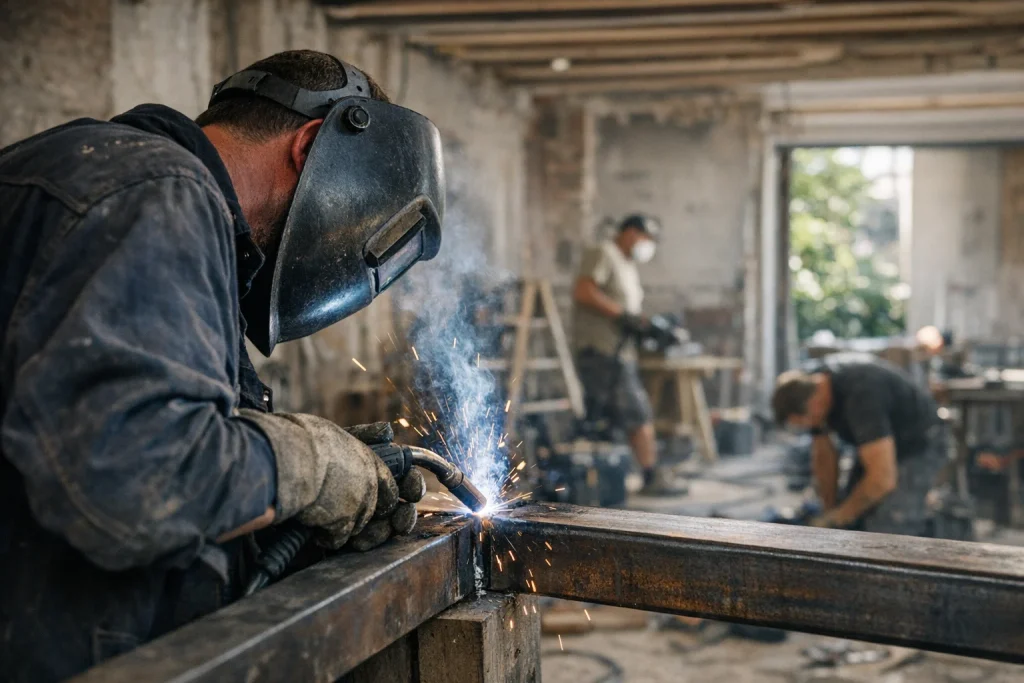
- Mandatory safety gear includes welding helmets, gloves, boots, and protective clothing.
Field expertise
Since 1999, Haldu Groep has specialized in connecting skilled welders, including MIG/MAG welders, with Dutch employers in cities such as Nijmegen. The company understands Dutch labor laws, CAO agreements, and safety standards, ensuring foreign welders receive proper contracts, fair pay, and housing support. MIG/MAG welding is widely used in Dutch construction and industrial maintenance, requiring certified welders familiar with Dutch safety regulations and work culture. Agencies like Haldu Groep assist foreign welders with permits, language skills, and relocation logistics, helping them integrate into Nijmegen’s job market and community.
What should you know about mig/mag welder jobs in nijmegen: guide for foreign workers?
MIG/MAG welding jobs in Nijmegen are primarily found in construction, infrastructure, and industrial maintenance sectors. Foreign welders must understand the Dutch work permit system: EU/EEA/Swiss citizens can start working immediately, while non-EU welders need a valid permit. Pay is influenced by collective labor agreements (CAOs), experience, and contract type. Safety is a priority; VCA certification is often required, and personal protective equipment (PPE) must be worn on site. Housing varies by employer or agency, with many foreign welders living in well-arranged accommodations that often include private bedrooms. Basic Dutch or English language skills improve communication and safety. Nijmegen’s good transport links make commuting manageable for welders living nearby.
How does mig/mag welder jobs in nijmegen: guide for foreign workers work in practice?
In practice, foreign MIG/MAG welders in Nijmegen start by securing a job offer through recruitment agencies like Haldu Groep or direct employers. EU/EEA/Swiss welders can begin work quickly, while non-EU welders must complete permit procedures first. Once employed, welders receive contracts aligned with Dutch labor laws and CAO agreements, which regulate pay, working hours, and conditions. Welders typically work on-site in construction or industrial settings, operating MIG/MAG welding machines and wearing mandatory PPE. Housing is often arranged by the employer or agency, with private bedrooms and shared facilities common. Communication on site is usually in Dutch or English, so basic language skills are essential. Commuting by bike, public transport, or car is common.
Which conditions apply for mig/mag welder jobs in nijmegen: guide for foreign workers?
Conditions for MIG/MAG welders in Nijmegen include:
- Work permits: Required for non-EU welders; EU/EEA/Swiss welders have free work rights.
- Pay: Based on CAO Metalektro or CAO Bouw & Infra, experience, and contract type.
- Working hours: Usually 36-40 hours per week, with possible overtime.
- Safety: VCA certification often mandatory; PPE such as welding helmets, gloves, boots required.
- Contracts: Temporary or permanent contracts common, must be in writing.
- Housing: Often provided or arranged by employer/agency, with private bedrooms.
- Language: Basic Dutch or English recommended for safety and communication.
Which mistakes are common around mig/mag welder jobs in nijmegen: guide for foreign workers?
Common mistakes foreign welders make include:
- Starting work without the proper work permit if non-EU, risking fines or job loss.
- Accepting verbal job offers without a written contract detailing pay and conditions.
- Underestimating the importance of VCA certification and safety training.
- Ignoring language skills, leading to communication problems and safety risks on site.
- Failing to clarify housing arrangements before arrival, causing accommodation issues.
- Not understanding Dutch labor laws and CAO agreements affecting pay and rights.
- Neglecting to register with local authorities (municipality) after moving to Nijmegen.
- Overlooking commuting options, resulting in long or costly travel times.
How do you proceed step by step?
- Check eligibility: Determine if you need a work permit based on nationality.
- Prepare CV and certificates: Include MIG/MAG welding certificates and VCA if available.
- Search for jobs: Use agencies like Haldu Groep, online job boards, or direct employer contacts.
- Apply and interview: Communicate your skills and ask about contracts, pay, and housing.
- Obtain work permit: For non-EU welders, apply through the Dutch immigration service.
- Sign contract: Ensure terms are clear and written, including pay, hours, and housing.
- Arrange travel and housing: Confirm accommodation details and plan your move to Nijmegen.
- Register locally: Upon arrival, register with Nijmegen municipality for legal residence.
- Start work: Attend safety briefings, use PPE, and follow site rules.
- Consider upskilling: Explore local training or certifications to improve career prospects.
What should you check before you start?
Before starting as a MIG/MAG welder in Nijmegen, check:
- Work permit status: Confirm if you have the correct permit or exemption.
- Contract details: Pay rate, working hours, overtime rules, and duration.
- VCA certification: Verify if required and valid.
- Housing arrangements: Location, cost, and facilities.
- Safety equipment: Availability of welding helmet, gloves, boots, and protective clothing.
- Language requirements: Clarify if basic Dutch or English is needed on site.
- Commuting options: Distance to work, transport modes, and costs.
- Insurance and benefits: Health insurance, social security, and holiday entitlements.
What does this look like in practice?
In practice, a foreign MIG/MAG welder arriving in Nijmegen might start by contacting an agency like Haldu Groep, which offers job placement and housing support. After submitting a CV with welding certificates and VCA proof, the welder receives a job offer with a written contract. If non-EU, the welder applies for a work permit before arrival. Upon arrival, the welder registers with Nijmegen municipality and moves into agency-arranged housing with a private bedroom. Daily work involves welding steel or aluminum on construction sites or industrial plants, wearing mandatory PPE and following safety protocols. The welder commutes by bike or public transport, communicates in English or basic Dutch, and may attend further training to improve skills.
| Aspect | EU/EEA/Swiss Welders | Non-EU Welders |
|---|---|---|
| Work permit | Not required | Required before starting work |
| Typical contract | Temporary or permanent | Temporary or permanent, permit-dependent |
| Housing | Often agency-arranged | Often agency-arranged |
| Language | Basic Dutch or English recommended | Basic Dutch or English recommended |
| Safety certification | VCA often required | VCA often required |
| Pay | Depends on experience / CAO | Depends on experience / CAO |
| Common Welding Projects in Nijmegen | Description |
|---|---|
| Construction | Steel frameworks, metal structures, and building components. |
| Infrastructure | Bridges, tunnels, pipelines, and public works requiring welding. |
| Industrial Maintenance | Repair and upkeep of machinery, factory equipment, and metal parts. |
| Metal Fabrication | Custom metal parts and assemblies for various industries. |
| Typical Working Conditions | Details |
|---|---|
| Working hours | 36-40 hours per week, with possible overtime |
| Shift patterns | Day shifts common; some projects may require early starts or weekend work |
| Safety gear | Welding helmet, gloves, boots, protective clothing mandatory |
| Work environment | Outdoor and indoor sites; exposure to noise, heat, and welding fumes |
| Commute | Public transport, cycling, or driving within Nijmegen area |
Frequently asked questions
Do I need a work permit to work as a MIG/MAG welder in Nijmegen?
What certifications are required for MIG/MAG welders in Nijmegen?
How much can I expect to earn as a MIG/MAG welder in Nijmegen?
Is housing provided for foreign welders in Nijmegen?
What language skills do I need to work as a welder in Nijmegen?
What kind of projects do MIG/MAG welders work on in Nijmegen?
How do I find MIG/MAG welder jobs in Nijmegen?
What safety equipment must I use as a welder in Nijmegen?
Can I commute easily to welding jobs in Nijmegen?
Are there training opportunities to improve my welding skills in Nijmegen?
Conclusion
Foreign MIG/MAG welders seeking jobs in Nijmegen should first confirm their work permit status, prepare relevant certifications like VCA, and secure a written contract aligned with Dutch CAO agreements. Housing is often arranged by agencies such as Haldu Groep, easing the relocation process. Basic Dutch or English skills improve workplace communication and safety. Welders will find diverse projects in construction and industry, supported by good local transport and labor protections. Careful preparation and understanding of local rules will help foreign welders succeed and build a stable career in Nijmegen. Related Haldupedia titles include “MIG/MAG Welder Jobs in the Netherlands: A Complete Guide,” “How to Get VCA Certified for Construction Jobs in the Netherlands,” and “Housing for Foreign Workers in Dutch Cities: Nijmegen Focus.”