
Direct answer
Car mechanic jobs in Utrecht are accessible to foreign workers, with EU/EEA/Swiss nationals able to work without a permit, while non-EU citizens must obtain a valid work permit before employment. Employers usually require relevant automotive qualifications, such as MBO-level diplomas, and VCA safety certification. Pay depends on experience, role, applicable CAO agreements, and contract type. Housing is often arranged by agencies like Haldu Groep, typically offering private bedrooms in shared accommodations. Utrecht’s compact city layout and excellent bike and public transport infrastructure make commuting easy, creating a practical environment for foreign car mechanics seeking work in the Dutch automotive sector.
Key points
- EU/EEA/Swiss nationals can work in Utrecht without a permit; non-EU nationals require a valid work permit.
- Relevant automotive qualifications (MBO level 2 or 3) and VCA safety certification are commonly required.
- Pay depends on experience, CAO agreements (Metalektro or Automotive), and contract type.
- Employment agencies often arrange housing, usually with private bedrooms and shared facilities.
- Dutch language skills improve communication and career opportunities.
- Safety standards and VCA certification are essential for workshop jobs.
- Typical working hours are around 40 hours per week, with both temporary and permanent contracts available.
- Recognition of foreign diplomas may require validation or additional training.
- Utrecht’s bike-friendly infrastructure and public transport make commuting convenient.
- Haldu Groep has supported foreign automotive workers in Utrecht since 1999.
- Common challenges include language barriers, diploma recognition, and adapting to Dutch work culture.
- Preparing a Dutch-style CV tailored to the local market increases job chances.
Field expertise
Since 1999, Haldu Groep has specialized in placing foreign workers in technical and automotive roles throughout the Netherlands, including Utrecht. The company understands the local labor market, collective labor agreements (CAOs), and legal requirements for foreign car mechanics. Automotive jobs in Utrecht require skills in vehicle diagnostics, maintenance, and repair, often under Dutch safety standards such as VCA certification. The city’s automotive sector covers passenger cars and commercial vehicles, with employers valuing practical experience and certifications. Haldu Groep also assists with housing and integration, recognizing the challenges foreign workers face adapting to Dutch labor laws and workplace culture.
What should you know about car mechanic jobs in Utrecht: guide for foreign workers?
Car mechanic jobs in Utrecht require a combination of technical expertise, legal work eligibility, and certifications. EU/EEA/Swiss nationals can work without a permit, but non-EU nationals must secure a work permit before starting. Employers typically expect MBO-level automotive education or equivalent vocational training. VCA certification is often mandatory to ensure compliance with Dutch safety standards in workshops. Pay is regulated by collective labor agreements (CAOs) such as Metalektro or Automotive, which influence wages and working conditions. Utrecht’s compact urban environment supports easy commuting by bike or public transport. Housing is usually arranged by agencies or employers to ensure comfort and privacy for foreign workers.
How does car mechanic jobs in Utrecht: guide for foreign workers work in practice?
Foreign car mechanics generally find jobs through specialized agencies, online job portals, or direct applications to garages and dealerships in Utrecht. The hiring process involves verifying qualifications, possibly validating foreign diplomas, and confirming legal work eligibility. After hiring, workers often receive on-the-job training and may need to obtain or renew VCA certification. Working hours are typically full-time, around 40 hours per week, with contracts ranging from temporary to permanent. Pay depends on experience, role, and CAO terms. Housing is often arranged by the employer or agency, commonly offering private rooms. Daily commuting is convenient due to Utrecht’s bike-friendly infrastructure and public transport network.
Which conditions apply for car mechanic jobs in Utrecht: guide for foreign workers?
Conditions include legal eligibility to work, possession of relevant qualifications, and adherence to safety standards. EU/EEA/Swiss nationals do not require a work permit; non-EU workers must obtain one before starting. Employers require proof of automotive training, such as MBO level 2 or 3 diplomas, and often VCA certification. Employment contracts specify working hours, pay according to CAO agreements, and job responsibilities. Safety equipment like gloves and eyewear is mandatory. Workers must comply with Dutch labor laws, including regulations on working hours, breaks, and holiday entitlements.
Which mistakes are common around car mechanic jobs in Utrecht: guide for foreign workers?
Common mistakes include applying without verifying legal work status, underestimating the importance of Dutch language skills, and lacking required certifications such as VCA. Some foreign workers assume their diplomas are automatically recognized, causing delays or rejection. Others accept job offers without a written contract or clear pay terms, risking unfair conditions. Not preparing a CV tailored to the Dutch market reduces chances of selection. Additionally, failing to plan housing early or ignoring commuting options can cause practical difficulties after starting work.
How do you proceed step by step?
- Check your legal work eligibility: EU/EEA/Swiss workers do not need a permit; non-EU workers must apply for one.
- Gather and translate your automotive qualifications and certifications.
- Obtain or renew VCA certification if required.
- Prepare a clear CV in Dutch or English, emphasizing relevant skills and experience.
- Search for jobs via agencies like Haldu Groep, online job portals, or direct applications.
- Verify job offer details, including pay, contract type, and working hours.
- Arrange housing early, either through the employer, agency, or independently.
- Plan your commute using Utrecht’s bike paths or public transport.
- Start work, comply with safety rules, and consider learning Dutch for better integration.
- Seek diploma recognition or additional training if needed for career growth.
What should you check before you start?
- Confirm your legal right to work and have all necessary permits.
- Ensure your qualifications and certifications meet employer requirements.
- Review the employment contract carefully, including pay, hours, and benefits.
- Check if VCA certification or other safety training is mandatory.
- Understand commuting options and housing arrangements.
- Clarify workplace language expectations and communication methods.
- Know your rights under Dutch labor law and applicable CAO agreements.
- Prepare for cultural differences in work behavior and expectations.
What does this look like in practice?
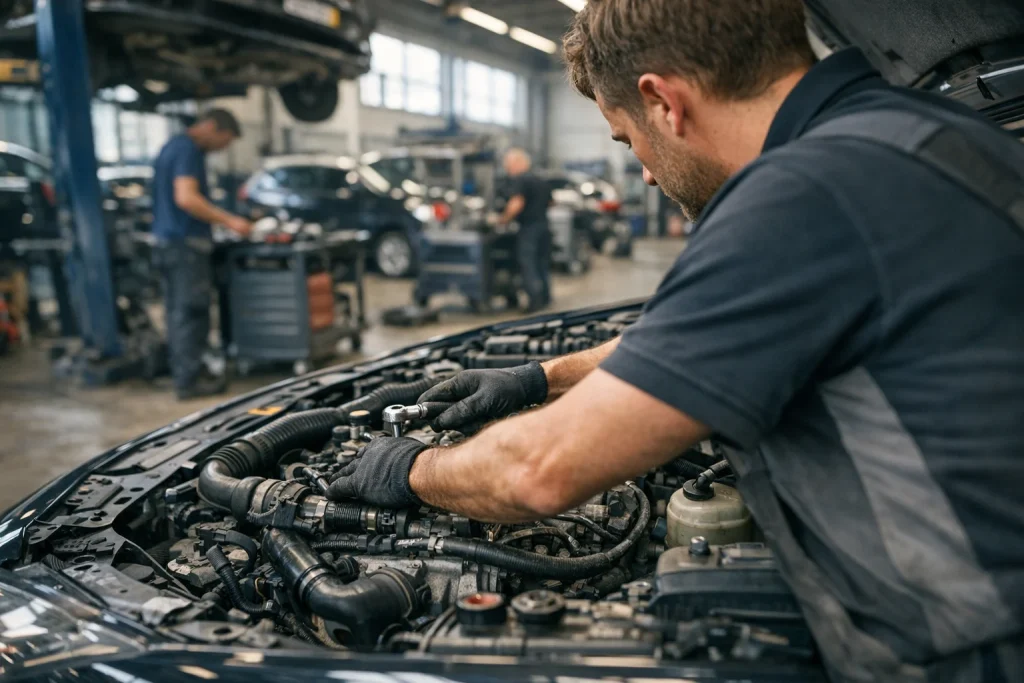
A foreign car mechanic arriving in Utrecht typically confirms work eligibility and secures a job through an agency or employer. Upon hiring, they receive a contract detailing pay and hours based on CAO agreements. Housing is often arranged by the agency, providing a private bedroom in shared accommodation. Daily travel to work is usually by bike or public transport, with Utrecht’s compact layout making commutes manageable. On the job, mechanics use diagnostic tools, perform repairs, and follow strict safety protocols, including wearing protective gear. Dutch language skills help with team communication and customer interaction, and many workers pursue further training or diploma validation to advance their careers.
| Aspect | EU/EEA/Swiss Workers | Non-EU Workers |
|---|---|---|
| Work Permit | Not required | Required before starting work |
| Qualification Recognition | Usually easier, but validation may be needed | Mandatory validation or additional training |
| VCA Certification | Often required | Often required |
| Housing | Agency or self-arranged; with Haldu Groep, housing is typically well arranged with private bedrooms | Agency often arranges housing, typically well organized with private bedrooms |
| Language | Dutch recommended | Dutch strongly recommended |
| Pay Factor | Influence |
|---|---|
| Experience | Higher experience generally leads to higher pay |
| CAO Agreement | Metalektro or Automotive CAO set minimum wages and working conditions |
| Contract Type | Permanent contracts often offer better pay and benefits than temporary |
| Role | Diagnostic technicians may earn more than general mechanics |
| Housing Option | Details |
|---|---|
| Agency-arranged | Private bedroom, shared facilities, usually close to work; quality depends on agency |
| Independent rental | Often more expensive and requires a Dutch rental contract |
| Shared housing | Lower cost, requires good communication skills and planning |
Frequently asked questions
Do I need a work permit to work as a car mechanic in Utrecht?
What qualifications are required for car mechanic jobs in Utrecht?
Is VCA certification mandatory for automotive jobs?
How much can I expect to earn as a car mechanic in Utrecht?
Can I use my foreign car mechanic diploma in Utrecht?
What language skills are needed for car mechanic jobs?
How do I find car mechanic jobs in Utrecht?
What are typical working hours for car mechanics in Utrecht?
Is housing provided for foreign workers in Utrecht?
How do I commute to work in Utrecht?
Conclusion
Foreign car mechanics aiming to work in Utrecht should first confirm their legal work status and prepare relevant qualifications, including VCA certification. Using agencies such as Haldu Groep can ease job search and housing arrangements. Learning Dutch and understanding CAO agreements enhance workplace integration and pay potential. Utrecht’s compact size and excellent transport options make commuting straightforward. Prepare a clear, Dutch-style CV, verify contract details carefully, and plan housing early. With proper preparation, foreign workers can build a rewarding automotive career in Utrecht’s dynamic market.
