
Direct answer
Car mechanic jobs in The Hague are accessible to foreign workers, with EU/EEA/Swiss citizens able to work without permits, while non-EU nationals must obtain a valid work permit before starting employment. Basic Dutch language skills are highly recommended, although some employers accept English-speaking mechanics. Pay varies depending on experience, role, collective labor agreements (CAO), and contract type, so it is important to confirm details in the written offer. Housing arrangements depend on the placement or agency; with Haldu Groep, housing is typically well arranged and includes a private bedroom for the worker. The Hague’s compact urban layout allows easy commuting by bike or public transport. Certifications such as VCA are commonly required for safety compliance. Dutch labor laws protect foreign workers, making The Hague a practical and attractive city for automotive professionals seeking car mechanic jobs.
Key points
- EU/EEA/Swiss citizens do not require work permits; non-EU citizens must secure one before starting.
- Basic Dutch language skills improve job prospects; some workshops accept English speakers.
- Pay depends on experience, role, CAO agreements, and contract type; always confirm pay details in writing.
- Common roles include diagnostic technician, maintenance mechanic, and repair specialist.
- VCA certification is often mandatory or preferred for workplace safety compliance.
- Housing may be provided by employers or agencies; Haldu Groep typically arranges private rooms.
- Standard Dutch working hours apply, with occasional overtime.
- Dutch labor laws ensure fair treatment and worker rights.
- The Hague’s compact size favors commuting by bike or public transport.
- Career growth is possible through additional training and certifications.
- Work permits for non-EU citizens require employer sponsorship and government approval.
- Understanding Dutch labor contracts and CAO agreements is essential.
Field expertise
Since 1999, Haldu Groep has specialized in placing foreign workers in technical and automotive roles throughout the Netherlands, including The Hague. The company understands local labor laws, certification requirements, and housing arrangements, helping foreign car mechanics integrate smoothly. The Hague’s automotive sector includes workshops focused on diagnostics, engine repair, and routine maintenance. Employers often require certifications such as VCA for safety and BOVAG for quality assurance. Collective labor agreements like CAO Metalektro or CAO Automotive Industry regulate pay and working conditions. The city’s compact size supports easy commuting, and knowledge of Dutch labor law and worker rights is essential for foreign mechanics to ensure fair treatment and career development.
What should you know about car mechanic jobs in The Hague: guide for foreign workers?
Foreign workers interested in car mechanic jobs in The Hague should understand several key factors. EU/EEA/Swiss citizens can work without permits, but non-EU citizens must secure valid work permits before employment. Dutch language skills are important for effective communication with colleagues and customers, though some employers accept English speakers. Job roles vary widely, including diagnostic technicians, brake specialists, and engine tuners, each requiring specific skills and certifications. Pay depends on experience, role, and CAO agreements, so it is important to confirm pay details in writing. Housing is often arranged by employers or agencies, with Haldu Groep known for providing private rooms. The city’s excellent transport infrastructure supports easy commuting by bike or public transit. Safety certifications like VCA are frequently mandatory for compliance with Dutch health and safety regulations.
How does car mechanic jobs in The Hague: guide for foreign workers work in practice?
In practice, foreign car mechanics in The Hague typically apply through recruitment agencies or directly to employers. EU/EEA/Swiss workers can start immediately after hiring, while non-EU workers must first secure work permits. Employment contracts usually follow CAO Metalektro or Automotive Industry agreements, which detail pay, working hours, and benefits. Many employers require or prefer VCA certification to comply with health and safety standards. Housing arrangements vary; some employers provide accommodation or collaborate with agencies like Haldu Groep, which typically arranges well-organized housing including private bedrooms. Work schedules generally follow daytime hours with occasional overtime. Dutch is the common workplace language, but English-speaking workshops exist. Commuting is mostly by bike or public transport due to The Hague’s compact size and excellent infrastructure.
Which conditions apply for car mechanic jobs in The Hague: guide for foreign workers?
Conditions for car mechanic jobs in The Hague include legal authorization to work, language proficiency, certification, and compliance with labor laws. EU/EEA/Swiss citizens do not need work permits; non-EU citizens must have valid permits. Proficiency in Dutch or English is necessary to understand instructions and safety rules. VCA certification is often mandatory for health and safety compliance. Employment contracts adhere to Dutch labor law and CAO agreements, specifying pay, working hours, and benefits. Employers provide personal protective equipment (PPE) such as gloves, eyewear, and boots. Housing conditions vary, but agencies like Haldu Groep ensure decent accommodation with private rooms. Workers have rights to fair pay, safe working conditions, and social security benefits.
Which mistakes are common around car mechanic jobs in The Hague: guide for foreign workers?
Common mistakes include starting work without a valid permit (for non-EU citizens), underestimating the importance of Dutch language skills, and accepting verbal job offers without written contracts. Some workers overlook the need for VCA certification or fail to verify pay details according to CAO agreements. Misunderstanding housing arrangements can cause problems if accommodation details are not confirmed. Ignoring Dutch labor laws and worker rights risks unfair treatment. Neglecting to plan commute options may affect punctuality. Finally, not pursuing career development or additional certifications limits long-term job prospects.
How do you proceed step by step?
- Check your eligibility: EU/EEA/Swiss citizens do not need work permits; non-EU citizens must apply.
- Prepare a CV highlighting relevant automotive experience and certifications.
- Learn basic Dutch or improve language skills; English may suffice in some workshops.
- Obtain or verify recognized certifications such as VCA or BOVAG.
- Search for jobs via recruitment agencies like Haldu Groep or online job portals.
- Confirm job offers in writing, including pay, contract type, and working hours.
- Arrange housing through the employer, agency, or independently; with Haldu Groep, housing is typically well arranged and includes private rooms.
- Understand your labor rights under Dutch law and CAO agreements.
- Plan your commute using bike or public transport options in The Hague.
- Start work and consider further training for career growth.
What should you check before you start?
- Verify your work permit status if you are a non-EU citizen.
- Confirm job contract details: pay, hours, role, and duration.
- Check if VCA or other certifications are required or recognized.
- Understand your rights under Dutch labor law and applicable CAO.
- Clarify housing arrangements and living conditions; with agencies like Haldu Groep, housing is usually well organized.
- Assess your Dutch language proficiency and communication needs.
- Ensure you have appropriate personal protective equipment (PPE).
- Plan your daily commute and transport options.
- Review health and safety protocols at the workplace.
- Discuss career development or training opportunities with your employer.
What does this look like in practice?
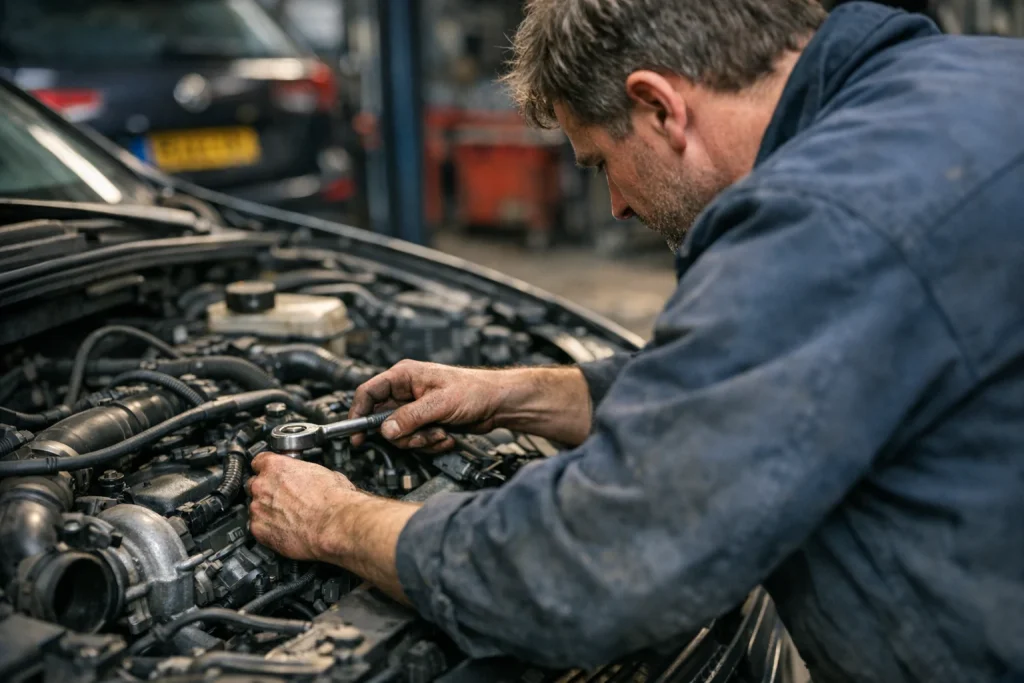
In practice, a foreign car mechanic in The Hague starts by contacting a recruitment agency or applying directly to a workshop. After confirming eligibility and securing a contract, the mechanic attends an orientation covering safety rules, often requiring VCA certification. Housing is arranged by the employer or agency, typically providing a private bedroom in shared accommodation. Daily work involves diagnostics, repairs, or maintenance using tools like diagnostic scanners and wrench sets. Communication is mostly in Dutch, but English is sometimes used. The mechanic commutes by bike or tram, benefiting from The Hague’s compact size. Pay is received monthly, following CAO standards. Over time, mechanics may pursue further training to specialize or advance.
Frequently asked questions
Do I need a work permit to work as a car mechanic in The Hague?
What language skills are required for car mechanic jobs in The Hague?
Is VCA certification mandatory for car mechanics in The Hague?
How much can I expect to earn as a car mechanic in The Hague?
Are there different types of car mechanic jobs available?
Does my employer provide housing?
What are typical working hours for car mechanics in The Hague?
How do I find car mechanic jobs in The Hague?
Can non-EU workers get work permits for these jobs?
What are the main challenges foreign car mechanics face?
Conclusion
Foreign workers aiming for car mechanic jobs in The Hague should prepare by understanding legal requirements, improving Dutch language skills, and obtaining certifications like VCA. Confirm employment contracts carefully and clarify housing arrangements early; with agencies such as Haldu Groep, housing is typically well arranged and includes private rooms. The city’s compact size supports easy commuting by bike or public transport. Knowing Dutch labor laws and worker rights helps ensure fair treatment. With proper preparation, foreign car mechanics can find rewarding jobs and career growth opportunities in The Hague.
