Direct answer
Car mechanic jobs in Groningen are accessible to foreign workers, with eligibility depending on nationality and qualifications. Citizens from the EU/EEA and Switzerland can work without a permit, while non-EU nationals must obtain a valid Dutch work permit. Employers typically require recognized automotive qualifications, such as a Dutch MBO diploma or validated foreign equivalent, along with safety certifications like VCA. Basic Dutch language skills improve job prospects, though some employers accept English speakers. Pay depends on factors such as experience, employer, applicable collective labor agreements (CAOs), and contract type; it is advisable to confirm details in the written offer. Housing arrangements vary by placement and agency; with Haldu Groep, housing is typically well arranged and includes a private bedroom for the worker. Groningen’s compact city layout and excellent public transport and cycling infrastructure make commuting practical and convenient. Validating foreign diplomas and understanding Dutch labor law are essential steps for a successful career as a car mechanic in Groningen.
Key points
- EU/EEA/Swiss citizens do not require a work permit; non-EU citizens must obtain one.
- Recognized qualifications such as Dutch MBO Automotive Technology or validated foreign diplomas are necessary.
- VCA safety certification is often mandatory for employment.
- Basic Dutch language skills are recommended; English may be accepted in some workplaces.
- Pay depends on experience, employer, applicable CAO agreements, and contract; always confirm the offer.
- Housing is frequently arranged by agencies, typically with private bedrooms; arrangements depend on the agency and placement.
- Groningen offers excellent public transport and cycling options for commuting.
- Employment contracts follow Dutch labor law and CAOs like Metalektro or Automotive Industry.
- Common employers include independent garages, brand dealerships, and fleet service companies.
- Career advancement opportunities exist in diagnostics, maintenance, and specialization.
- Validation of foreign diplomas is essential for legal employment and career growth.
- Cost of living in Groningen is moderate compared to larger Dutch cities.
Field expertise
Since 1999, Haldu Groep has specialized in placing skilled foreign workers in technical and automotive roles throughout the Netherlands, including Groningen. The automotive sector in Groningen demands qualified car mechanics for roles such as diagnostic technician, maintenance mechanic, and repair specialist. Employers typically require recognized certifications like VCA and APK licenses. Pay and working conditions are regulated by collective labor agreements such as CAO Metalektro and CAO Automotive Industry. Groningen’s automotive industry includes a mix of independent garages, brand dealerships, and fleet maintenance providers, creating steady demand for skilled mechanics. Housing arrangements depend on the agency and placement; with Haldu Groep, housing is typically well organized, often including a private bedroom for the worker.
What should you know about car mechanic jobs in Groningen: guide for foreign workers?
Car mechanic jobs in Groningen require legal work rights, recognized qualifications, and practical skills. EU/EEA/Swiss citizens can work immediately without a permit, while non-EU citizens must obtain a valid Dutch work permit. Employers prefer candidates with Dutch vocational diplomas (MBO Automotive Technology) or equivalent foreign qualifications validated by Dutch authorities. Dutch language skills help with communication and safety, but some employers accept English-speaking mechanics, especially in larger or international workshops. Safety certifications like VCA are often mandatory to meet Dutch workplace safety standards. Housing arrangements vary by agency and placement; with Haldu Groep, housing is typically arranged and includes private bedrooms. Groningen’s compact city layout and excellent transport infrastructure make commuting manageable and convenient.
How does car mechanic jobs in Groningen: guide for foreign workers work in practice?
In practice, foreign car mechanics seeking jobs in Groningen follow these steps: first, confirm legal eligibility to work (work permit if non-EU). Next, validate foreign qualifications through Dutch authorities or recognized bodies. Then, obtain relevant certifications such as VCA and APK licenses if required. Apply to employers such as local garages, dealerships, or fleet service companies. Many foreign workers use agencies like Haldu Groep that offer job placement and housing support. Once hired, mechanics work under CAO agreements defining pay, working hours, and conditions. Daily tasks include vehicle diagnostics, engine repair, maintenance servicing, and emission testing. Groningen’s infrastructure supports commuting by bike or public transport, easing daily travel.
Which conditions apply for car mechanic jobs in Groningen: guide for foreign workers?
Conditions include legal work eligibility, recognized qualifications, safety certifications, and language skills. EU/EEA/Swiss citizens have free labor market access; non-EU workers need a work permit from the Dutch Immigration and Naturalisation Service (IND). Employers require proof of qualifications, often a Dutch MBO diploma or validated foreign diploma. VCA certification is frequently required to ensure workplace safety compliance. Language requirements vary but basic Dutch is recommended for safety and communication. Employment contracts follow Dutch labor law and collective labor agreements (CAOs) such as CAO Metalektro or CAO Automotive Industry, which regulate wages, working hours, holidays, and overtime.
Which mistakes are common around car mechanic jobs in Groningen: guide for foreign workers?
Common mistakes include:
- Starting work without the correct work permit (for non-EU workers).
- Failing to validate foreign qualifications, causing job offer refusals.
- Underestimating the importance of Dutch language skills for safety and communication.
- Ignoring the need for VCA certification, which can block employment.
- Not arranging housing in advance, leading to stress upon arrival.
- Accepting informal or undocumented work without proper contracts.
- Overlooking CAO agreements that protect pay and working conditions.
How do you proceed step by step?
- Check your eligibility to work in the Netherlands (EU/EEA/Swiss vs non-EU).
- Gather and validate your automotive qualifications through Dutch authorities.
- Obtain necessary certifications such as VCA and APK licenses.
- Prepare a clear CV highlighting relevant experience and skills.
- Apply for car mechanic jobs in Groningen via agencies or directly to employers.
- Arrange housing, often with agency support, ensuring private and safe accommodation.
- Learn basic Dutch phrases related to safety and work tasks.
- Sign a written contract following Dutch labor law and CAO standards.
- Start work, following safety rules and using standard personal protective equipment (PPE).
- Consider career development options such as specialization or further training.
What should you check before you start?
Before starting a car mechanic job in Groningen, check:
- Your work permit status (if non-EU).
- Validation of your foreign qualifications and certificates.
- Whether you have the required safety certificates like VCA.
- Your employment contract details: pay, working hours, overtime policies.
- Housing arrangements and proximity to your workplace.
- Language requirements and if language support is available.
- Availability and condition of personal protective equipment (PPE).
- Commuting options and travel time to the job location.
- Understanding of the CAO applicable to your job.
What does this look like in practice?
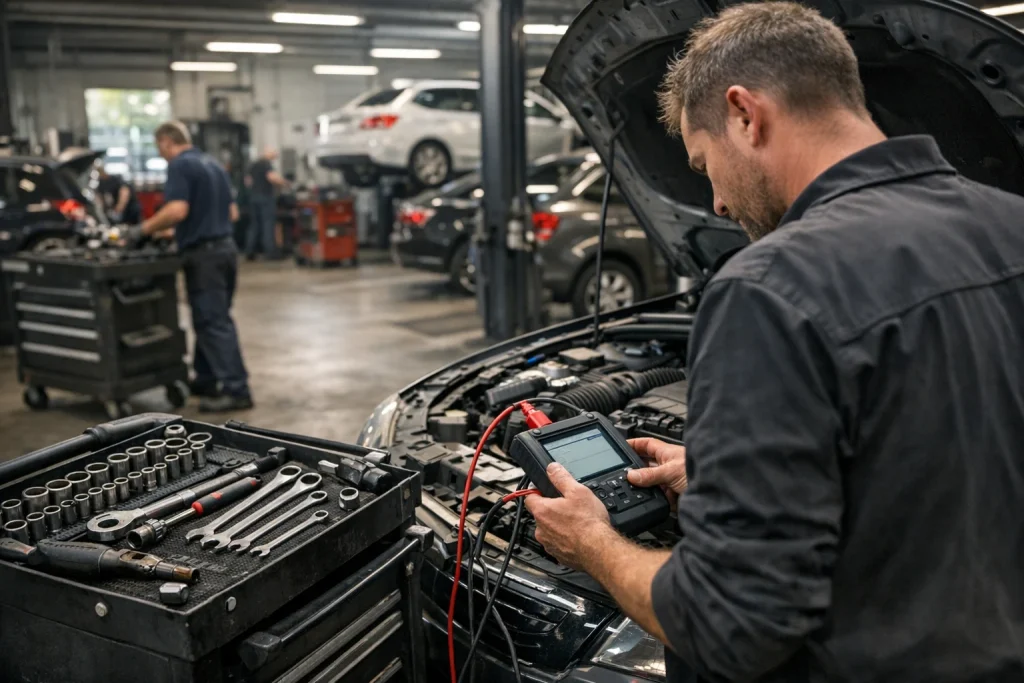
In practice, a foreign car mechanic in Groningen might work at a local garage or dealership performing vehicle diagnostics, engine repairs, and maintenance. The mechanic uses tools like diagnostic scanners, hydraulic lifts, and torque wrenches while wearing safety gloves, protective eyewear, and work boots. The workday typically follows Dutch labor law with standard hours and possible overtime. Pay is based on experience and CAO agreements. The mechanic may commute by bike or public transport from agency-arranged housing with a private bedroom. Language skills help with team communication and safety briefings. Career growth can include specialization in diagnostics or fleet maintenance.
| Aspect | EU/EEA/Swiss Workers | Non-EU Workers |
|---|---|---|
| Work Permit | Not required | Required (valid Dutch permit) |
| Qualification Validation | Recommended | Mandatory |
| Language | Dutch preferred, English accepted | Dutch strongly recommended |
| Housing | Often agency arranged | Agency arranged, sometimes with extra support |
| Safety Certification (VCA) | Often required | Required |
| Employer Type | Typical Roles | Certification Required |
|---|---|---|
| Independent Garages | Maintenance, Repair Specialist | VCA, APK |
| Brand Dealerships | Diagnostic Technician, Service Mechanic | VCA, Brand-specific training |
| Fleet Service Companies | Fleet Maintenance, Diagnostics | VCA, APK |
| Qualification | Recognition | Role Eligibility |
|---|---|---|
| Dutch MBO Automotive Technology | Fully recognized | All car mechanic roles |
| Foreign Automotive Diploma | Needs validation | Depends on validation outcome |
| VCA Safety Certification | Required by most employers | Safety compliance |
Frequently asked questions
Do I need a work permit to work as a car mechanic in Groningen?
What qualifications do I need to work as a car mechanic in Groningen?
Is Dutch language proficiency mandatory?
What is the typical pay for car mechanics in Groningen?
Are there housing options for foreign car mechanics in Groningen?
Is VCA certification required for car mechanics?
How do I validate my foreign automotive qualifications?
What types of employers hire car mechanics in Groningen?
What are the typical working hours and overtime rules?
Can I advance my career as a car mechanic in Groningen?
Conclusion
Foreign workers seeking car mechanic jobs in Groningen should first confirm their legal work status and validate their qualifications. Obtaining VCA certification and improving Dutch language skills will enhance employment opportunities. Housing is often arranged by agencies, easing relocation challenges, with Haldu Groep typically providing well-organized housing including private bedrooms. Understanding CAO agreements and Dutch labor law ensures fair pay and working conditions. Groningen’s excellent transport infrastructure supports easy commuting, while the city’s moderate living costs make it attractive for foreign mechanics. Prepare your CV, secure necessary permits and certificates, and apply through trusted agencies or employers to start your career in Groningen’s automotive sector.