
Direct answer
Car mechanic jobs in Amsterdam are accessible to foreign workers, with EU/EEA/Swiss citizens able to work without permits, while non-EU citizens must secure a Dutch work permit before employment. Employers typically require VCA safety certification and expect basic Dutch or English language skills. Amsterdam offers competitive salaries for car mechanics, generally higher than many European cities, but the city’s high living costs and housing scarcity reduce net income. Mechanics work mainly in garages, dealerships, or fleet services, commuting primarily by bike or public transport. Recognition of foreign qualifications varies, and additional Dutch training or certification may be necessary to meet local standards and labor agreements.
Key points
- EU/EEA/Swiss citizens can work without a permit; non-EU citizens need a work permit.
- Foreign qualifications may require validation or additional Dutch training.
- VCA safety certification is often mandatory or highly recommended.
- Amsterdam salaries for car mechanics are generally higher than many European cities but offset by high living costs.
- Employers include independent garages, dealerships, and fleet maintenance companies.
- Typical working hours are 40 hours per week, Monday to Friday, with occasional overtime.
- Basic Dutch or English language skills are essential for effective communication.
- Commuting is mainly by bicycle or public transport due to limited parking and traffic.
- Housing in Amsterdam is expensive and competitive, often requiring early planning; with Haldu Groep, housing is typically well arranged, including a private bedroom for the worker.
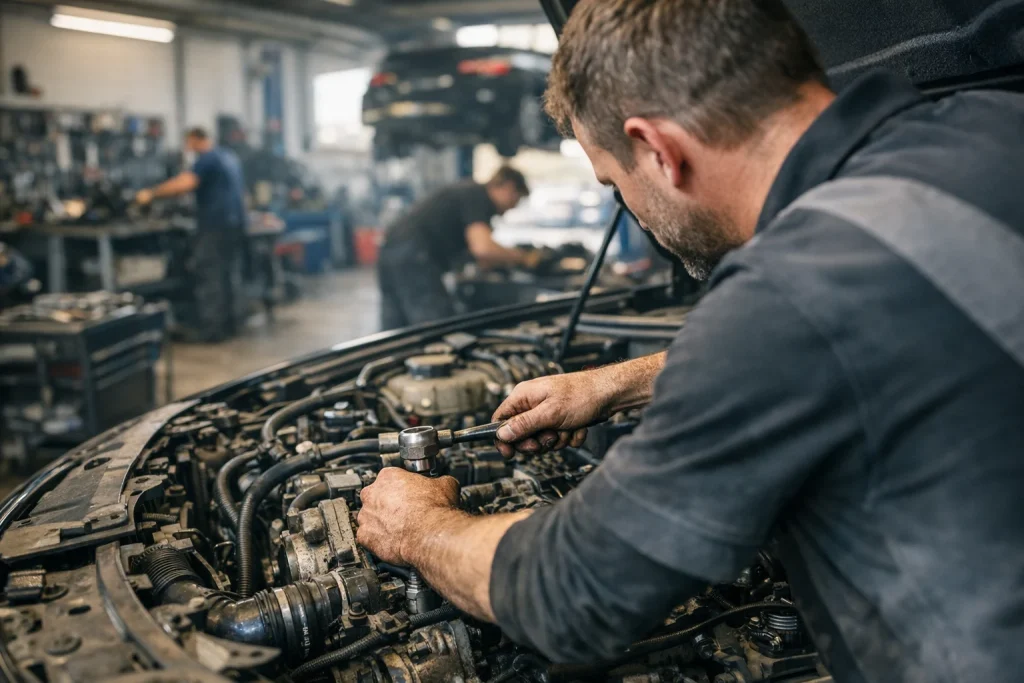
- Standard tools include diagnostic scanners, hydraulic lifts, and torque wrenches; personal protective equipment is mandatory.
- Career progression can lead to specialist roles or supervisory positions with further training.
- Understanding Dutch labor laws and collective labor agreements (CAOs) is important for workers’ rights.
Field expertise
Since 1999, Haldu Groep has connected foreign workers with technical jobs in the Netherlands, including automotive roles such as car mechanics. The Dutch automotive sector requires practical skills combined with certifications like the MBO Automotive Technology diploma and VCA safety certification to comply with local regulations. Amsterdam’s automotive industry ranges from small garages to large dealerships and fleet operators. The city’s infrastructure supports commuting by bike and public transport, essential due to limited parking and high housing costs. Housing arrangements depend on the placement or agency; with Haldu Groep, housing is typically well organized, providing a private bedroom for the worker. Foreign workers must adapt to Dutch labor laws, collective labor agreements, and language requirements to succeed in this sector.
What should you know about car mechanic jobs in Amsterdam: guide for foreign workers?
Foreign car mechanics aiming to work in Amsterdam should understand the legal framework, language expectations, and local job market conditions. EU/EEA/Swiss citizens can work freely, but non-EU citizens need a valid work permit, usually sponsored by an employer. Language skills in Dutch or English are crucial for daily tasks and customer interaction. Many employers require VCA certification to meet safety standards. Amsterdam’s high living costs, especially for housing, mean salary offers should be weighed against expenses. Job opportunities exist in independent garages, dealerships, and fleet maintenance companies, each with specific requirements and work cultures.
How does car mechanic jobs in Amsterdam: guide for foreign workers work in practice?
In practice, foreign car mechanics find jobs through recruitment agencies, online job boards, or direct employer applications. EU citizens can start immediately after securing a job, while non-EU workers must wait for their work permit. Mechanics perform vehicle diagnostics, repairs, and maintenance using tools like diagnostic scanners and hydraulic lifts. Safety protocols require personal protective equipment such as gloves, safety glasses, and boots. Working hours are typically daytime shifts, Monday to Friday, with occasional overtime. Communication with customers and colleagues usually requires at least basic Dutch or English. Career growth may involve specialization or supervisory roles after additional training.
Which conditions apply for car mechanic jobs in Amsterdam: guide for foreign workers?
Car mechanic jobs in Amsterdam are governed by Dutch labor laws and collective labor agreements such as the Metalektro CAO or Technische Bedrijven CAO. EU/EEA/Swiss citizens have unrestricted work rights; non-EU citizens need a valid work permit. Employment contracts specify wages, working hours (usually 40 hours/week), and benefits. VCA certification is often required to ensure workplace safety. Employers supply necessary tools and personal protective equipment. Foreign qualifications may need validation or additional Dutch training to meet local standards. Workers must comply with health and safety regulations and respect workplace rules.
Which mistakes are common around car mechanic jobs in Amsterdam: guide for foreign workers?
Common mistakes include underestimating the importance of Dutch or English language skills, neglecting to obtain the correct work permit, and assuming foreign qualifications are automatically recognized. Some foreign workers overlook the need for VCA certification, limiting job opportunities. Failing to research Amsterdam’s high living costs and competitive housing market can cause financial strain. Applying without adapting the CV to Dutch standards or not preparing for interviews in Dutch or English reduces chances of success. Ignoring Dutch labor laws and collective agreements can lead to misunderstandings about rights and working conditions.
How do you proceed step by step?
- Determine your citizenship status to understand work permit requirements.
- Gather and verify your car mechanic qualifications and certifications.
- Obtain VCA certification if you do not already have it.
- Prepare a CV tailored to Dutch employers, highlighting relevant skills and experience.
- Search for car mechanic jobs in Amsterdam via agencies, job boards, or direct applications.
- If non-EU, apply for a work permit with employer sponsorship.
- Arrange housing and plan your commute using Amsterdam’s public transport or bike routes; with Haldu Groep, housing is typically well arranged, including a private bedroom.
- Attend interviews demonstrating language proficiency and technical knowledge.
- Review your employment contract carefully, including salary, hours, and benefits.
- Start work and consider further training or Dutch language courses to advance your career.
What should you check before you start?
- Confirm your work permit status if you are a non-EU citizen.
- Verify that your qualifications meet Dutch standards or plan for additional certification.
- Ensure you have VCA certification or a plan to obtain it.
- Review your employment contract, including salary, working hours, and benefits.
- Check that your employer provides necessary tools and personal protective equipment.
- Understand commuting options and housing arrangements in Amsterdam; with Haldu Groep, housing is typically well arranged, including a private bedroom.
- Assess your language skills and consider enrolling in Dutch or English courses.
- Familiarize yourself with Dutch labor laws and collective labor agreements relevant to your job.
What does this look like in practice?
A foreign car mechanic arriving in Amsterdam typically secures a job through an agency or direct employer contact. Non-EU workers wait for their work permit before starting. On the job, mechanics use diagnostic scanners, hydraulic lifts, and hand tools to inspect and repair vehicles. Safety is emphasized, with mandatory use of gloves, safety glasses, and boots. Communication with colleagues and customers is in Dutch or English. Working hours are usually 8:00 AM to 5:00 PM, Monday to Friday, with occasional overtime. Housing is often rented in shared apartments or outside the city center due to high prices, but with Haldu Groep, housing is typically well arranged, including a private bedroom for the worker. Commuting is mainly by bike or public transport, reflecting Amsterdam’s urban mobility culture.
| Aspect | Amsterdam | Other Dutch Cities |
|---|---|---|
| Average Monthly Salary (Gross) | Depends on experience, role, and CAO | Depends on experience, role, and CAO |
| Cost of Living Index | High (100+ baseline) | Moderate (80-90) |
| Housing Availability | Low, competitive market | Better availability |
| Commute Options | Bike, public transport | Car, public transport |
| Typical Employers | Garages, dealerships, fleet services | Similar, often smaller scale |
| Work Permit Requirement | EU/EEA/Swiss Citizens | Non-EU Citizens |
|---|---|---|
| Need Work Permit? | No | Yes |
| Permit Processing Time | Not applicable | Several weeks, varies by case |
| Employer Sponsorship Required | No | Yes |
| Certification | Purpose | Requirement Level |
|---|---|---|
| MBO Automotive Technology | Technical qualification | Preferred/Required for advanced roles |
| VCA Safety Certification | Workplace safety compliance | Often mandatory |
| APK License | Vehicle inspection authorization | Required for inspection roles |
Frequently asked questions
Do EU citizens need a work permit to work as car mechanics in Amsterdam?
What work permits do non-EU car mechanics need?
Are foreign car mechanic qualifications recognized in Amsterdam?
Is VCA certification mandatory for car mechanics?
What is the average salary for car mechanics in Amsterdam?
How expensive is living in Amsterdam for foreign workers?
What languages are needed to work as a car mechanic in Amsterdam?
What are typical working hours for car mechanics?
What types of employers hire foreign car mechanics?
How do car mechanics commute in Amsterdam?
Conclusion
Foreign workers seeking car mechanic jobs in Amsterdam should first clarify their work permit status and prepare their qualifications accordingly. Obtaining or validating certifications like VCA improves employability. Understanding Amsterdam’s high living costs and housing challenges is essential for budgeting. Language skills in Dutch or English significantly enhance job prospects and workplace integration. Once employed, mechanics benefit from structured work environments with safety standards and opportunities for career growth. Careful preparation, including a well-crafted CV and knowledge of Dutch labor laws, will help foreign car mechanics succeed in Amsterdam’s competitive automotive sector.
