
Direct answer
Utility plumber jobs in Groningen are accessible to foreign workers, with EU/EEA/Swiss citizens able to work without a permit, while non-EU nationals must obtain a valid Dutch work permit before starting. These roles require recognized plumbing qualifications and often VCA safety certification to meet Dutch standards. Pay in Groningen is competitive within the Netherlands and depends on experience, contract type, and collective labor agreements (CAOs). Housing is commonly arranged by recruitment agencies or employers, typically offering private bedrooms. Basic Dutch or English language skills are important for safety and communication. Groningen’s bike-friendly infrastructure and public transport facilitate commuting, and ongoing residential and utility projects provide steady opportunities for utility plumbers.
Key points
- EU/EEA/Swiss workers do not need a work permit; non-EU workers require a valid Dutch work permit.
- Recognized plumbing qualifications and VCA safety certification are often mandatory.
- Pay depends on experience, CAO agreements, and contract type; Groningen offers competitive salaries within the Dutch market.
- Common projects include residential plumbing, public utility infrastructure, and maintenance.
- Housing is usually arranged by agencies or employers, often including private bedrooms.
- Basic Dutch or English language skills are essential for safety and communication.
- Commuting is convenient due to Groningen’s bike-friendly and public transport network.
- Working hours typically follow CAO agreements, with overtime paid accordingly.
- Personal protective equipment (PPE) such as helmets, gloves, and safety glasses is standard.
- Local training and upskilling opportunities are available for plumbers.
- Understanding Dutch labor laws and collective agreements is important for workers’ rights.
- Foreign plumbers should prepare a CV tailored to Dutch employers and verify contract details.
Field expertise
Since 1999, Haldu Groep has specialized in placing skilled tradespeople, including utility plumbers, across the Netherlands. Groningen’s expanding housing and infrastructure sectors create steady demand for qualified plumbers. The Dutch installation sector is regulated by collective labor agreements such as CAO Bouw & Infra and CAO Installatiebedrijf, which set standards for pay, working hours, and conditions. Safety certifications like VCA (Safety, Health, and Environment Checklist for Contractors) are highly valued and often required to comply with Dutch regulations. Plumbing work in Groningen involves installing and maintaining water supply, gas, and drainage systems, using tools such as pipe wrenches, press tools, and multimeters. Language skills and cultural adaptation are key for foreign workers to integrate successfully into Dutch teams.
What should you know about utility plumber jobs in Groningen: guide for foreign workers?
Utility plumber jobs in Groningen involve installing, repairing, and maintaining water, gas, and drainage systems in residential and commercial buildings. Foreign workers from the EU/EEA/Switzerland can start immediately without a work permit, while non-EU citizens must secure a valid Dutch work permit before employment. Recognized qualifications such as Dutch MBO Plumbing diplomas or equivalent foreign certificates are essential. VCA safety certification is often required due to strict Dutch health and safety standards. Pay depends on experience, contract type, and collective labor agreements. Plumbing projects in Groningen include new housing developments, public utility infrastructure, and ongoing maintenance contracts. Housing is typically arranged by employers or recruitment agencies, often providing private rooms. Basic Dutch or English language skills are necessary for effective communication and safety compliance on-site.
How does utility plumber jobs in Groningen: guide for foreign workers work in practice?
In practice, foreign utility plumbers in Groningen usually find jobs through recruitment agencies or direct employer contacts. EU/EEA/Swiss workers can start immediately, while non-EU workers must obtain a work permit, often facilitated by the employer. Job tasks include installing piping systems, leak detection, pressure testing, and routine maintenance. Safety is a priority, with VCA certification often required before starting. Working hours generally follow CAO agreements, with contracts ranging from temporary to permanent. Housing is often provided or arranged by the employer or agency, typically including private bedrooms and shared facilities. Groningen’s excellent public transport and bike infrastructure make commuting easy. Language skills help with understanding instructions, safety protocols, and teamwork.
Which conditions apply for utility plumber jobs in Groningen: guide for foreign workers?
Conditions for utility plumber jobs in Groningen include:
- Work permit: Not required for EU/EEA/Swiss; mandatory for non-EU workers.
- Qualifications: Dutch recognized plumbing diplomas or equivalent foreign certificates.
- Safety certification: VCA is often mandatory.
- Working hours: Typically 40 hours per week, with overtime paid according to CAO.
- Contracts: Fixed-term, permanent, or project-based, governed by Dutch labor law and CAOs.
- Pay: Based on CAO Bouw & Infra or CAO Installatiebedrijf, experience, and role; always confirm details in your contract.
- Housing: Often arranged by agencies or employers, with private rooms common, especially when placed through agencies like Haldu Groep.
- Language: Basic Dutch or English recommended for safety and communication.
Which mistakes are common around utility plumber jobs in Groningen: guide for foreign workers?
- Assuming no work permit is needed if coming from outside the EU/EEA/Switzerland.
- Starting work without proper VCA safety certification.
- Underestimating the importance of basic Dutch or English language skills.
- Failing to verify contract terms, pay scales, and working hours before starting.
- Not arranging or confirming housing before arrival, leading to last-minute difficulties.
- Ignoring Dutch labor laws and collective agreements affecting rights and benefits.
- Not preparing a CV tailored to Dutch plumbing jobs and employer expectations.
- Overlooking the need for personal protective equipment (PPE) on job sites.
How do you proceed step by step?
- Check your nationality: EU/EEA/Swiss workers can work without a permit; non-EU workers must apply for a Dutch work permit.
- Verify your plumbing qualifications and obtain Dutch recognition or equivalent certification.
- Complete or renew VCA safety certification if required.
- Prepare a clear CV highlighting relevant plumbing experience and certifications.
- Contact recruitment agencies like Haldu Groep or apply directly to employers in Groningen.
- Discuss housing options with your employer or agency; confirm arrangements before arrival.
- Learn basic Dutch or improve English skills to aid communication and safety compliance.
- Understand your contract terms, pay scale, and working hours before signing.
- Ensure you have or receive the necessary personal protective equipment (PPE).
- Start work, following safety protocols and Dutch labor regulations.
What should you check before you start?
- Work permit status and legal right to work in the Netherlands.
- Recognition of your plumbing qualifications and required certifications.
- Validity of your VCA safety certificate.
- Details of your employment contract: pay, hours, duration, and benefits.
- Housing arrangements and costs if provided by the employer or agency.
- Language requirements and support for communication on-site.
- Availability of personal protective equipment (PPE) and safety training.
- Commuting options and travel time to the job site.
- Information about the employer’s compliance with Dutch labor laws and CAOs.
What does this look like in practice?
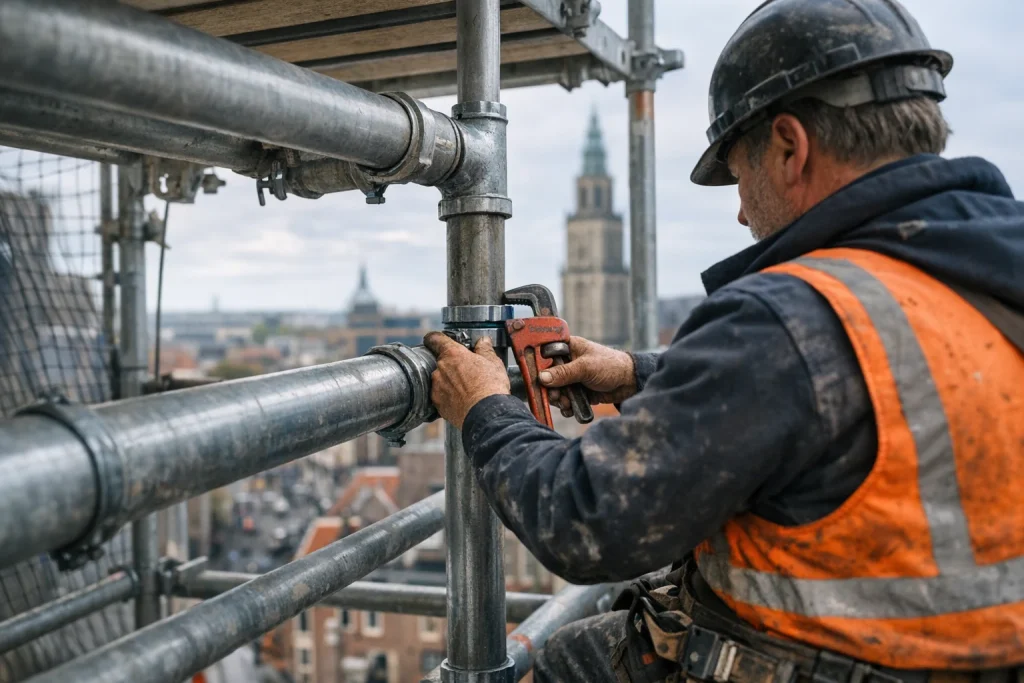
A foreign utility plumber arriving in Groningen typically confirms their work permit status first. After securing employment through an agency or employer, they receive housing details, often a private bedroom in shared accommodation arranged by the agency. On-site, plumbers use tools like pipe cutters, press tools, and multimeters, wearing PPE such as helmets, gloves, and safety glasses. They work on projects ranging from new residential plumbing installations to public utility infrastructure maintenance. Communication is mainly in Dutch or English, depending on the team. Working hours follow CAO agreements, with overtime paid accordingly. Local training opportunities help plumbers improve skills or gain additional certifications.
| Aspect | EU/EEA/Swiss Workers | Non-EU Workers |
|---|---|---|
| Work permit | Not required | Required before starting work |
| Qualification recognition | Must be recognized or equivalent | Must be recognized or equivalent |
| VCA certification | Often mandatory | Often mandatory |
| Housing | Typically arranged by agency/employer | Typically arranged by agency/employer |
| Language | Basic Dutch or English recommended | Basic Dutch or English recommended |
| Project Type | Description | Common Tools |
|---|---|---|
| Residential Plumbing | Installation and maintenance of water and drainage systems in homes | Pipe wrench, pipe cutter, press tool |
| Utility Infrastructure | Work on public water, gas, and sewage systems | Multimeter, welding tools, valves |
| Maintenance | Leak detection, pressure testing, repairs | Leak detectors, pressure gauges, soldering tools |
| Certification | Purpose | Required? |
|---|---|---|
| VCA | Safety, health, and environment compliance | Often mandatory |
| STEIGERBEWIJS | Safe use of scaffolding | Sometimes required |
| BRL 6000 | Quality assurance for plumbing installations | Recommended |
Frequently asked questions
Do I need a work permit to work as a utility plumber in Groningen?
What qualifications are required for utility plumber jobs in Groningen?
Is VCA certification mandatory for plumbers in Groningen?
How much can I expect to earn as a utility plumber in Groningen?
Are housing and accommodation provided for foreign plumbers in Groningen?
What language skills do I need for plumbing jobs in Groningen?
What are typical working hours for utility plumbers in Groningen?
Can I commute easily to plumbing jobs within Groningen?
Are there opportunities for training or upskilling in Groningen?
What personal protective equipment (PPE) is standard for plumbers?
Conclusion
Foreign utility plumbers aiming to work in Groningen should first confirm their work permit status and ensure their qualifications are recognized in the Netherlands. Obtaining VCA certification and preparing a clear, Dutch-style CV are essential steps. Housing is often arranged by agencies like Haldu Groep, easing relocation and providing private rooms. Basic Dutch or English language skills improve safety and communication on-site. Understanding Dutch labor laws and collective agreements helps secure fair pay and working conditions. Groningen’s diverse plumbing projects and excellent commuting options make it a practical choice for foreign plumbers. Careful preparation and compliance with local requirements support a successful career in Groningen’s plumbing sector.
