
Direct answer
Car mechanic jobs in Nijmegen are accessible to foreign workers, with EU/EEA/Swiss citizens able to work without a permit, while non-EU nationals must secure a valid Dutch work permit before employment. Nijmegen’s automotive sector benefits from its location near the German border, creating steady demand for skilled mechanics. Certifications such as VCA (safety) and APK (vehicle inspection) are highly valued and often required. Basic Dutch language skills improve job prospects, though some employers accept English speakers. Pay depends on experience, CAO agreements, contract type, and region; always confirm the written offer. Housing is frequently arranged by agencies like Haldu Groep, typically offering private bedrooms in shared accommodations. Nijmegen’s compact size and excellent public transport make commuting by bike or bus practical and affordable for workers.
Key points
- EU/EEA/Swiss citizens can work without a permit; non-EU citizens need a Dutch work permit.
- Nijmegen’s automotive sector serves both Dutch and German markets due to its border location.
- VCA and APK certifications are highly valued and often mandatory for mechanics.
- Basic Dutch language skills improve employability and workplace safety compliance.
- Pay depends on experience, CAO Metalektro or Automotive agreements, contract type, and region; always confirm details in writing.
- Housing is often arranged by agencies, usually with private bedrooms in shared apartments.
- Commuting by bike or public transport is common due to Nijmegen’s compact urban layout.
- Standard tools include diagnostic scanners, wrenches, hydraulic lifts; PPE is mandatory.
- Working hours vary; full-time, part-time, and apprenticeship roles are available.
- Apprenticeships and training programs help foreign workers gain local qualifications.
- Written contracts and clear pay agreements are essential to avoid misunderstandings.
- Early housing arrangements are recommended due to local demand and limited availability.
Field expertise
Since 1999, Haldu Groep has specialized in placing foreign technical workers, including car mechanics, in the Netherlands. Nijmegen’s automotive sector benefits from its strategic location near the German border, creating cross-border demand for vehicle maintenance and repair. Mechanics in Nijmegen work on diagnostics, repairs, maintenance, and APK inspections, using modern tools and adhering to Dutch safety standards. Employment conditions are regulated by CAO agreements such as Metalektro and Automotive, which set pay scales and working hours. Safety certification like VCA is often mandatory to ensure compliance with workplace safety laws. Agencies often assist foreign workers with housing and integration, including language support and vocational training. With Haldu Groep, housing is typically well arranged, providing private bedrooms in shared accommodations.
What should you know about car mechanic jobs in Nijmegen: guide for foreign workers?
Foreign workers from the EU/EEA/Switzerland can work in Nijmegen without a permit, while non-EU citizens must obtain a Dutch work permit before starting. Nijmegen’s automotive sector includes dealerships, independent garages, and service centers that cater to both local and German customers. Employers typically seek candidates with vocational training in automotive technology and certifications such as VCA and APK. Basic Dutch language skills are often required for safety and communication, though some employers accept English speakers. Pay and working conditions are governed by collective labor agreements (CAOs) like Metalektro or Automotive. Housing is frequently arranged by agencies, offering private rooms in shared apartments or houses. Nijmegen’s compact size and good public transport infrastructure make commuting straightforward.
How does car mechanic jobs in Nijmegen: guide for foreign workers work in practice?
Foreign car mechanics usually apply through recruitment agencies or directly to local employers. EU/EEA/Swiss workers can start immediately with valid ID and CV, while non-EU workers need a work permit, often arranged by the employer or agency. Mechanics perform vehicle diagnostics, repairs, and maintenance using tools such as diagnostic scanners, torque wrenches, and hydraulic lifts. Safety equipment like gloves, protective eyewear, and work boots are mandatory. Many employers require VCA certification to comply with safety regulations. Working hours typically follow standard shifts, with options for part-time or overtime. Housing is often provided or arranged by agencies, easing the transition for foreign workers. With Haldu Groep, housing is typically well arranged, including a private bedroom for the worker.
Which conditions apply for car mechanic jobs in Nijmegen: guide for foreign workers?
Key conditions include valid work authorization, relevant vocational qualifications, and compliance with Dutch labor laws. EU/EEA/Swiss citizens have freedom of movement and do not need permits. Non-EU citizens must obtain a work permit, usually sponsored by the employer. Vocational qualifications such as MBO Automotive Technology or equivalent are expected. Certifications like VCA and APK are highly recommended or required. Basic Dutch language skills are often necessary for safety and communication. Employment contracts may be permanent or temporary, full-time or part-time, with pay regulated by CAO Metalektro or Automotive agreements. Pay levels vary depending on experience, contract, and region; always confirm pay details in writing.
Which mistakes are common around car mechanic jobs in Nijmegen: guide for foreign workers?
Common mistakes include starting work without the proper permit (for non-EU workers), underestimating the importance of Dutch language skills, and accepting verbal job offers without written contracts. Some foreign workers overlook the need for certifications like VCA or APK, limiting job opportunities. Failing to clarify pay and CAO coverage before starting can cause disputes. Housing arrangements are sometimes delayed, leading to accommodation problems. Not understanding commuting options or local transport can create daily difficulties. Lastly, submitting a CV not tailored to Dutch standards reduces chances of success.
How do you proceed step by step?
- Check your nationality and work permit requirements for the Netherlands.
- Obtain or validate relevant qualifications and certifications (VCA, APK).
- Prepare a clear CV highlighting automotive skills and experience.
- Learn basic Dutch phrases related to automotive work and safety.
- Search for jobs via agencies like Haldu Groep or directly with Nijmegen employers.
- Apply with a CV and cover letter, specifying your work permit status.
- Confirm employment contract details, pay, and CAO coverage before signing.
- Arrange housing early, preferably through your agency or employer.
- Plan your commute using Nijmegen’s bike paths or public transport.
- Start work with proper tools, PPE, and safety certifications in place.
What should you check before you start?
- Valid work permit or right to work in the Netherlands.
- Written employment contract specifying pay, hours, and CAO agreement.
- Required certifications such as VCA and APK for your role.
- Housing arrangements and location relative to your workplace.
- Commuting options and travel time to the workshop.
- Availability of necessary tools and personal protective equipment (PPE).
- Language requirements and communication expectations.
- Understanding of Dutch labor rights and safety regulations.
What does this look like in practice?
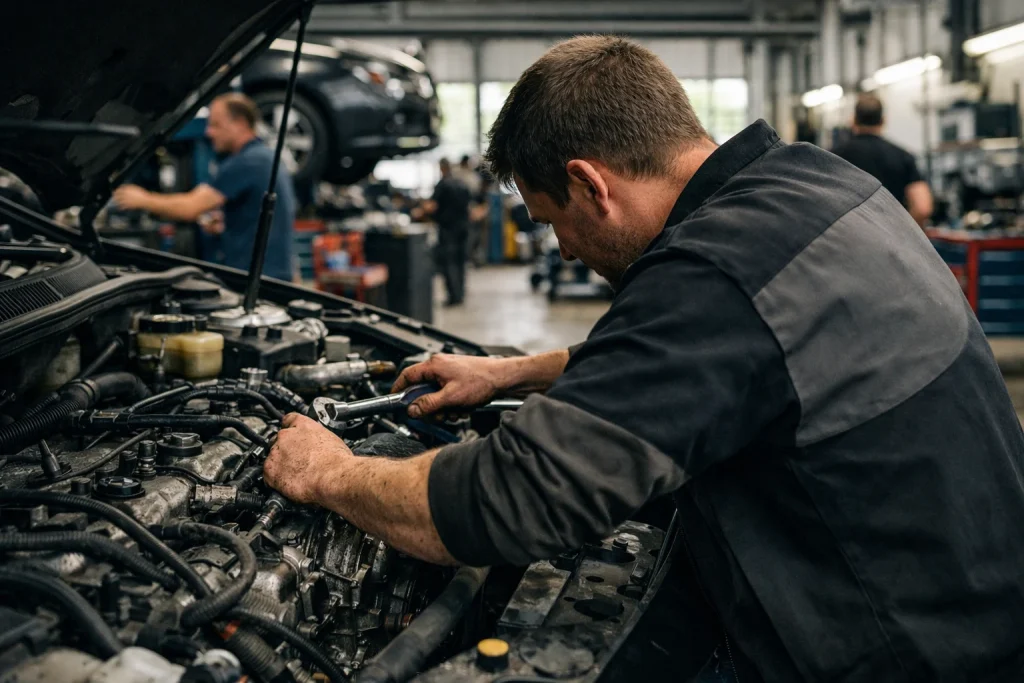
A foreign car mechanic in Nijmegen typically arrives with a valid work permit (if non-EU) and vocational training. After securing a job through an agency or employer, they receive a contract aligned with CAO Metalektro or Automotive. The mechanic works in a local garage or dealership, using diagnostic scanners, wrenches, and hydraulic lifts to service vehicles. Daily safety is ensured by wearing gloves, protective eyewear, and work boots, with VCA certification confirming safety training. The mechanic often lives in agency-arranged housing with a private bedroom. Commuting is mostly by bike or public transport, taking advantage of Nijmegen’s compact layout. Language skills improve over time through workplace interaction and local courses.
| Aspect | Nijmegen | Amsterdam | Eindhoven |
|---|---|---|---|
| Work permit for non-EU | Required | Required | Required |
| Demand for car mechanics | Moderate, influenced by German border | High, large city with many dealerships | High, automotive tech hub |
| Typical commute | Bike/public transport, short distances | Public transport, longer distances | Bike/public transport |
| Housing availability | Agency-arranged, typically well arranged | Competitive, expensive | Moderate, agency support common |
| Language requirement | Basic Dutch preferred | Basic to intermediate Dutch preferred | Basic Dutch preferred |
| Certification | Purpose | Required? | Notes |
|---|---|---|---|
| VCA | Workplace safety | Recommended | Often mandatory in workshops |
| APK | Vehicle periodic inspection | Preferred | Increases employability |
| BOVAG certificate | Quality assurance | Optional | Recognized by employers |
| Contract Type | Hours | Pay Basis | Typical Duration |
|---|---|---|---|
| Permanent | Full-time or part-time | Depends on experience / CAO agreements | Indefinite |
| Temporary | Full-time or part-time | Depends on experience / CAO agreements | Fixed term |
| Apprenticeship | Part-time work + training | Lower pay, training allowance | 1-3 years |
Frequently asked questions
Do I need a work permit to work as a car mechanic in Nijmegen?
What certifications improve my chances of getting a car mechanic job in Nijmegen?
Is Dutch language proficiency mandatory for car mechanic jobs?
What is the typical pay for car mechanics in Nijmegen?
Are there agencies that help foreign car mechanics find jobs and housing in Nijmegen?
What tools and safety equipment do I need as a car mechanic in Nijmegen?
How do I apply for a car mechanic job in Nijmegen?
Are there apprenticeship opportunities for foreign workers in Nijmegen?
How do I commute to work as a car mechanic in Nijmegen?
What should I know about housing as a foreign car mechanic in Nijmegen?
Conclusion
Foreign workers interested in car mechanic jobs in Nijmegen should first verify their work permit status and secure key certifications such as VCA and APK. Basic Dutch language skills enhance safety and communication but are not always mandatory. Job opportunities are available through agencies and local employers, with pay and conditions governed by CAO agreements. Housing is often arranged by agencies, providing private rooms and easing relocation challenges. Commuting by bike or public transport is common due to Nijmegen’s compact size. Preparing a clear CV, understanding contract terms, and arranging housing early are essential steps for success in Nijmegen’s automotive sector.
