
Direct answer
Foreign utility electricians can work in Eindhoven if they meet Dutch legal requirements. Citizens from the EU/EEA and Switzerland have unrestricted work rights and do not need a permit. Non-EU nationals must obtain a valid Dutch work permit before starting employment. Utility electrician jobs in Eindhoven involve installing, maintaining, and inspecting electrical systems for utilities such as power grids, street lighting, and public infrastructure. Pay is competitive within the Netherlands and depends on experience, collective labor agreements (CAOs), contract type, and region. Many employers or staffing agencies, including Haldu Groep, assist foreign workers with housing, often providing private bedrooms. Basic Dutch language skills and safety certifications like VCA improve job prospects and workplace safety. Eindhoven’s compact size means most commutes are short, typically within the Brainport region.
Key points
- EU/EEA/Swiss citizens can work in Eindhoven without a permit; non-EU workers require a Dutch work permit.
- Utility electrician jobs cover installation, maintenance, inspection, and troubleshooting of utility electrical systems.
- Pay depends on experience, CAO agreements, contract type, and region; Eindhoven offers competitive wages.
- VCA safety certification and electrical qualifications such as NEN 3140 are often mandatory.
- Basic Dutch language skills improve communication and safety; English may be accepted in some workplaces.
- Housing is often arranged by employers or agencies; Haldu Groep typically provides private bedrooms.
- Commutes in Eindhoven are usually short due to the city’s size and local project locations.
- Haldu Groep has placed electricians in Eindhoven since 1999, supporting foreign workers with job matching and housing.
- Collective labor agreements (CAOs) regulate pay, working hours, and conditions for electricians.
- Standard tools include multimeters, wire strippers, and insulated gloves; personal protective equipment (PPE) is mandatory.
- Career progression often moves from field electrician to project or maintenance roles with further training.
- Challenges for foreign workers include language barriers, understanding Dutch labor law, and adapting to local safety standards.
Field expertise
Since 1999, Haldu Groep has specialized in placing skilled tradespeople, including utility electricians, in the Eindhoven region. The company understands local labor market conditions, collective labor agreements, and employer expectations. Utility electricians in Eindhoven typically work on projects related to power distribution networks, street lighting, and utility meter installations. The region’s focus on technology and innovation means electricians often encounter modern electrical systems and smart grid components. Haldu Groep supports foreign workers by assisting with work permits, housing arrangements, and integration into Dutch work culture. Their expertise ensures compliance with Dutch labor law, safety certifications like VCA, and proper contract conditions under CAOs such as CAO Bouw & Infra or CAO Metaal & Techniek.
What should you know about utility electrician jobs in Eindhoven: guide for foreign workers?
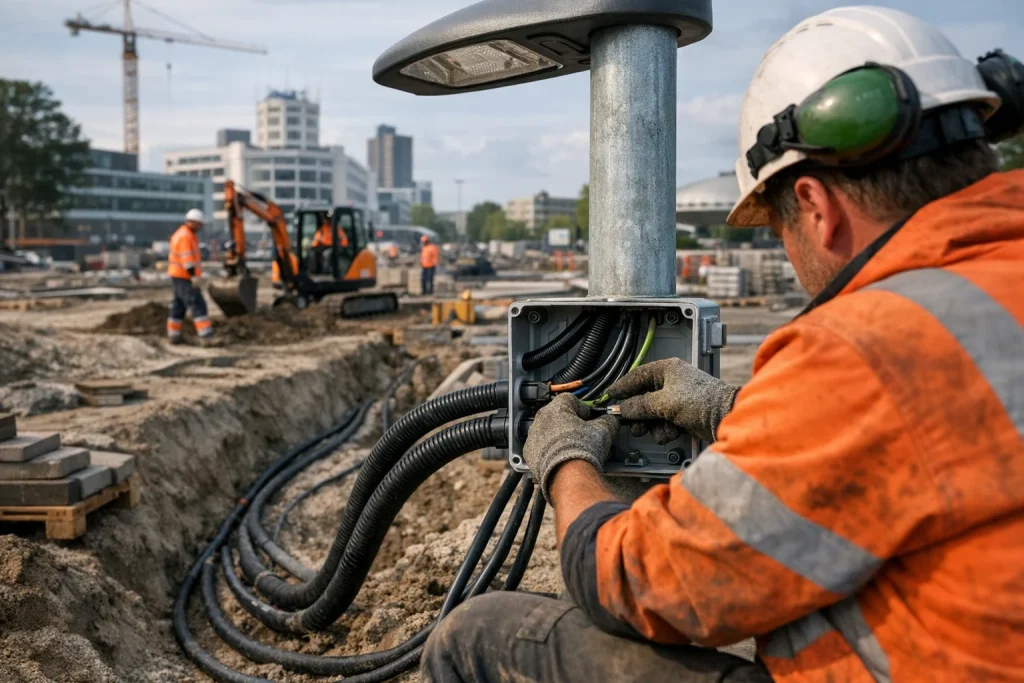
Utility electrician jobs in Eindhoven involve a variety of tasks such as installing, maintaining, inspecting, and troubleshooting electrical systems that power homes, businesses, street lighting, and public infrastructure. Foreign workers must understand the legal framework: EU/EEA/Swiss citizens have unrestricted access to work, while non-EU nationals require a valid work permit. Employers typically require certifications such as VCA (safety), NEN 3140 (electrical safety), and vocational qualifications like MBO Electrical Engineering. Basic Dutch language skills are important for safety and communication, although some companies accept English at a basic level. Eindhoven’s labor market benefits from the Brainport region’s industrial and technological activity, creating steady demand for skilled electricians.
How does utility electrician jobs in Eindhoven: guide for foreign workers work in practice?
In practice, foreign utility electricians in Eindhoven often find jobs through staffing agencies or direct employer recruitment. After verifying legal work status and certifications, candidates submit a CV and attend interviews. Once hired, electricians receive assignments for utility installation, maintenance, or inspection projects. Work hours usually follow Dutch labor standards, with shifts typically ranging from 8 to 40 hours per week, including occasional overtime. Safety training and the use of personal protective equipment (PPE) are mandatory on-site. Many employers or agencies arrange housing close to job sites, reducing commute times. Foreign electricians may start with simpler tasks and progress to more complex roles as they gain experience and language proficiency.
Which conditions apply for utility electrician jobs in Eindhoven: guide for foreign workers?
Conditions for utility electrician jobs in Eindhoven include compliance with Dutch labor law and collective labor agreements (CAOs). Pay scales depend on experience, role, and CAO coverage, typically CAO Bouw & Infra or CAO Metaal & Techniek. Working hours are regulated, with overtime compensated according to CAO rules. Safety standards require VCA certification and adherence to electrical safety protocols such as NEN 3140. Employers provide necessary tools and personal protective equipment (PPE) including safety helmets, insulated gloves, and safety boots. Housing conditions vary depending on the placement or agency but often include private bedrooms and basic furnishings. Language skills are expected to ensure safe and effective communication on-site.
Which mistakes are common around utility electrician jobs in Eindhoven: guide for foreign workers?
Common mistakes foreign utility electricians make include:
- Not securing the correct work permit before starting work (non-EU workers).
- Underestimating the importance of VCA and electrical safety certifications.
- Applying without a well-prepared CV tailored to Dutch standards.
- Ignoring Dutch language learning, which impacts safety and integration.
- Failing to verify housing arrangements before arrival, leading to accommodation issues.
- Not understanding collective labor agreements, resulting in confusion over pay and working hours.
- Using inappropriate or incomplete personal protective equipment (PPE) on-site.
- Assuming all employers provide the same tools and safety gear.
How do you proceed step by step?
- Check your nationality: EU/EEA/Swiss citizens can work freely; non-EU workers must apply for a Dutch work permit.
- Obtain necessary certifications: VCA, NEN 3140, and vocational qualifications.
- Prepare a clear CV in English or Dutch, highlighting relevant experience and certifications.
- Apply for jobs via staffing agencies like Haldu Groep or directly with employers in Eindhoven.
- Confirm housing arrangements before arrival; agencies often provide furnished rooms with privacy.
- Attend interviews and complete any required safety or language training.
- Start work with proper PPE and tools; follow safety protocols strictly.
- Build language skills and professional experience to advance your career.
What should you check before you start?
- Valid work permit or confirmation of free work rights (for non-EU workers).
- Required certifications such as VCA and NEN 3140.
- Employment contract details including pay, working hours, and CAO coverage.
- Housing arrangements and location relative to the job site.
- Availability of personal protective equipment (PPE) and tools.
- Language requirements and whether language support is available.
- Health and safety policies at the workplace.
- Contact details for your employer or staffing agency.
What does this look like in practice?
In practice, a foreign utility electrician arriving in Eindhoven will often be met by a staffing agency representative who assists with housing and job placement. The electrician receives a contract aligned with Dutch labor laws and CAOs. Workdays start with safety briefings, and electricians use standard tools like multimeters, wire strippers, and insulated gloves. Projects vary from installing new utility meters to maintaining street lighting systems. Most work is local within Eindhoven or nearby Brainport municipalities, minimizing commute times. Language barriers are addressed by basic Dutch or English communication, with ongoing language training encouraged. Career growth is supported by additional training and certifications.
| Aspect | Details |
|---|---|
| Work Permit | EU/EEA/Swiss: No permit needed; Non-EU: Required |
| Key Certifications | VCA, NEN 3140, MBO Electrical Engineering |
| Typical Jobs | Installation, maintenance, inspection, troubleshooting |
| Pay Factors | Depends on experience, CAO, contract type, and region |
| Housing | Often arranged by employer or agency; private bedroom common |
| Language | Basic Dutch preferred; English accepted in some cases |
| Commute | Short, local projects within Eindhoven and Brainport |
| Certification | Purpose | Required for |
|---|---|---|
| VCA | Safety awareness for construction sites | Almost all utility electrician jobs |
| NEN 3140 | Electrical safety and inspection | Maintenance and inspection roles |
| MBO Electrical Engineering | Vocational qualification | Entry-level and skilled electrician roles |
| CAO | Sector | Impact |
|---|---|---|
| CAO Bouw & Infra | Construction and infrastructure | Pay scales, working hours, overtime rules |
| CAO Metaal & Techniek | Metal and technical trades | Conditions for electricians in technical industries |
Frequently asked questions
Do EU citizens need a work permit to work as utility electricians in Eindhoven?
What certifications are mandatory for utility electricians in Eindhoven?
How does pay for utility electricians in Eindhoven compare to other Dutch regions?
Is housing provided for foreign electricians in Eindhoven?
What language skills are needed to work as a utility electrician in Eindhoven?
Are there specific safety rules electricians must follow on Dutch sites?
What are typical working hours for utility electricians in Eindhoven?
Can non-EU workers easily get work permits for electrician jobs in Eindhoven?
How far do electricians typically commute in Eindhoven?
What tools do utility electricians use daily in Eindhoven?
Conclusion
Foreign utility electricians aiming to work in Eindhoven should first confirm their eligibility to work and obtain essential certifications like VCA and NEN 3140. Preparing a clear, tailored CV and securing housing through employers or staffing agencies is crucial for a smooth transition. Eindhoven’s strong industrial base and compact geography offer many local job opportunities with competitive pay under Dutch collective labor agreements. Learning basic Dutch and strictly following safety protocols will improve workplace integration and career prospects. Support from staffing agencies such as Haldu Groep can ease the transition by assisting with permits, housing, and job matching. For detailed guidance, consult Haldupedia’s related articles on electrician roles and Dutch construction work.
