
Direct answer
Working as a utility electrician in Groningen is accessible for foreign workers, with EU/EEA/Swiss citizens able to work without a permit due to freedom of movement. Non-EU nationals must obtain a valid Dutch work and residence permit before starting employment. Qualification recognition is essential, especially for non-EU electricians, to meet Dutch standards. Pay and working conditions follow Dutch collective labor agreements (CAOs), and safety certifications like VCA are usually required. Housing arrangements depend on the placement or agency; with recruitment agencies such as Haldu Groep, housing is typically well arranged, often providing private bedrooms in shared accommodations near workplaces. Basic Dutch or English language skills are important for safety and communication. Groningen’s utility sector focuses on electricity, gas, and water infrastructure, with most commutes by bike or public transport within the city and surrounding region.
Key points
- EU/EEA/Swiss citizens can work in Groningen without a work permit; non-EU workers need a valid Dutch permit.
- Recognition of qualifications is simpler for EU credentials; non-EU electricians face a more complex validation process.
- Pay depends on experience, role, CAO agreements, contract type, and region; Groningen offers competitive wages within the Netherlands.
- Utility projects include electrical grid maintenance, gas pipeline work, and water infrastructure upgrades.
- Recruitment agencies often arrange housing, typically offering private rooms in shared apartments near job sites.
- VCA safety certification is usually mandatory; NEN 3140 is highly recommended for electrical safety compliance.
- Basic Dutch or English language skills are necessary for workplace safety and effective communication.
- Daily commuting is mostly by bicycle or public transport, reflecting Groningen’s bike-friendly infrastructure.
- Dutch CAOs regulate pay, working hours, holidays, overtime, and sick leave for electricians.
- Contracts vary from temporary to permanent, often including probation periods.
- Proper preparation of a CV tailored to Dutch employers improves job prospects.
- Understanding local safety protocols and labor laws is critical for job success.
Field expertise
Since 1999, Haldu Groep has specialized in placing foreign electricians and installation workers in the Netherlands, including Groningen. The company supports foreign utility electricians by assisting with qualification validation, housing arrangements, and guidance on Dutch labor laws and collective labor agreements (CAOs). Utility electricians in Groningen work on essential infrastructure projects involving electrical grids, gas pipelines, and water systems. They use specialized tools and personal protective equipment (PBM) to comply with Dutch safety standards. The region’s infrastructure requires electricians familiar with local regulations and certifications. Haldu Groep’s experience helps foreign workers understand both the legal and practical aspects of working in Groningen’s utility sector.
What should you know about utility electrician jobs in Groningen: guide for foreign workers?
Utility electrician jobs in Groningen involve installing, maintaining, and repairing electrical systems for public utilities such as electricity, gas, and water. Foreign workers must understand Dutch labor laws, work permit requirements, and the importance of safety certifications like VCA and NEN 3140. Groningen’s utility projects often require traveling within the province, so mobility and reliable transportation are important. Language skills in Dutch or English are necessary for effective communication and safety compliance. Housing arrangements vary but are commonly organized by recruitment agencies, offering affordable and convenient options close to work sites. Understanding Dutch collective labor agreements (CAOs) helps workers know their rights, pay scales, and benefits.
How does utility electrician jobs in Groningen: guide for foreign workers work in practice?
In practice, foreign utility electricians in Groningen start by validating their qualifications and securing any necessary permits. Recruitment agencies like Haldu Groep assist with job placement and housing arrangements. Upon employment, electricians undergo safety training and certification verification. Daily work involves traveling to various utility sites to perform installation, maintenance, or repair tasks. Electricians use standard tools such as multimeters, wire strippers, and voltage testers, along with personal protective equipment like insulated gloves and safety helmets. Communication on site is usually in Dutch or English, and workers follow strict safety protocols. Pay and working hours are regulated by CAOs, ensuring fair and transparent conditions.
Which conditions apply for utility electrician jobs in Groningen: guide for foreign workers?
Conditions include legal work rights, safety certification, and compliance with Dutch labor laws and CAOs. EU/EEA/Swiss citizens can work without permits, while non-EU workers require valid work and residence permits. Employers require proof of qualifications and often VCA certification. Employment contracts vary from temporary to permanent, commonly including probation periods. Pay depends on experience, role, and CAO agreements, which also cover working hours, overtime, holidays, and sick leave. Housing is often provided or facilitated by agencies. Language skills and adherence to safety standards are mandatory for job retention and career advancement.
Which mistakes are common around utility electrician jobs in Groningen: guide for foreign workers?
Common mistakes include:
- Failing to verify or recognize foreign qualifications before applying.
- Underestimating the importance of VCA and other safety certifications.
- Ignoring the need for a valid work permit if non-EU.
- Not learning basic Dutch or English, causing communication problems on site.
- Overlooking Dutch CAO rules, leading to misunderstandings about pay and working conditions.
- Delaying housing arrangements, resulting in stress and long commutes.
- Submitting a CV not tailored to Dutch employer expectations.
- Assuming all utility projects are similar; Groningen has specific infrastructure needs.
How do you proceed step by step?
- Check your nationality to determine if a Dutch work and residence permit is required.
- Validate your electrician qualifications through Dutch or EU recognition bodies.
- Obtain necessary safety certifications such as VCA and NEN 3140.
- Prepare a CV highlighting skills and experience relevant to Dutch utility projects.
- Apply for jobs through recruitment agencies like Haldu Groep or directly with employers.
- Arrange housing early, preferably through your recruitment agency.
- Learn basic Dutch or English to improve workplace communication.
- Understand your employment contract and CAO conditions before signing.
- Attend safety and job-specific training upon starting work.
- Plan your daily commute using Groningen’s bike-friendly and public transport options.
What should you check before you start?
- Your work and residence permit status (if non-EU).
- Recognition and validity of your electrician qualifications.
- Possession of required safety certificates like VCA and NEN 3140.
- Details of your employment contract, including pay, hours, and duration.
- Housing arrangements and proximity to work sites.
- Language skills sufficient for safety and teamwork.
- Availability of personal protective equipment (PBM) and tools.
- Understanding of Dutch CAO rules affecting your job.
- Health and safety protocols specific to Groningen utility projects.
What does this look like in practice?
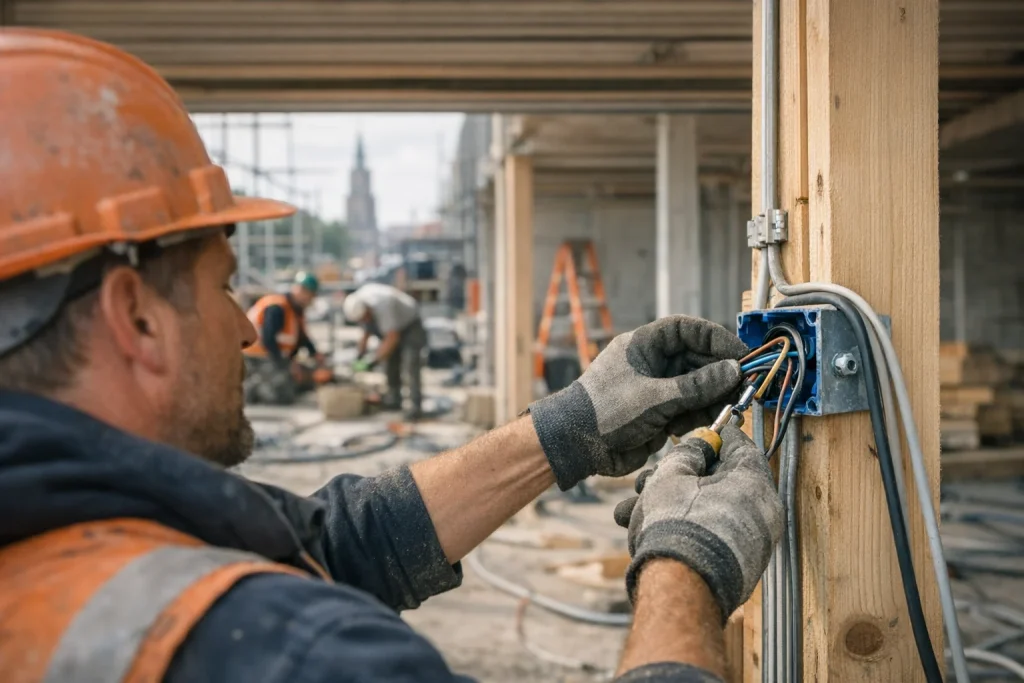
Utility electricians in Groningen typically start their day traveling to a project site by bicycle or public transport. They wear required personal protective equipment such as safety helmets, insulated gloves, and safety boots. Tasks include electrical wiring, fault detection, installation testing, and preventive maintenance on utility grids for electricity, gas, or water. Communication with supervisors and colleagues occurs in Dutch or English. Worksites follow strict safety protocols, and electricians use tools like multimeters and voltage testers. Pay is processed according to CAO agreements, and workers often return to shared housing arranged by their agency after their shift.
| Aspect | EU/EEA/Swiss Workers | Non-EU Workers |
|---|---|---|
| Work Permit | Not required | Required |
| Residence Permit | Not required | Required |
| Qualification Recognition | Streamlined process | More complex process |
| Job Search Support | Available via agencies | Available via agencies |
| Housing Support | Typically arranged by agency | Typically arranged by agency |
| Certification | Purpose | Requirement Level |
|---|---|---|
| VCA | Safety awareness on construction sites | Often mandatory |
| NEN 3140 | Safe working on electrical installations | Highly recommended |
| STEK Certification | Electrical appliance safety (optional) | Sometimes required |
| Job Role | Main Tasks | Typical Tools | Safety Equipment |
|---|---|---|---|
| Field Technician | Installation and repair on site | Multimeter, wire strippers | Helmet, gloves, boots |
| Maintenance Electrician | Preventive maintenance, fault detection | Voltage tester, insulation tester | Helmet, insulated gloves |
| Project Electrician | Supervision and installation planning | All standard tools | Full PBM set |
Frequently asked questions
Do EU citizens need a work permit to work as utility electricians in Groningen?
How can non-EU electricians get a work permit for Groningen?
What certifications are mandatory for utility electricians in Groningen?
Is housing provided for foreign utility electricians in Groningen?
What language skills are needed for utility electrician jobs in Groningen?
How is pay determined for utility electricians in Groningen?
Can foreign qualifications be recognized in the Netherlands?
What types of utility projects are common in Groningen?
What tools do utility electricians use in Groningen?
What personal protective equipment is standard for utility electricians?
Conclusion
Foreign utility electricians can successfully work in Groningen by understanding legal requirements, validating qualifications, and obtaining necessary safety certifications. Recruitment agencies like Haldu Groep facilitate job placement and housing arrangements, easing the transition. Learning basic Dutch or English is essential for safety and communication. Familiarity with Dutch CAOs ensures fair pay and working conditions. Planning your commute and preparing a CV tailored to Dutch employers will improve your chances. Groningen offers diverse utility projects and a supportive environment for skilled foreign electricians ready to work safely and professionally.
