
Direct answer
Housing construction plumber jobs in Utrecht are accessible to foreign workers, with work rights depending on nationality. EU/EEA/Swiss citizens can work without permits, while non-EU plumbers must obtain work and residence permits from the Dutch Immigration and Naturalisation Service (IND). Pay is regulated by Dutch collective labor agreements (CAOs) and varies by experience, role, and contract type. Dutch construction wages are often higher than in many other European countries, though living costs vary by region. Housing is often arranged by employers or agencies, with Haldu Groep typically providing well-organized accommodation including private bedrooms. VCA safety certification is usually required, and basic Dutch or English language skills are important for communication and safety. Utrecht’s housing construction sector involves new builds and renovations, mostly within or near the city, influencing commute and daily work routines.
Key points
- EU/EEA/Swiss plumbers do not need work permits; non-EU plumbers require permits from IND.
- Pay depends on experience, CAO agreements, role, and contract; Dutch construction wages are competitive.
- Housing is often provided by employers or agencies; Haldu Groep usually offers private bedrooms in shared housing.
- VCA safety certification is commonly mandatory for site work.
- Basic Dutch or English language skills are essential for safety and teamwork.
- Utrecht projects include new housing developments and renovations, affecting plumber tasks.
- Standard plumbing tools and PPE are required on site.
- Commuting options include cycling, public transport, and carpooling.
- Tailoring your CV to Dutch standards improves job chances.
- Understanding Dutch labor law and CAO agreements helps ensure fair treatment.
- Work contracts are usually full-time, fixed-term or permanent.
- Planning housing and commute early avoids last-minute issues.
Field expertise
Since 1999, Haldu Groep has specialized in placing foreign construction workers, including plumbers, in Dutch housing construction projects. The company assists with permits, housing, and integration into Dutch work culture. Housing construction plumbers in Utrecht work on new builds, renovations, and installations of water and drainage systems using materials like copper, PVC, and PEX. The sector follows strict safety protocols, often requiring VCA certification. Labor conditions are regulated by collective labor agreements such as CAO Bouw & Infra or CAO Installatiebedrijf, which define wages, working hours, and benefits. Foreign plumbers benefit from understanding these agreements and adapting their CVs to Dutch expectations to improve employment prospects.
What should you know about housing construction plumber jobs in Utrecht: guide for foreign workers?
Foreign plumbers aiming to work in Utrecht’s housing construction sector should be aware of several key points:
- Work permits: EU/EEA/Swiss citizens can work without permits; non-EU plumbers must obtain permits from IND.
- CAO agreements: These collective labor agreements set minimum wages, working hours, and benefits.
- Project types: Utrecht features many new housing developments and renovation projects requiring plumbing installation and repairs.
- Language: Dutch is preferred, but English is often accepted. Basic communication skills are essential for safety and teamwork.
- Safety certification: VCA certification is often required to work safely on construction sites.
- Housing: Employers or agencies may provide housing; Haldu Groep typically offers private rooms in shared apartments.
- Tools and PPE: Standard plumbing tools and personal protective equipment are mandatory on sites.
- Commuting: Utrecht’s compact size and good transport infrastructure make cycling and public transport common choices.
How does housing construction plumber jobs in Utrecht: guide for foreign workers work in practice?
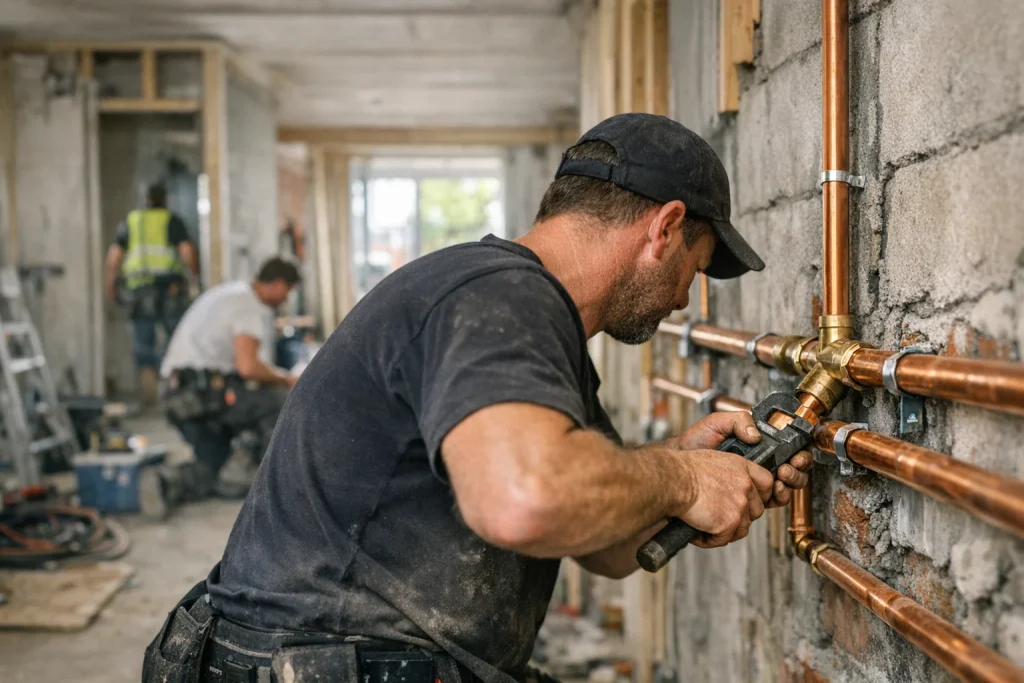
In practice, foreign plumbers usually find jobs through recruitment agencies or direct employer contacts. EU/EEA/Swiss plumbers can start working immediately after securing a job, while non-EU plumbers must first apply for work and residence permits. Upon arrival, many workers receive housing arranged by their employer or agency, often in shared apartments with private bedrooms. Daily tasks include installing and maintaining plumbing systems in new or renovated homes, following Dutch safety standards and using tools like pipe wrenches, cutters, and soldering equipment. VCA certification is verified before starting work. Communication on site is typically in Dutch or English, so basic language skills are necessary. Commuting is often by bike or public transport, with many projects located within or near Utrecht city.
Which conditions apply for housing construction plumber jobs in Utrecht: guide for foreign workers?
Conditions for plumbers in Utrecht’s housing construction sector include:
- Employment contracts: Usually full-time, fixed-term or permanent, governed by Dutch labor law and CAO agreements.
- Wages: Based on CAO rates, experience, and role; overtime and holiday pay are regulated.
- Working hours: Typically 40 hours per week, Monday to Friday; occasional weekend or evening work may occur.
- Safety: VCA certification and PPE use are mandatory; safety training is often provided.
- Housing: Varies by employer; Haldu Groep offers well-maintained housing with private rooms.
- Language: Basic Dutch or English is required for safety and teamwork.
- Permits: Work and residence permits required for non-EU workers; EU/EEA/Swiss citizens are exempt.
Which mistakes are common around housing construction plumber jobs in Utrecht: guide for foreign workers?
Common mistakes foreign plumbers make include:
- Starting work without the correct work and residence permits (especially non-EU workers).
- Underestimating the importance of VCA safety certification for site access.
- Failing to tailor the CV to Dutch standards, reducing chances of job offers.
- Ignoring language requirements, leading to communication problems and safety risks.
- Not clarifying housing arrangements before arrival, causing last-minute accommodation issues.
- Overlooking Dutch labor laws and CAO agreements, leading to misunderstandings about pay and rights.
- Not preparing for the commute or local transport options, causing delays or fatigue.
How do you proceed step by step?
- Check eligibility: Confirm if you need a work permit based on nationality.
- Prepare your CV: Adapt it to Dutch standards, highlighting plumbing experience and certifications.
- Obtain VCA certification: Complete the safety course if required.
- Apply for jobs: Use agencies like Haldu Groep or direct employer contacts.
- Secure work and residence permits: For non-EU workers, apply through IND.
- Arrange housing: Confirm if the employer or agency provides accommodation.
- Plan your commute: Research transport options in Utrecht.
- Start work: Attend site safety briefings and follow Dutch labor laws and CAO agreements.
What should you check before you start?
Before starting a plumber job in Utrecht, foreign workers should verify:
- Work and residence permit status (if applicable).
- Employment contract details, including pay, hours, and benefits.
- CAO agreement applicable to the job and its conditions.
- Housing arrangements and costs.
- Required certifications, especially VCA safety certificate.
- Language requirements and communication expectations.
- Tools and PPE provided or required.
- Commuting options and travel time to the site.
What does this look like in practice?
In practice, a foreign plumber working in Utrecht might start by contacting an agency like Haldu Groep, which helps with job placement, permits, and housing. After securing a job, the plumber obtains any necessary permits and completes VCA safety training. Upon arrival, the plumber moves into agency-arranged housing, usually a shared apartment with a private bedroom. The daily job involves installing water supply and drainage systems in new housing developments or renovations, using tools such as pipe wrenches and soldering equipment. Communication with Dutch colleagues happens in simple Dutch or English. The plumber follows safety protocols, wears PPE, and commutes by bike or public transport. Pay and working hours follow CAO agreements, ensuring fair treatment.
| Aspect | EU/EEA/Swiss Plumbers | Non-EU Plumbers |
|---|---|---|
| Work Permit | Not required | Required (IND application) |
| Residence Permit | Not required | Required |
| VCA Certification | Often required | Often required |
| Housing | Often arranged by employer/agency | Often arranged by employer/agency |
| Language | Dutch or English recommended | Dutch or English recommended |
| Project Type | Common Tasks | Tools Used | PPE |
|---|---|---|---|
| New Housing Developments | Pipe installation, water system setup | Pipe wrenches, cutters, soldering tools | Helmet, gloves, safety glasses, boots |
| Renovations | Leak testing, system repair | Spanners, plumbing snakes, sealants | Helmet, gloves, safety glasses, boots |
| Pay Factor | Impact on Wage |
|---|---|
| Experience Level | Depends on experience and CAO agreements |
| CAO Agreement | Sets minimum wage and benefits |
| Role Type | Site plumber vs installation plumber affects pay |
| Contract Type | Permanent contracts often offer better conditions |
Frequently asked questions
Do EU/EEA plumbers need a work permit to work in Utrecht?
What permits do non-EU plumbers need?
Is VCA certification mandatory for plumbers in Utrecht?
How much can I expect to earn as a plumber in Utrecht?
Will my employer provide housing?
What language skills do I need?
What tools will I need to bring or use?
How do I prepare my CV for Dutch plumber jobs?
What types of projects will I work on in Utrecht?
How do I commute to construction sites in Utrecht?
Conclusion
Foreign plumbers seeking work in Utrecht’s housing construction sector should first determine their permit requirements based on nationality. Obtaining VCA certification and preparing a Dutch-style CV enhance job prospects. Housing is frequently arranged by employers or agencies, with Haldu Groep known for quality accommodations including private bedrooms. Understanding Dutch labor laws and CAO agreements ensures fair pay and working conditions. Basic Dutch or English skills are essential for safety and communication on site. Planning your commute and familiarizing yourself with local project types will help you adapt quickly. Begin by securing a job offer, confirming permits, and arranging housing to start your plumbing career in Utrecht successfully.
