
Direct answer
Housing electrician jobs in Rotterdam are accessible to foreign workers, with EU/EEA/Swiss nationals able to work without permits, while non-EU electricians must secure a valid Dutch work permit or EU Blue Card. Pay is competitive and depends on experience, project type, and collective labor agreements (CAOs). Many staffing agencies, including Haldu Groep, assist with well-organized housing, typically offering private bedrooms near job sites. Essential certifications include VCA safety and Dutch electrical standards (NEN 3140, NEN 1010). Basic English is usually sufficient on site, but Dutch language skills improve job prospects. Rotterdam’s housing projects range from new builds to renovations, with common commutes by bike, public transport, or car. Safety and labor regulations are strictly enforced.
Key points
- EU/EEA/Swiss electricians can work in Rotterdam without a permit; non-EU workers require a valid Dutch work permit or EU Blue Card.
- Pay depends on experience, CAO, contract type, and project complexity; Dutch construction pay is often higher than many European countries.
- Housing arrangements vary; agencies like Haldu Groep typically provide well-arranged housing with private bedrooms.
- VCA safety certification and Dutch electrical standards (NEN 3140, NEN 1010) are essential for housing electricians.
- Basic English is often sufficient on site; Dutch language skills improve communication and job opportunities.
- Housing projects include new construction, renovations, and social housing requiring varied electrical tasks.
- Common commute options include bike, public transport, and car; most projects are within Rotterdam or nearby suburbs.
- Collective labor agreements (CAOs) regulate pay, working hours, and conditions for electricians.
- Standard tools and personal protective equipment (PBM) are required and must meet Dutch safety standards.
- Staffing agencies play a key role in job placement and housing support for foreign electricians.
- Rotterdam’s cost of living is moderate compared to Amsterdam but requires careful budgeting.
- Apprenticeships and vocational training programs are available for skill development and certification.
Field expertise
Since 1999, Haldu Groep has specialized in placing skilled workers, including housing electricians, in the Dutch construction and installation sectors. Their experience shows that proper certification, legal compliance, and well-organized housing are crucial for foreign workers’ success. Rotterdam’s construction market values safety certifications such as VCA and adherence to NEN standards. Collective labor agreements (CAOs) govern employment conditions, ensuring fair pay and regulated working hours. Rotterdam’s housing projects include social housing and private developments, requiring electricians to be versatile in installation, maintenance, and safety inspections. Staffing agencies like Haldu Groep facilitate access to jobs and housing, easing the transition for foreign electricians.
What should you know about housing electrician jobs in Rotterdam: guide for foreign workers?
Foreign electricians must understand the legal framework, certification requirements, and local work culture in Rotterdam. EU/EEA/Swiss nationals can work freely, but non-EU workers need a valid work permit or EU Blue Card. The CAO Bouw & Infra or CAO Metaal en Techniek usually apply, regulating pay and conditions. VCA safety certification is essential, alongside knowledge of Dutch electrical standards NEN 3140 (electrical safety) and NEN 1010 (installation norms). Housing arrangements vary; some agencies provide shared or private accommodations, often close to job sites. Dutch language skills are beneficial but not always mandatory, as English is widely used on site. Rotterdam’s housing projects include new builds, renovations, and social housing, requiring electricians to perform wiring, troubleshooting, and testing.
How does housing electrician jobs in Rotterdam: guide for foreign workers work in practice?
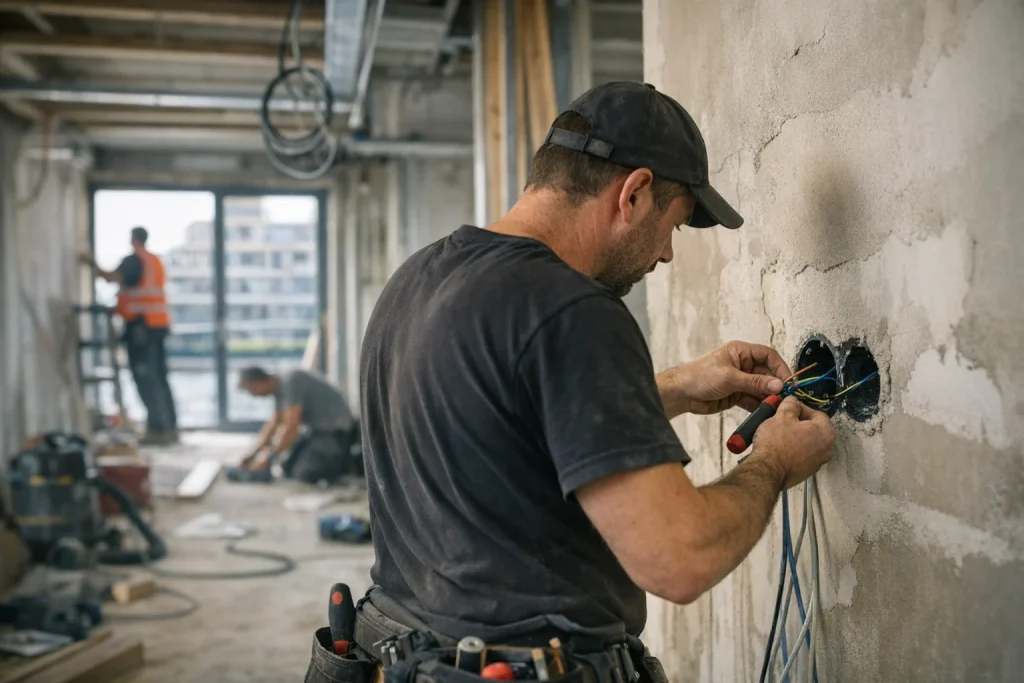
In practice, foreign electricians usually find jobs through staffing agencies or direct employer contacts. Once hired, they often receive support with housing, especially from agencies like Haldu Groep, which arrange accommodations with private bedrooms and shared facilities. Work permits are verified before starting. On site, electricians use standard tools such as multimeters, wire strippers, and drills, and wear personal protective equipment (PBM) including helmets, gloves, and safety boots. Daily tasks include installing electrical wiring, maintaining systems, and conducting safety inspections. Commutes are typically short, using bikes or public transport due to Rotterdam’s compact urban layout. Work hours and pay follow the applicable CAO.
Which conditions apply for housing electrician jobs in Rotterdam: guide for foreign workers?
Conditions include legal work authorization, adherence to safety standards, and compliance with collective labor agreements. EU/EEA/Swiss electricians do not need permits; non-EU workers must obtain a valid Dutch work permit or EU Blue Card. Employers must follow Dutch labor laws, including regulated working hours and minimum wages under CAOs. Safety certifications like VCA are mandatory, ensuring knowledge of safe work practices. Housing conditions depend on the employer or agency; many provide furnished rooms with shared kitchens and bathrooms. Language requirements vary, but basic English is usually accepted. Tools and PBM must meet Dutch regulations, and electricians must follow NEN 3140 and NEN 1010 standards.
Which mistakes are common around housing electrician jobs in Rotterdam: guide for foreign workers?
Common mistakes include:
- Starting work without the correct work permit if non-EU.
- Underestimating the importance of VCA and Dutch electrical certifications.
- Failing to clarify housing arrangements before accepting a job.
- Not checking the applicable CAO and pay conditions.
- Ignoring Dutch safety regulations and PPE requirements.
- Overlooking the need for basic Dutch language skills to improve communication.
- Assuming all housing is provided; arrangements vary widely.
- Not planning for Rotterdam’s cost of living and commuting logistics.
How do you proceed step by step?
- Check your eligibility to work in the Netherlands (EU/EEA/Swiss or non-EU).
- Obtain necessary work permits or EU Blue Card if non-EU.
- Prepare a CV highlighting relevant electrical certifications and experience.
- Apply for housing electrician jobs through staffing agencies or direct employers.
- Confirm housing arrangements and conditions before accepting the job.
- Ensure you have or obtain VCA and Dutch electrical certifications (NEN 3140, NEN 1010).
- Arrange travel and commuting plans within Rotterdam.
- Start work following Dutch labor law and safety regulations.
- Consider learning basic Dutch to improve workplace communication.
- Plan finances considering Rotterdam’s cost of living.
What should you check before you start?
- Validity of your work permit or right to work in the Netherlands.
- Which collective labor agreement (CAO) applies to your job.
- Details of your contract: pay, working hours, and job duties.
- Housing arrangements: location, costs, and facilities.
- Required certifications: VCA, NEN 3140, NEN 1010.
- Availability of personal protective equipment (PBM) and tools.
- Commute options and travel time to the job site.
- Language requirements and communication expectations.
- Safety rules and emergency procedures on site.
- Contact details for your employer or agency in case of issues.
What does this look like in practice?
Foreign electricians arriving in Rotterdam often start by contacting staffing agencies specializing in construction and installation trades. After verifying work permits and certifications, they receive job offers aligned with their skills and experience. Housing is commonly arranged by the agency, providing furnished rooms with shared kitchens near job sites. On site, electricians perform tasks such as installing wiring in new housing developments, upgrading electrical panels in renovations, or maintaining social housing electrical systems. Daily safety briefings and use of PBM are standard. Commutes are short, often by bike or public transport. Pay and working hours follow CAO agreements, ensuring fair conditions.
| Aspect | EU/EEA/Swiss Electricians | Non-EU Electricians |
|---|---|---|
| Work Permit | Not required | Required (Dutch Work Permit or EU Blue Card) |
| Housing Provided | Often arranged by agency | Often arranged by agency |
| Language Requirement | Basic English usually sufficient | Basic English usually sufficient; Dutch improves prospects |
| Certifications Needed | VCA, NEN 3140, NEN 1010 recommended | VCA, NEN 3140, NEN 1010 mandatory |
| Typical Commute | Bike, public transport, car | Bike, public transport, car |
| Type of Housing Project | Electrical Tasks | Typical Tools | Safety Equipment (PBM) |
|---|---|---|---|
| New Build Apartments | Wiring, panel installation, testing | Multimeter, wire stripper, drill | Helmet, gloves, boots, high-vis vest |
| Renovations | Rewiring, troubleshooting, upgrades | Insulation tester, screwdriver set | Helmet, gloves, boots |
| Social Housing Maintenance | Safety inspections, repairs | Multimeter, circuit tester | Helmet, gloves, boots, high-vis vest |
| Pay Factors | Effect on Salary |
|---|---|
| Experience Level | Depends on experience and CAO |
| CAO Agreement | Determines minimum wages and benefits |
| Project Type | Complex projects may offer higher pay |
| Contract Type | Permanent contracts often offer better pay |
| Region | Rotterdam pay is competitive within the Netherlands |
Frequently asked questions
Do I need a work permit to work as a housing electrician in Rotterdam?
What certifications are required for housing electricians in Rotterdam?
Is Dutch language proficiency mandatory?
How do pay rates for housing electricians in Rotterdam compare to other Dutch cities?
What housing options are available for foreign electricians?
What tools and safety equipment will I need?
Are there apprenticeship programs for foreign electricians in Rotterdam?
How do collective labor agreements (CAOs) affect my job?
What types of housing projects will I work on?
How do I commute to housing electrician jobs in Rotterdam?
Conclusion
Foreign electricians seeking housing jobs in Rotterdam should first verify their work permit status and obtain necessary certifications like VCA and NEN standards. Using staffing agencies can simplify job placement and housing arrangements, often providing private rooms near job sites. Understanding collective labor agreements ensures fair pay and working conditions. While English is commonly used, learning Dutch improves communication and career prospects. Planning for commuting and living costs in Rotterdam is essential for a smooth transition. Following safety regulations and using proper tools and personal protective equipment is mandatory for success in this field.
