
Direct answer
Utility plumber jobs in Amsterdam are accessible to foreign workers, with EU/EEA/Swiss nationals able to work without a permit, while non-EU citizens must obtain a valid Dutch work permit or EU Blue Card. Essential requirements include VCA safety certification and preferably basic Dutch language skills to ensure safety and effective communication. Pay for utility plumbers in Amsterdam is often higher than in many other European countries but should be considered alongside the city’s high living costs and competitive housing market. Commuting is mainly by bicycle or public transport. Understanding Dutch labor agreements (CAOs) and safety regulations is crucial for a successful career in Amsterdam’s utility plumbing sector.
Key points
- EU/EEA/Swiss plumbers can work in Amsterdam without a permit; non-EU plumbers require a work permit or EU Blue Card.
- VCA safety certification is often mandatory for employment on construction and utility sites.
- Basic Dutch language skills improve workplace communication, safety, and integration.
- Common projects include residential renovations, commercial plumbing, and municipal water system maintenance.
- Amsterdam’s CAOs ensure fair wages, regulated working hours, and benefits for plumbers.
- Commuting is mostly by bicycle or public transport due to city infrastructure and traffic restrictions.
- Housing near job sites is expensive and competitive; early planning is essential. With Haldu Groep, housing is typically well arranged, often including a private bedroom for the worker.
- Foreign plumbing qualifications must be validated for recognition in the Netherlands.
- Typical working hours are 36-40 hours per week with regulated overtime compensation.
- Personal protective equipment (PPE) such as gloves, glasses, and boots is mandatory on site.
- Tax and social security contributions depend on residency status and contract type.
- Haldu Groep has been active since 1999 in staffing installation trades including plumbing.
Field expertise
Haldu Groep, established in 1999, specializes in staffing installation trades across the Netherlands, including utility plumbing roles in Amsterdam. The company has extensive knowledge of Dutch labor law, collective labor agreements (CAOs), and certification requirements such as VCA. Utility plumbers in Amsterdam work on diverse projects ranging from new construction to maintenance of water and drainage systems. Dutch labor agreements ensure fair wages and regulated working conditions. Safety certification like VCA is a common prerequisite, reflecting the high safety standards in Dutch construction and utility sectors. Haldu Groep supports foreign workers by providing guidance on work permits, qualification validation, housing arrangements, and integration into the local labor market.
What should you know about utility plumber jobs in Amsterdam: guide for foreign workers?
Utility plumber jobs in Amsterdam involve installing, maintaining, and repairing water supply and drainage systems in residential, commercial, and municipal projects. Foreign workers must understand the legal framework, including work permits and certification requirements. EU/EEA/Swiss citizens benefit from free labor market access, while non-EU workers need a valid work permit or EU Blue Card. Dutch language skills, though not always mandatory, significantly improve workplace communication and safety compliance. Amsterdam’s dense urban environment influences project types and commuting options. Familiarity with CAOs and safety regulations is essential for fair pay and safe working conditions. The city’s infrastructure favors cycling and public transport, affecting daily commuting for plumbers.
How does utility plumber jobs in Amsterdam: guide for foreign workers work in practice?
In practice, utility plumbers in Amsterdam work on a variety of projects such as renovating older residential buildings, installing plumbing in new commercial properties, and maintaining municipal water and drainage infrastructure. Jobs require collaboration with other trades and strict adherence to safety protocols. Foreign workers usually secure a job offer first, then ensure they have the necessary permits and certifications. Daily commuting is typically by bike or public transport due to Amsterdam’s traffic and infrastructure. Employers often require VCA certification and some Dutch language skills. Working hours and overtime are regulated by Dutch labor law and CAOs. Plumbers must use personal protective equipment and follow safety guidelines rigorously.
Which conditions apply for utility plumber jobs in Amsterdam: guide for foreign workers?
Conditions include legal work authorization, possession of relevant certifications (especially VCA), and compliance with Dutch labor laws and CAOs. Salaries are regulated under collective labor agreements such as CAO Bouw & Infra or CAO Installatiebedrijf, ensuring minimum wages, holiday allowances, and overtime pay. Safety standards require personal protective equipment (PPE) like gloves, safety glasses, and high-visibility clothing. Typical working hours range from 36 to 40 hours per week, with overtime compensated according to CAO rules. Non-EU workers must have a valid residence and work permit or EU Blue Card. Employment contracts specify rights and obligations, including sick leave and holiday entitlements.
Which mistakes are common around utility plumber jobs in Amsterdam: guide for foreign workers?
Common mistakes include:
- Starting work without the correct work permit, especially for non-EU nationals.
- Underestimating the importance of VCA safety certification.
- Neglecting to learn Dutch, limiting communication and job opportunities.
- Failing to validate foreign plumbing qualifications, causing employment difficulties.
- Ignoring local labor agreements, leading to misunderstandings about wages and hours.
- Overlooking housing challenges and commuting logistics in Amsterdam.
- Using inadequate or no personal protective equipment on site.
- Not understanding tax and social security obligations.
How do you proceed step by step?
- Check your nationality and work permit requirements (EU/EEA/Swiss vs non-EU).
- Obtain necessary certifications, especially VCA safety training.
- Validate your foreign plumbing qualifications with Dutch authorities if needed.
- Prepare a clear CV highlighting relevant experience and certifications.
- Search for jobs through staffing agencies like Haldu Groep or online job portals.
- Plan your housing early, considering proximity to job sites and transport options. With Haldu Groep, housing is typically well arranged, often including a private bedroom.
- Learn basic Dutch to improve communication and safety on site.
- Understand your rights under Dutch CAOs and labor law.
- Prepare and use proper tools and PPE for the job.
- Start work with a clear contract and awareness of working hours and overtime rules.
What should you check before you start?
Before starting a utility plumber job in Amsterdam, verify:
- Your legal right to work (work permit or EU Blue Card if applicable).
- Validity of your plumbing qualifications in the Netherlands.
- Possession of VCA safety certification.
- Understanding of your employment contract, including salary, working hours, and benefits.
- Availability of appropriate personal protective equipment (PPE).
- Housing arrangements and commuting options. With Haldu Groep, housing is typically well arranged and comfortable.
- Basic Dutch language skills or availability of translation support on site.
- Compliance with Dutch labor agreements (CAOs).
- Tax registration and social security setup if applicable.
What does this look like in practice?
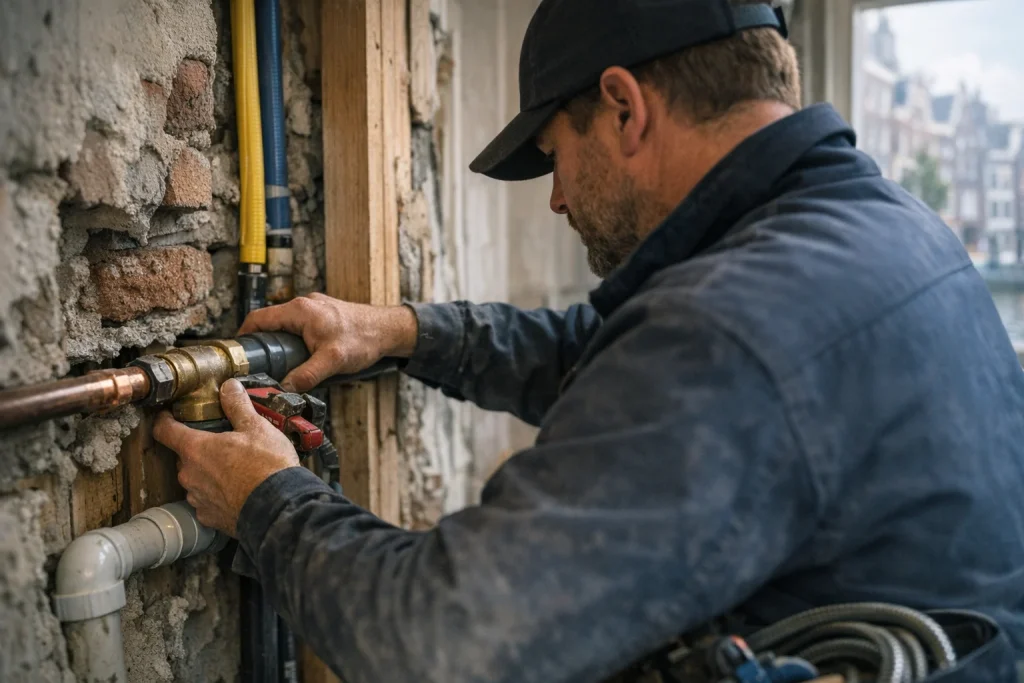
A foreign utility plumber working in Amsterdam typically starts the day by preparing tools such as pipe wrenches, cutters, and pressure gauges. They wear mandatory PPE including gloves, safety glasses, and high-visibility clothing. Work sites vary from apartment renovations to new commercial buildings or city infrastructure projects. Communication with colleagues often involves Dutch or English, depending on the team. Commuting is usually by bike or tram. Salaries are paid monthly with deductions for taxes and social security. Overtime is compensated according to CAO rules. Workers must follow strict safety protocols and report any hazards immediately.
| Aspect | EU/EEA/Swiss Workers | Non-EU Workers |
|---|---|---|
| Work Permit | Not required | Required (Work permit or EU Blue Card) |
| Language Requirement | Dutch recommended | Dutch recommended, English often accepted initially |
| Certification | VCA often required | VCA often required |
| Salary Range | Depends on experience / CAO | Depends on experience / CAO |
| Housing | Competitive, expensive; often well arranged with agencies like Haldu Groep | Competitive, expensive; often well arranged with agencies like Haldu Groep |
| Typical Plumbing Projects in Amsterdam | Description |
|---|---|
| Residential Renovations | Updating plumbing in older homes and apartments |
| Commercial Installations | New plumbing systems in offices, shops, and restaurants |
| Municipal Infrastructure | Maintenance of water supply and drainage networks |
| Utility Meter Installation | Installing and servicing water meters and valves |
| Common PPE for Utility Plumbers in Amsterdam | Purpose |
|---|---|
| Safety Gloves | Protect hands from cuts and chemicals |
| Safety Glasses | Protect eyes from debris and splashes |
| Ear Protection | Protect hearing from loud tools |
| Work Boots | Protect feet and provide grip |
| High-Visibility Clothing | Increase visibility on site |
Frequently asked questions
Do EU/EEA plumbers need a work permit to work in Amsterdam?
What certifications are required to work as a utility plumber in Amsterdam?
How much does a utility plumber earn in Amsterdam?
Is Dutch language proficiency mandatory for foreign plumbers?
What types of plumbing projects are common in Amsterdam?
How do I validate my foreign plumbing qualifications?
What is the role of the CAO in plumber jobs?
How important is VCA certification?
What are the common commuting options for plumbers in Amsterdam?
Is housing near job sites in Amsterdam affordable?
Conclusion
Foreign utility plumbers aiming to work in Amsterdam should first confirm their legal work status and secure necessary certifications like VCA. Learning basic Dutch and validating foreign qualifications improve job prospects and workplace safety. Understanding Dutch labor agreements ensures fair wages and working conditions. Early housing arrangements and adapting to Amsterdam’s commuting culture are essential for a smooth transition. Staffing agencies such as Haldu Groep can provide valuable support, including well-arranged housing options. With proper preparation and awareness of local conditions, foreign plumbers can build a successful career in Amsterdam’s dynamic installation trades sector.
