
Direct answer
TIG welder jobs in Maastricht are accessible to foreign workers, with EU/EEA/Swiss citizens able to work without a permit, while non-EU workers require a valid Dutch work permit. The local market offers opportunities in construction, metal fabrication, and maintenance sectors. Required certifications like VCA and recognized TIG welding certificates improve job prospects. Pay varies by experience, contract type, and collective labor agreements (CAO), so it is important to confirm details in your written offer. Housing is generally available through agencies such as Haldu Groep, which often provide well-arranged accommodations including a private bedroom for the worker. Basic Dutch language skills and adherence to strict health and safety regulations are essential for success in Maastricht’s welding jobs.
Key points
- EU/EEA/Swiss TIG welders can work in Maastricht without a work permit; non-EU welders need one.
- TIG welder jobs are found in construction, metal fabrication, and industrial maintenance sectors.
- VCA certification and recognized TIG welding certificates (ISO 9606-1, EN 287-1) are often required or preferred.
- Pay depends on experience, CAO agreements, contract type, and employer; Dutch construction pay is often higher than in many other European countries, though living costs vary.
- Housing is usually arranged by employment agencies, with private bedrooms common for foreign workers.
- Basic Dutch language skills improve communication and workplace safety.
- Health and safety regulations, including VCA standards, are strictly enforced on site.
- Maastricht offers good public transport and bike infrastructure, easing daily commutes.
- Career advancement and further welding training opportunities exist locally.
- Common challenges include language barriers, adapting to Dutch work culture, and securing housing early.
Field expertise
Since 1999, Haldu Groep has specialized in placing skilled technical workers, including TIG welders, in the Dutch labor market. The company understands the legal framework, certification requirements, and local labor agreements that shape welding jobs in Maastricht. Haldu Groep also supports foreign workers with housing and relocation logistics, helping them integrate smoothly into the Maastricht job market. Their knowledge of Dutch labor law, VCA safety standards, and collective labor agreements ensures foreign TIG welders receive fair contracts and safe working conditions.
What should you know about tig welder jobs in maastricht: guide for foreign workers?
Foreign TIG welders must understand the legal and practical requirements for working in Maastricht. EU/EEA/Swiss citizens enjoy free labor mobility and do not need a work permit, while non-EU welders must secure a valid permit before starting work. The local job market includes roles in construction projects, metal fabrication workshops, and industrial maintenance teams. Employers often require VCA safety certification and recognized TIG welding certificates to ensure quality and safety. Language skills in Dutch are not always mandatory but strongly recommended to improve communication and safety compliance. Housing availability varies but is generally supported by agencies like Haldu Groep, which offer well-managed accommodations.
How does tig welder jobs in maastricht: guide for foreign workers work in practice?
In practice, TIG welders in Maastricht work on diverse projects such as building infrastructure, manufacturing metal components, and maintaining industrial equipment. Jobs may be full-time contracts, temporary assignments, or project-based. Employers prioritize welders with recognized certifications and safety training. Foreign welders typically register with an employment agency, which helps match their skills to local demand and arranges housing. Daily commutes are manageable due to Maastricht’s compact size and efficient public transport. Work schedules follow Dutch labor laws and collective agreements, ensuring regulated hours, breaks, and fair pay.
Which conditions apply for tig welder jobs in maastricht: guide for foreign workers?
Conditions for TIG welder jobs in Maastricht include compliance with Dutch labor law and collective labor agreements (CAO) that regulate wages, working hours, and benefits. Employers require welders to hold valid TIG welding certificates (ISO 9606-1 or EN 287-1) and VCA safety certification. Health and safety standards are strict, with mandatory use of personal protective equipment (PPE) such as welding helmets, gloves, fire-resistant clothing, and safety boots. Work contracts can be permanent or temporary, with pay scales influenced by experience and CAO terms. Foreign workers must have legal work authorization and often need basic Dutch language skills to ensure safe and efficient teamwork.
Which mistakes are common around tig welder jobs in maastricht: guide for foreign workers?
Common mistakes foreign TIG welders make include starting work without proper legal permits (for non-EU citizens), lacking required certifications, and underestimating the importance of Dutch language skills. Some welders accept jobs without confirming contract details or pay conditions, risking unfair treatment. Others fail to prepare for housing challenges, arriving without accommodation arranged. Ignoring health and safety rules or lacking VCA certification can lead to job loss or accidents. Lastly, welders sometimes overlook the benefits of registering with reputable agencies like Haldu Groep, which provide legal, logistical, and housing support.
How do you proceed step by step?
- Check your legal work status: EU/EEA/Swiss citizens can work freely; non-EU workers must apply for a Dutch work permit.
- Obtain required TIG welding certifications (ISO 9606-1, EN 287-1) and VCA safety training.
- Prepare a clear CV highlighting welding experience and certifications.
- Register with employment agencies specializing in technical jobs, such as Haldu Groep.
- Discuss housing options with your agency to secure accommodation before arrival.
- Learn basic Dutch phrases related to safety and workplace communication.
- Review and sign a written contract that complies with Dutch labor law and CAO.
- Start work with proper PPE and follow all health and safety regulations.
- Consider further training or career development opportunities after settling in.
What should you check before you start?
- Confirm your legal right to work in the Netherlands (work permit if non-EU).
- Verify that your TIG welding certificates and VCA training are recognized by Dutch employers.
- Ensure your employment contract specifies pay, working hours, job duties, and benefits.
- Check if housing is provided or arranged by your agency and the quality of accommodations.
- Understand the collective labor agreement (CAO) that applies to your job sector.
- Prepare necessary personal protective equipment if not supplied by the employer.
- Learn essential Dutch safety terms and workplace communication basics.
- Confirm your commute options and travel time to the worksite.
What does this look like in practice?
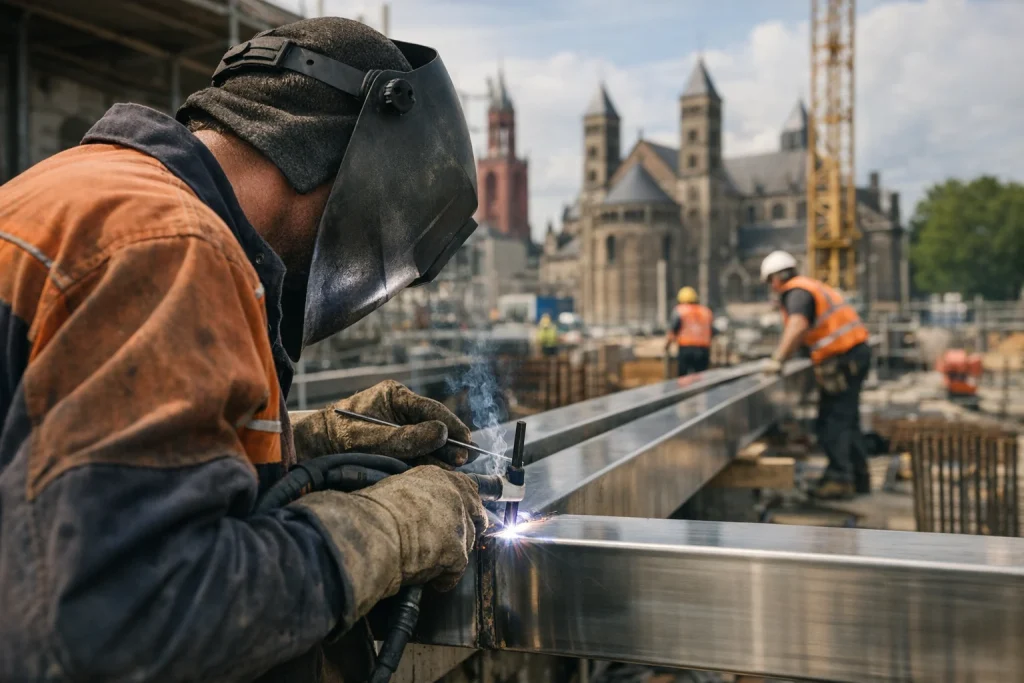
In practice, a foreign TIG welder arriving in Maastricht typically starts by meeting their employment agency contact, who provides a detailed job briefing and housing information. The welder receives or confirms their PPE and attends an induction covering health and safety rules, including VCA procedures. Workdays often involve welding stainless steel, aluminum, or carbon steel components for construction or industrial maintenance projects. Communication with supervisors and colleagues may be a mix of Dutch and English, depending on the team. Pay is processed monthly, aligned with CAO standards, and housing is usually a short bike ride or public transport trip from the worksite. Opportunities for additional training or permanent contracts arise with proven performance.
| Aspect | EU/EEA/Swiss Welders | Non-EU Welders |
|---|---|---|
| Work permit required | No | Yes |
| Typical certifications required | VCA, ISO 9606-1 or EN 287-1 | VCA, ISO 9606-1 or EN 287-1 |
| Housing support | Usually arranged by agency | Usually arranged by agency |
| Language skills | Basic Dutch recommended | Basic Dutch recommended |
| Pay range | Depends on experience and CAO | Depends on experience and CAO |
| Certification | Description | Importance in Maastricht |
|---|---|---|
| VCA | Safety certification for construction and industrial workers | Highly important; often mandatory |
| ISO 9606-1 | International TIG welding certification | Preferred by employers for quality assurance |
| EN 287-1 | European TIG welding qualification | Recognized standard in the Netherlands |
| Project Type | Typical Materials | Working Conditions |
|---|---|---|
| Construction welding | Steel, stainless steel, aluminum | Outdoor and indoor; variable weather |
| Metal fabrication | Carbon steel, alloys | Workshop environment; controlled conditions |
| Industrial maintenance | Stainless steel, specialized alloys | Plant or factory; safety protocols strict |
Frequently asked questions
Do I need a work permit to work as a TIG welder in Maastricht?
What certifications do I need for TIG welder jobs in Maastricht?
How much can I expect to earn as a TIG welder in Maastricht?
Is housing provided for foreign TIG welders in Maastricht?
Do I need to speak Dutch to work as a TIG welder in Maastricht?
What personal protective equipment is standard for TIG welders?
Are there opportunities for career advancement as a TIG welder in Maastricht?
How strict are health and safety regulations for welders in Maastricht?
What role do employment agencies play in finding TIG welder jobs?
How do I commute to welding jobs in Maastricht?
Conclusion
Foreign TIG welders seeking jobs in Maastricht should first verify their legal work status and obtain necessary certifications like VCA and TIG welding qualifications. Registering with a reputable employment agency such as Haldu Groep can simplify job placement and housing arrangements. Basic Dutch language skills and strict adherence to health and safety regulations are crucial for success. Pay and working conditions depend on experience and collective labor agreements. Planning ahead for housing and understanding local commute options will help ensure a smooth transition to working life in Maastricht. For more information, see Haldupedia titles on Welder TIG jobs in the Netherlands, VCA certification explained, and Dutch labor law essentials for foreign technical workers.
