
Direct answer
TIG welder jobs in Eindhoven are accessible to foreign workers, with EU/EEA/Swiss nationals able to work without permits, while non-EU welders must obtain a Dutch work permit before starting. Eindhoven’s strong industrial and high-tech sectors, particularly automotive manufacturing and machine building, create steady demand for skilled TIG welders. Essential certifications like ISO 9606-1 and VCA safety training are often required. Pay depends on experience, contract type, and collective labor agreements (CAOs), generally offering competitive wages compared to many European countries. Housing availability varies but is often arranged by staffing agencies such as Haldu Groep, typically providing private rooms. The city’s excellent public transport and cycling infrastructure support convenient commuting for welders living locally or in nearby towns.
Key points
- EU/EEA/Swiss citizens can work in Eindhoven without a permit; non-EU welders need a valid Dutch work permit.
- TIG welding jobs are mainly found in automotive manufacturing, industrial production, and construction sectors.
- ISO 9606-1 welding certification and VCA safety training are highly valued and often mandatory.
- Pay varies by experience, contract type, and CAO agreements; generally competitive within the Dutch labor market.
- Contracts include temporary, permanent, and project-based roles, usually with 40-hour workweeks.
- Housing availability depends on the placement and agency; with Haldu Groep, housing is typically well arranged, often including private bedrooms.
- Basic Dutch or English language skills are important for safety and communication on site.
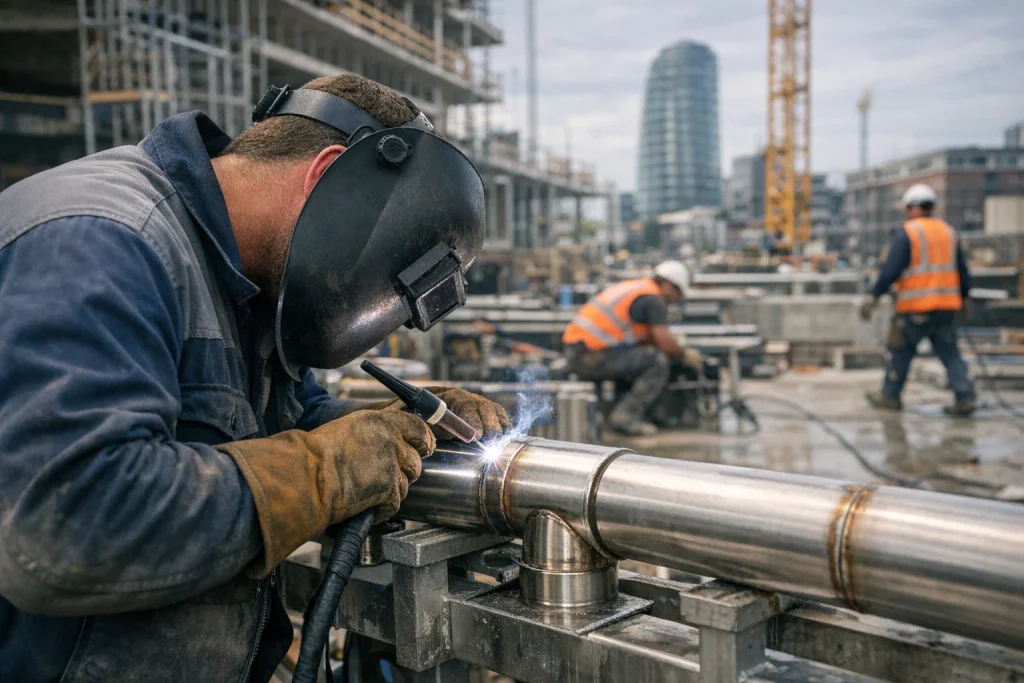
- Personal protective equipment (PPE) like welding helmets, gloves, and fire-resistant clothing is mandatory.
- Eindhoven’s public transport and bike paths facilitate easy commuting for welders.
- Staffing agencies such as Haldu Groep provide support for job placement, permits, and housing.
- Career growth is possible through additional training and certifications.
- Common challenges include language barriers, housing costs, and adapting to Dutch workplace culture.
Field expertise
Since 1999, Haldu Groep has specialized in placing skilled foreign workers, including TIG welders, in the Dutch technical and construction sectors. Eindhoven is a major technology and industrial hub, home to automotive manufacturers, machine builders, and construction companies that regularly seek TIG welders. The Dutch labor market is regulated by collective labor agreements (CAOs) such as Metalektro and the Construction CAO, which define wages, working conditions, and benefits. Safety certification like VCA is widely recognized and often mandatory to ensure workplace safety. Agencies like Haldu Groep assist foreign welders with legal requirements, certification recognition, housing arrangements, and language challenges.
What should you know about tig welder jobs in eindhoven: guide for foreign workers?
Foreign TIG welders aiming for jobs in Eindhoven should understand the legal work framework, job market specifics, certification requirements, and local living conditions. EU/EEA/Swiss citizens have unrestricted work rights, while non-EU welders must secure a Dutch work permit, usually arranged by the employer or agency. Eindhoven’s economy includes major automotive companies, industrial manufacturers, and construction firms that regularly hire TIG welders. Certifications such as ISO 9606-1 and VCA are highly valued and often required. Pay and contract conditions vary but are generally governed by CAOs. Language skills in Dutch or English are important for safety and teamwork. Housing can be challenging but is often arranged by staffing agencies. Safety standards are strict, requiring proper PPE and VCA certification.
How does tig welder jobs in eindhoven: guide for foreign workers work in practice?
In practice, foreign TIG welders usually apply through staffing agencies or directly to employers. Agencies like Haldu Groep assist with CV preparation, certification validation, and work permit arrangements if necessary. After hiring, welders typically sign temporary or permanent contracts aligned with Dutch labor laws and CAOs. Work involves TIG welding stainless steel, aluminum, and carbon steel components in sectors such as automotive parts production, machine construction, and building projects. Daily tasks include seam preparation, operating TIG welding machines, and quality control. Safety training and VCA certification are often prerequisites. Housing is arranged either independently or through the agency, with private rooms common. Commuting is typically by bike or public transport.
Which conditions apply for tig welder jobs in eindhoven: guide for foreign workers?
Conditions for TIG welder jobs in Eindhoven include legal work rights, certification requirements, pay scales, contract types, and safety standards. EU/EEA/Swiss welders have unrestricted access; non-EU welders require a work permit. Employers prefer welders with recognized certifications like ISO 9606-1 and VCA safety certificates. Pay depends on experience, CAO agreements (Metalektro or Construction), and contract type (temporary, permanent, project-based). Working hours are usually 40 per week, with possible overtime. Safety regulations require PPE such as welding helmets, gloves, and fire-resistant clothing. Language skills in Dutch or English are often necessary for communication and compliance with safety protocols.
Which mistakes are common around tig welder jobs in eindhoven: guide for foreign workers?
Common mistakes foreign TIG welders make include underestimating the need for proper certification, neglecting language skills, and misunderstanding legal work requirements. Non-EU welders sometimes start work without a valid permit, risking legal consequences. Others overlook the importance of VCA certification, limiting job opportunities. Poor CV preparation or failure to highlight relevant welding experience reduces chances of placement. Housing arrangements can be neglected, causing last-minute difficulties. Some welders underestimate the importance of safety training and PPE compliance. Lastly, not researching CAO pay scales or contract terms can cause confusion about wages and benefits.
How do you proceed step by step?
- Check your legal work status: EU/EEA/Swiss citizens can work without a permit; non-EU welders must secure a Dutch work permit.
- Obtain or validate required welding certifications such as ISO 9606-1 and VCA.
- Prepare a clear CV emphasizing TIG welding experience and certifications.
- Apply through staffing agencies like Haldu Groep or directly to employers in Eindhoven.
- Arrange housing early, either independently or via your agency.
- Complete any required safety training and obtain PPE before starting work.
- Understand your contract terms, pay scale, and working hours based on CAO agreements.
- Learn basic Dutch or improve English to facilitate workplace communication.
- Plan your commute using Eindhoven’s public transport or bike infrastructure.
- Seek career development opportunities through further training or employer programs.
What should you check before you start?
- Confirm your legal right to work in the Netherlands and have necessary permits.
- Verify your welding certifications and consider obtaining VCA safety certification.
- Review your employment contract carefully, including pay, working hours, and benefits.
- Ensure housing arrangements are confirmed, preferably with a private bedroom.
- Check the required personal protective equipment (PPE) and safety protocols.
- Assess your language skills and plan to improve if needed.
- Understand the commuting options and routes to your workplace.
- Clarify job duties, work environment, and expectations with your employer or agency.
- Prepare your CV to highlight relevant TIG welding skills and experience.
- Confirm any additional training or induction sessions before starting.
What does this look like in practice?
In practice, a foreign TIG welder arriving in Eindhoven typically connects with a staffing agency such as Haldu Groep, which assists with job placement, certification checks, and housing. The welder receives a contract aligned with Dutch labor laws and CAO standards. Daily work involves TIG welding stainless steel or aluminum parts for automotive or industrial clients, following strict safety rules. The welder wears PPE including a welding helmet, gloves, and fire-resistant clothing. Communication is often in English or basic Dutch. Commuting is done by bike or public transport, with many workers living in nearby neighborhoods or agency-arranged housing. Ongoing training and career development are encouraged by employers.
| Aspect | EU/EEA/Swiss Welders | Non-EU Welders |
|---|---|---|
| Work Permit | Not required | Required, employer or agency arranges |
| Common Certifications | ISO 9606-1, VCA | ISO 9606-1, VCA (often required) |
| Language Requirements | Basic Dutch or English recommended | Basic Dutch or English recommended |
| Housing | Agency-assisted or independent | Agency-assisted preferred |
| Contract Types | Temporary, permanent, project-based | Temporary, permanent, project-based |
| Certification | Description | Importance in Eindhoven |
|---|---|---|
| ISO 9606-1 | Welder qualification for TIG welding | Highly preferred by employers |
| VCA (Safety) | Safety certification for working in hazardous environments | Often required or strongly preferred |
| EN 287-1 | European welding qualification standard | Recognized, sometimes required |
| Contract Type | Typical Duration | Working Hours | Pay Influence |
|---|---|---|---|
| Temporary | Project-based or seasonal | 40 hours/week, possible overtime | Depends on experience and CAO agreements |
| Permanent | Indefinite | 40 hours/week, overtime possible | Depends on experience and CAO agreements |
| Project-based | Duration of project | Varies by project | Depends on project complexity and CAO agreements |
Frequently asked questions
Do I need a work permit to work as a TIG welder in Eindhoven?
What certifications do employers in Eindhoven require for TIG welders?
How much can I expect to earn as a TIG welder in Eindhoven?
Are there language requirements for TIG welder jobs in Eindhoven?
What types of contracts are common for TIG welders in Eindhoven?
Is housing provided for foreign TIG welders in Eindhoven?
What personal protective equipment (PPE) do TIG welders need?
What industries hire TIG welders in Eindhoven?
How do I prepare my CV for TIG welder jobs in Eindhoven?
Can I advance my career as a TIG welder in Eindhoven?
Conclusion
Foreign TIG welders seeking jobs in Eindhoven benefit from a strong local demand in industrial and construction sectors. EU/EEA/Swiss workers enjoy straightforward access, while non-EU welders must secure work permits. Certification and safety compliance, especially VCA, are essential. Pay and contracts align with Dutch CAOs, offering competitive conditions. Housing is often arranged by agencies, easing relocation. Basic language skills and understanding local work culture improve integration. Careful planning—from legal status to housing and certification—helps ensure a smooth transition and successful career in Eindhoven’s welding sector.
