Direct answer
MIG/MAG welder jobs in the Netherlands are accessible to foreign workers, with EU/EEA/Swiss citizens able to work without restrictions. Non-EU nationals must obtain a valid work permit, usually requiring employer sponsorship. Essential certifications such as ISO 9606-1 and VCA safety certification are commonly required. Pay depends on experience, region, contract type, and collective labor agreements (CAO), with Dutch wages often higher than in many other European countries, though living costs vary by location. Housing may be arranged by employers or agencies, often including private bedrooms. The demand for skilled MIG/MAG welders remains strong in industrial hubs like Amsterdam, Rotterdam, and Eindhoven, making the Netherlands an attractive destination for qualified foreign welders with proper legal status and certifications.
Key points
- EU/EEA/Swiss citizens can work without permits; non-EU nationals require work permits and employer sponsorship.
- Recognized welding certifications such as ISO 9606-1 and VCA safety certification are often mandatory.
- Pay varies by experience, CAO agreements, contract type, and region; Dutch wages are often competitive in Europe.
- Basic Dutch or English language skills are usually sufficient; stronger skills improve safety and teamwork.
- Housing arrangements vary; some employers or agencies provide accommodation with private bedrooms.
- High demand for MIG/MAG welders exists in major cities and industrial regions.
- Collective labor agreements regulate wages, working hours, overtime, holidays, and benefits.
- Personal protective equipment (PPE) such as helmets, gloves, and fire-resistant clothing is mandatory.
- Both temporary and permanent contracts are common, with labor laws protecting workers.
- Career growth is possible through advanced welding certifications and training programs.
- Recruitment agencies often assist with work permits, housing, and onboarding.
- Understanding Dutch workplace culture and safety standards is essential for success.
Field expertise
Since 1999, Haldu Groep has specialized in placing skilled workers in construction, technical trades, and industrial sectors across the Netherlands. Their expertise includes navigating Dutch labor laws, collective labor agreements, and certification requirements relevant to welders. Haldu Groep supports foreign candidates by facilitating work permit processes, verifying qualifications, and arranging housing solutions. Their experience reflects the ongoing demand for MIG/MAG welders in Dutch infrastructure, manufacturing, and construction projects, where safety and quality standards are strictly enforced.
What should you know about mig/mag welder jobs in the netherlands for foreign workers?
Foreign workers aiming for MIG/MAG welder jobs in the Netherlands should understand that these roles require specific technical skills and certifications. MIG (Metal Inert Gas) and MAG (Metal Active Gas) welding are widely used in sectors like construction, shipbuilding, and industrial fabrication. The Netherlands welcomes EU/EEA/Swiss nationals without restrictions, but non-EU welders must secure a work permit, usually through employer sponsorship. Recognized welding certifications such as ISO 9606-1 or the Dutch Welding Certificate are often mandatory. VCA safety certification is also commonly required to meet Dutch health and safety standards. Language skills in Dutch or English help with communication and safety on-site. Housing may be provided by employers or agencies, often with private bedrooms. Collective labor agreements (CAO) regulate wages, working hours, and benefits, ensuring fair treatment.
How does mig/mag welder jobs in the netherlands for foreign workers work in practice?
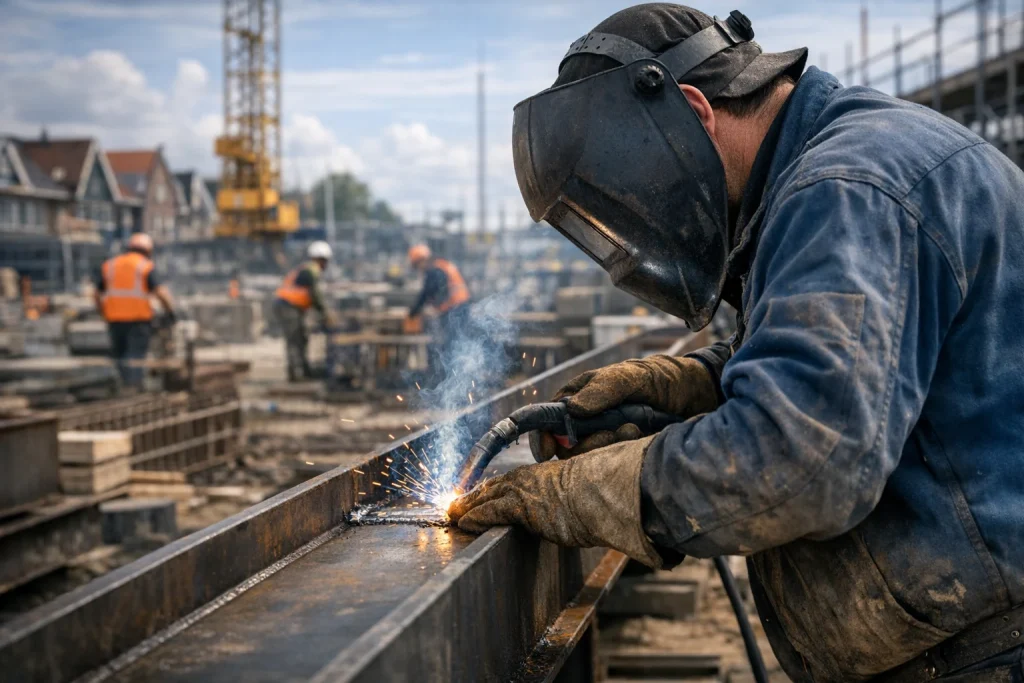
In practice, foreign MIG/MAG welders typically find jobs through recruitment agencies or direct applications to companies in construction, metal fabrication, or industrial sectors. Employers verify legal work eligibility and may assist non-EU welders with work permit applications. Upon hiring, welders often complete safety training, including obtaining or renewing VCA certification if needed. Contracts can be temporary or permanent, with pay and conditions set by the applicable CAO. Daily tasks include preparing materials, setting welding parameters, and performing welds on steel, stainless steel, or aluminum components. Welders must wear personal protective equipment (PPE) such as helmets, gloves, and fire-resistant clothing. Housing arrangements depend on the employer or agency; accommodations may be shared or private and are often near the worksite. Communication on-site is usually in Dutch or English, with basic language skills sufficient in many cases.
Which conditions apply for mig/mag welder jobs in the netherlands for foreign workers?
Several conditions apply to MIG/MAG welder jobs for foreign workers in the Netherlands:
- Legal work rights: EU/EEA/Swiss citizens can work without permits; non-EU nationals require valid work permits and employer sponsorship.
- Certifications: Recognized welding certificates (ISO 9606-1, Dutch Welding Certificate) and VCA safety certification are often mandatory.
- Language: Basic Dutch or English is usually sufficient; better language skills improve safety and teamwork.
- Collective labor agreements (CAO): Regulate wages, working hours, overtime, holidays, and benefits.
- Work contracts: Temporary and permanent contracts are common, with labor laws protecting workers’ rights.
- Health and safety: Mandatory use of PPE and adherence to safety protocols are strictly enforced.
- Housing: Varies by employer or agency; some provide accommodation with private bedrooms.
Which mistakes are common around mig/mag welder jobs in the netherlands for foreign workers?
Common mistakes foreign welders make include:
- Not verifying legal work status before applying, causing permit or employment issues.
- Failing to obtain or recognize the importance of VCA safety certification.
- Ignoring language requirements, leading to communication problems and safety risks.
- Overlooking collective labor agreements (CAO) and their impact on pay and conditions.
- Assuming housing is always provided; some workers face difficulties without prior arrangements.
- Submitting unclear or incomplete CVs lacking relevant welding certifications and experience.
- Neglecting the need for proper personal protective equipment (PPE) on the job.
- Accepting job offers without confirming contract details, pay, and working hours in writing.
How do you proceed step by step?
- Check eligibility: Confirm your right to work in the Netherlands (EU/EEA/Swiss or work permit for non-EU).
- Prepare your CV: Emphasize MIG/MAG welding experience, certifications, and safety training.
- Obtain certifications: Acquire recognized welding certificates and VCA safety certification if possible.
- Search for jobs: Use recruitment agencies, job portals, or company websites specializing in welding roles.
- Apply and interview: Submit applications and prepare for interviews, highlighting your skills and certifications.
- Secure work permit: For non-EU nationals, ensure your employer applies for the necessary permit.
- Arrange housing: Confirm accommodation options with your employer or agency before arrival.
- Relocate and start work: Travel to the Netherlands, complete onboarding or safety training, and begin your job.
What should you check before you start?
Before starting a MIG/MAG welder job in the Netherlands, verify:
- Your legal work status and validity of any required permits.
- Employment contract details: pay, working hours, duration, and benefits.
- Recognition and validity of your welding certifications.
- Whether VCA safety certification is required and if you possess it.
- Language requirements and your ability to communicate effectively on-site.
- Housing arrangements, costs, location, and amenities.
- Availability and condition of personal protective equipment (PPE).
- Applicable collective labor agreements (CAO) and their terms.
- Health and safety rules and your rights as a worker.
What does this look like in practice?
A foreign MIG/MAG welder arriving in the Netherlands might be greeted by an employer or agency representative at the airport or train station. They receive an introduction to the worksite, safety protocols, and team members. If housing is provided, the welder moves into shared or private accommodation near the worksite. Initial days include safety training and possibly obtaining or renewing VCA certification. Daily tasks involve welding steel or aluminum parts using MIG or MAG techniques, following strict welding parameters and quality standards. Welders wear mandatory PPE such as helmets, gloves, and fire-resistant clothing. Pay is usually monthly, with overtime compensated according to CAO rules. Communication is often in English or simple Dutch, and welders may attend further training to enhance skills or gain additional certifications.
| Aspect | EU/EEA/Swiss Welders | Non-EU Welders |
|---|---|---|
| Work Permit | Not required | Required, employer sponsorship needed |
| Common Certifications | ISO 9606-1, VCA | ISO 9606-1, VCA |
| Language | Basic Dutch or English recommended | Basic Dutch or English recommended |
| Housing | Varies by employer/agency; often arranged | Varies by employer/agency; often arranged |
| Contract Types | Temporary or permanent | Temporary or permanent |
| Certification | Description | Importance |
|---|---|---|
| ISO 9606-1 | International standard for welder qualification | Highly valued and often required |
| Dutch Welding Certificate | National recognized welding qualification | Preferred by many employers |
| VCA Safety Certification | Safety training certification for hazardous work | Often mandatory for site access |
| Housing Type | Description | Typical Features |
|---|---|---|
| Employer-provided | Accommodation arranged by employer or agency | Private bedroom, shared kitchen/bathroom, near worksite |
| Independent rental | Worker arranges own housing | Varies widely, may be more expensive |
| Temporary housing | Short-term housing during initial period | Shared rooms, basic amenities |
Frequently asked questions
Do I need a work permit to work as a MIG/MAG welder in the Netherlands?
What certifications are required for MIG/MAG welders in the Netherlands?
Is VCA certification mandatory for welding jobs?
What languages do I need to speak for welding jobs?
How much can I expect to earn as a MIG/MAG welder in the Netherlands?
Are housing and accommodation provided?
What types of companies hire MIG/MAG welders?
Can I get permanent contracts as a foreign welder?
What personal protective equipment is required?
Are there opportunities for further training?
Conclusion
MIG/MAG welder jobs in the Netherlands offer strong opportunities for foreign workers, especially those from the EU/EEA/Switzerland with free work rights. Non-EU welders must secure work permits and employer sponsorship. Success depends on recognized welding certifications, VCA safety training, and basic language skills. Pay and conditions are regulated by collective labor agreements, often providing competitive wages and protections. Housing arrangements vary by employer or agency, so clarify accommodation before arrival. Demand is high in major industrial regions, with career growth possible through further training. Preparing your CV, verifying legal status, and understanding contract terms are essential steps toward a successful welding career in the Netherlands.