
Direct answer
Foreign workers from the EU, EEA, and Switzerland can work in construction jobs in The Hague without a work permit. Non-EU workers must obtain a valid work permit before starting employment. Construction roles range from laborers to skilled trades like bricklayers, carpenters, electricians, and site supervisors. VCA safety certification is generally mandatory, and basic Dutch or English language skills improve job opportunities. Salaries in The Hague’s construction sector are often higher than in many European countries but reflect the city’s relatively high living costs. The CAO Bouw & Infra governs wages and working conditions. Public transport is efficient for commuting, and housing arrangements vary by placement; with Haldu Groep, housing is typically well arranged, including a private bedroom for the worker. Early planning is recommended due to limited availability and higher costs in the city.
Key points
- EU/EEA/Swiss citizens do not need a work permit for construction jobs in The Hague; non-EU workers do.
- Common construction roles include laborer, bricklayer, carpenter, electrician, plumber, and site supervisor.
- VCA safety certification is typically required to work on Dutch construction sites.
- Construction salaries in The Hague are generally higher than many European cities but balanced by local living costs.
- Basic Dutch language skills improve employability; English is often accepted on site.
- The Hague’s construction projects include government buildings, infrastructure, and residential developments.
- Public transport and cycling are common commuting methods.
- Housing arrangements depend on the placement or agency; with Haldu Groep, housing is usually well arranged, including private bedrooms.
- The CAO Bouw & Infra regulates wages, working hours, overtime, holidays, and labor conditions.
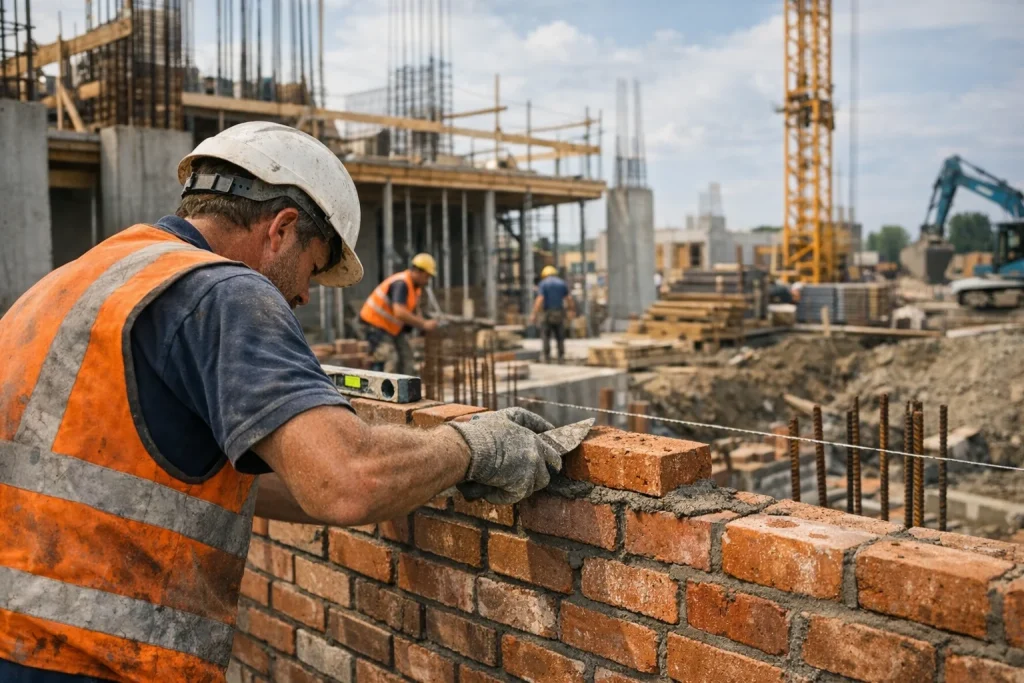
- Personal protective equipment (PPE) such as helmets, safety boots, and high-visibility vests are mandatory.
- Typical working hours are 40 per week, with regulated overtime pay.
- Training programs like VCA and MBO Bouwkunde support skill development and certification.
Field expertise
Since 1999, Haldu Groep has supported foreign workers in Dutch technical sectors, including construction. The Hague’s construction market operates under Dutch labor law and the CAO Bouw & Infra collective agreement, which ensures fair wages and working conditions. Safety regulations such as the Arbowet require strict compliance, including VCA certification for workers. The city’s construction sector focuses on public infrastructure, government buildings, and residential projects, creating steady demand for skilled and semi-skilled workers. Organizations like Haldu Groep, FNV Bouw, and CNV Vakmensen provide guidance on legal rights, training, and job matching for foreign workers. Understanding local labor agreements, language expectations, and safety requirements is essential for success.
What should you know about construction jobs in The Hague: guide for foreign workers?
Construction jobs in The Hague cover a broad spectrum of roles, from general laborers to skilled trades such as bricklayers, carpenters, electricians, and plumbers. The city’s construction sector is active with projects including government buildings, public infrastructure, and residential housing developments. Foreign workers from the EU/EEA/Switzerland can work freely without a permit, while non-EU workers must secure a work permit through their employer or a recognized sponsor. Safety is a priority, with VCA certification often required to access construction sites. While Dutch language skills are advantageous, many sites accept basic English, especially for laborers and helpers. The CAO Bouw & Infra collective agreement governs wages, working hours, and conditions, ensuring fair treatment and social security coverage.
How does construction jobs in The Hague: guide for foreign workers work in practice?
In practice, foreign workers find construction jobs through recruitment agencies, direct employers, or organizations like Haldu Groep. EU/EEA/Swiss workers only need to register their residence and can start working immediately. Non-EU workers require a valid work permit, which employers often help arrange. Upon hiring, workers usually attend safety training, including VCA certification courses if not already certified. On site, wearing personal protective equipment (PPE) such as helmets, safety boots, gloves, and high-visibility vests is mandatory. Daily toolbox talks and safety checks are standard. Employment contracts follow the CAO Bouw & Infra terms, specifying wages, working hours, and overtime rules. Most workers commute by public transport, bicycle, or sometimes car, benefiting from The Hague’s well-connected infrastructure.
Which conditions apply for construction jobs in The Hague: guide for foreign workers?
Construction workers in The Hague must comply with Dutch labor law and the CAO Bouw & Infra collective agreement. This includes a standard 40-hour workweek, regulated overtime pay, and mandatory rest periods. Non-EU workers must have valid work permits. VCA safety certification is often required to work on construction sites. Employers must provide and enforce the use of personal protective equipment (PPE). Workers have rights to social security, paid holidays, and sick leave. Employers must ensure safe working conditions under the Arbowet (Occupational Health and Safety Act). While language skills are not legally mandated, they improve communication and safety on site. Housing arrangements depend on the placement or agency; with Haldu Groep, housing is typically well arranged, including private bedrooms. Workers should plan housing early due to limited availability and higher costs in The Hague.
Which mistakes are common around construction jobs in The Hague: guide for foreign workers?
- Starting work without the correct work permit (non-EU workers).
- Underestimating the importance of VCA safety certification.
- Lacking basic Dutch or English language skills, causing communication problems on site.
- Not understanding CAO Bouw & Infra terms, leading to wage or hours disputes.
- Ignoring safety rules or PPE requirements, risking accidents and fines.
- Failing to prepare for high housing costs and limited availability in The Hague.
- Submitting incomplete or unverified CVs, reducing chances of job offers.
- Assuming all construction jobs pay the same regardless of role or experience.
How do you proceed step by step?
- Check your eligibility: EU/EEA/Swiss citizens do not need a work permit; non-EU workers must apply for one.
- Prepare your CV, emphasizing construction experience and certifications such as VCA.
- Learn basic Dutch or improve English to increase job prospects.
- Search for construction jobs via agencies, Haldu Groep, or online job portals.
- Apply for jobs and attend interviews or skill assessments.
- If hired, complete any required VCA safety training.
- Sign an employment contract based on CAO Bouw & Infra terms.
- Arrange housing and plan your commute using The Hague’s public transport or cycling routes.
- Start work, follow safety rules, and attend daily site briefings.
- Keep your documents updated and consider further training or certifications.
What should you check before you start?
- Work permit status (if non-EU).
- Validity of your VCA safety certificate or plan to complete training.
- Employment contract details: wages, hours, overtime, and benefits.
- Required personal protective equipment and site safety rules.
- Language requirements and communication expectations on site.
- Housing arrangements and commuting options.
- Health insurance and social security registration.
- Emergency contacts and workplace safety procedures.
What does this look like in practice?
A Polish bricklayer with EU citizenship arrives in The Hague with a valid CV. He finds a job through a recruitment agency specializing in construction workers. After registering his residence, he starts work without needing a permit. His employer requires him to complete a VCA basic safety course, which he finishes within a week. He receives a contract under the CAO Bouw & Infra, with a salary generally higher than many European countries but adjusted for The Hague’s living costs. He commutes daily by tram and wears all required PPE on site. He attends daily safety briefings and works 40 hours per week, occasionally doing overtime paid according to CAO rules. He rents a small apartment shared with other workers due to high housing prices.
Salary comparison for construction workers in The Hague and selected European cities
| City | Salary Range | Living Cost Index (100 = Amsterdam) | Net Salary Adjusted for Living Cost |
|---|---|---|---|
| The Hague | Depends on experience / CAO | 95 | Reflects local living costs |
| Berlin | Depends on experience / CAO | 85 | Reflects local living costs |
| Warsaw | Depends on experience / CAO | 60 | Reflects local living costs |
| Prague | Depends on experience / CAO | 65 | Reflects local living costs |
| Brussels | Depends on experience / CAO | 100 | Reflects local living costs |
Common construction roles and required certifications in The Hague
| Role | Typical Certification | VCA Required | Salary Range |
|---|---|---|---|
| Construction Laborer | None or basic safety training | Yes | Depends on experience / CAO |
| Bricklayer | MBO Level 2-3 | Yes | Depends on experience / CAO |
| Carpenter | MBO Level 3 | Yes | Depends on experience / CAO |
| Electrician | MBO Level 3-4 | Yes | Depends on experience / CAO |
| Site Supervisor | Bachelor or MBO + experience | Yes | Depends on experience / CAO |
Typical working hours and overtime rules in The Hague construction
| Work Type | Standard Hours per Week | Overtime Pay | Rest Periods |
|---|---|---|---|
| Regular Work | 40 hours | Standard hourly rate | At least 11 hours daily rest |
| Overtime (Weekdays) | Varies | 125% of hourly rate | Mandatory breaks |
| Overtime (Weekends/Holidays) | Varies | 150% or more | Mandatory breaks |
Frequently asked questions
Do EU citizens need a work permit for construction jobs in The Hague?
What about non-EU construction workers?
Which construction roles are most common for foreign workers?
Is VCA certification mandatory?
How much do construction workers earn in The Hague?
Are Dutch language skills required?
What types of construction projects are common?
How do workers commute to construction sites?
Is housing provided by employers?
What does the CAO Bouw & Infra cover?
Conclusion
Foreign workers aiming for construction jobs in The Hague should first confirm their work permit status and obtain necessary safety certifications like VCA. Improving Dutch or English language skills enhances employability. Understanding the CAO Bouw & Infra collective agreement ensures fair wages and working conditions. While The Hague offers diverse construction projects and excellent public transport, housing remains a significant challenge requiring early planning. Preparing a clear CV and complying with safety regulations are essential for success. Support organizations such as Haldu Groep provide valuable assistance for foreign workers navigating the Dutch construction labor market.
