
Direct answer
Foreign workers from EU/EEA countries and Switzerland can work in construction jobs in Nijmegen without a work permit, enjoying immediate labor market access. Non-EU citizens must obtain a valid work permit before starting, usually arranged by the employer. Construction roles include laborers, bricklayers, carpenters, electricians, plumbers, and site supervisors. Pay is competitive compared to many European countries but depends on experience, role, contract type, and applicable collective agreements (CAOs). Housing for foreign workers varies by employer or agency; reputable agencies like Haldu Groep typically provide well-organized housing with private bedrooms. Basic Dutch or English language skills are important for safety and communication. VCA safety certification is often required. Nijmegen’s compact city layout supports commuting by bike, public transport, or carpooling to diverse construction projects.
Key points
- EU/EEA/Swiss citizens do not need work permits for construction jobs in Nijmegen; non-EU citizens do.
- Common roles include laborer, bricklayer, carpenter, electrician, plumber, and site supervisor.
- Pay depends on experience, role, CAO agreements, and contract type; generally higher than in many Eastern European countries.
- Housing availability varies; agencies like Haldu Groep often provide private bedrooms and good living conditions.
- Basic Dutch or English language skills improve job prospects and site safety communication.
- VCA safety certification is essential or strongly recommended for most construction jobs.
- Working hours typically follow Dutch labor laws and CAO Bouw & Infra agreements, around 40 hours per week.
- Commuting options include public transport, bicycles, and carpooling due to Nijmegen’s compact urban layout.
- Active construction sectors include residential housing, infrastructure upgrades, and commercial buildings.
- Preparing a clear CV with relevant certifications and experience is key to job success.
- Dutch labor laws and CAOs protect workers’ rights and regulate contracts and pay.
- Personal protective equipment (PPE) like helmets, safety boots, and high-visibility vests are mandatory on site.
Field expertise
Since 1999, Haldu Groep has specialized in placing foreign workers in Dutch construction jobs, including in Nijmegen. The company understands the local labor market, Dutch labor laws, and the importance of safety certifications such as VCA. Haldu Groep supports foreign workers with housing arrangements, contract guidance, and integration advice. Nijmegen’s construction sector is diverse, with ongoing projects in infrastructure, residential, and commercial development. Dutch labor laws and collective labor agreements (CAOs) such as CAO Bouw & Infra regulate working conditions, pay, and worker rights. Safety on site is a high priority, with mandatory use of personal protective equipment and safety training. Language skills and cultural adaptation are important for job success and workplace safety.
What should you know about construction jobs in nijmegen: guide for foreign workers?
Foreign workers aiming for construction jobs in Nijmegen should understand the local labor market, legal requirements, and practical working conditions. EU/EEA and Swiss citizens can work freely without permits, while non-EU workers must secure work permits. Construction roles vary widely, from manual labor to skilled trades like carpentry and electrical work. Pay depends on experience, role, and collective labor agreements (CAOs). Housing may be provided by employers or agencies; Haldu Groep typically offers well-organized housing with private rooms. Language skills in Dutch or English are important for communication and safety. VCA certification is often required to comply with safety regulations. Nijmegen’s compact size allows easy commuting by bike or public transport. Active sectors include infrastructure, residential building, and commercial projects.
How does construction jobs in nijmegen: guide for foreign workers work in practice?
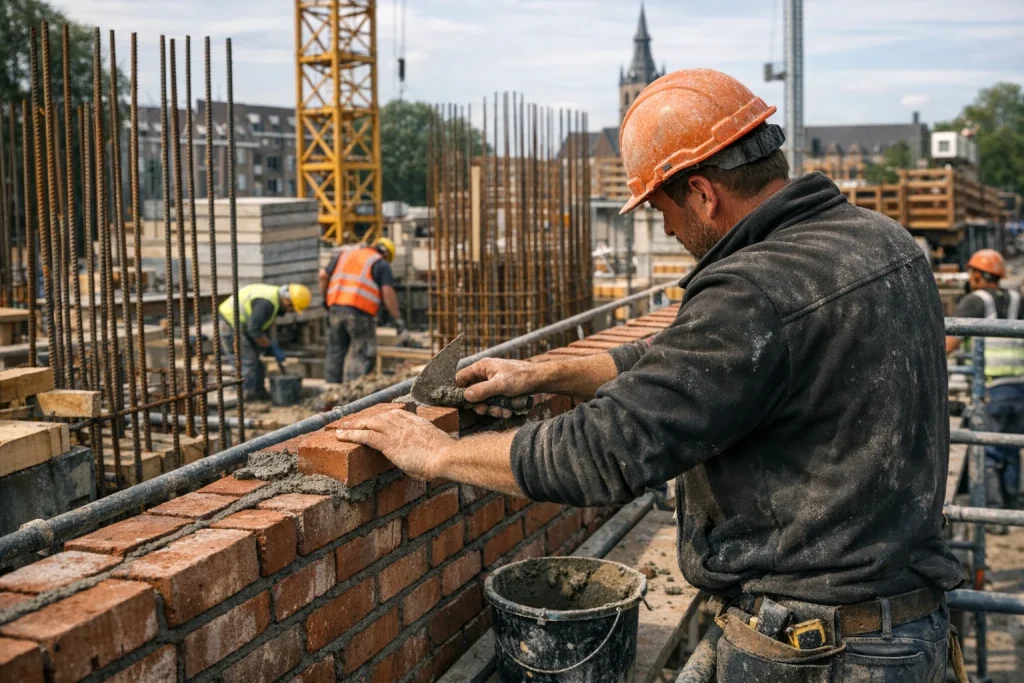
In practice, foreign workers apply for construction jobs through agencies or direct employers. EU/EEA/Swiss workers start immediately after hiring, while non-EU workers must first obtain a work permit. Once hired, workers receive contracts regulated by Dutch labor law and CAOs, specifying pay, hours, and conditions. Workers often need VCA safety certification before starting on site. Housing arrangements vary; agencies like Haldu Groep usually provide accommodation with private bedrooms and shared facilities. Workers commute by bike, public transport, or carpool. Daily tasks depend on the role—laborers assist with site preparation, bricklayers build walls, electricians install wiring, and supervisors manage teams. Safety equipment like helmets and boots is mandatory. Communication in Dutch or English is essential for safety and teamwork.
Which conditions apply for construction jobs in nijmegen: guide for foreign workers?
Construction jobs in Nijmegen are governed by Dutch labor law and sector-specific collective labor agreements (CAOs), primarily CAO Bouw & Infra. These set minimum wages, working hours, overtime rules, and holiday entitlements. EU/EEA/Swiss citizens have unrestricted work rights; non-EU workers need valid work permits and residence permits. VCA safety certification is often required or strongly recommended. Employers must provide mandatory personal protective equipment (PPE) such as helmets, safety boots, gloves, and high-visibility vests. Contracts can be temporary or permanent, full-time or part-time, with typical working hours around 40 per week. Workers have rights to social security and health insurance under Dutch law. Language skills in Dutch or English improve safety and integration on site.
Which mistakes are common around construction jobs in nijmegen: guide for foreign workers?
Common mistakes foreign workers make include starting work without verifying work permit requirements, especially non-EU citizens. Another frequent error is underestimating the importance of VCA certification, which can block site access. Poor preparation of the CV without highlighting relevant skills and certifications reduces job chances. Some workers neglect to clarify housing arrangements, leading to last-minute accommodation problems. Language barriers can cause safety risks and misunderstandings on site. Not understanding Dutch labor laws and CAOs can result in accepting unfair contracts or pay. Lastly, workers sometimes overlook commuting options, causing delays or increased costs.
How do you proceed step by step?
- Check your nationality and work permit requirements for the Netherlands.
- Prepare a clear CV emphasizing construction skills, certifications, and experience.
- Obtain necessary safety certificates like VCA before applying.
- Apply for jobs via reputable agencies or employers in Nijmegen.
- Confirm contract details, pay, working hours, and housing arrangements before signing.
- Arrange travel and accommodation; agencies like Haldu Groep often assist with housing.
- Learn basic Dutch or English to improve communication and safety on site.
- Start work with all required PPE and follow safety rules strictly.
- Register with Dutch authorities for social security and health insurance.
- Explore training and career progression opportunities once settled.
What should you check before you start?
- Verify whether you need a work permit based on your nationality.
- Confirm that your employer or agency provides a written contract in English or Dutch.
- Check if VCA or other safety certificates are required and valid.
- Understand your pay rate, working hours, overtime rules, and holiday entitlements.
- Clarify housing arrangements—whether provided, costs, and facilities.
- Ensure you have or can obtain mandatory personal protective equipment (PPE).
- Learn basic Dutch or English phrases useful on construction sites.
- Know your rights under Dutch labor law and applicable CAOs.
- Plan your commute options and travel time to the worksite.
- Prepare for health insurance registration and social security contributions.
What does this look like in practice?
A foreign bricklayer from Poland, for example, applies through an agency like Haldu Groep. Being an EU citizen, he does not need a work permit. He holds a valid VCA certificate and submits a CV highlighting his masonry experience. The agency offers a contract under CAO Bouw & Infra, with competitive pay and a 40-hour workweek. Housing is arranged in a shared apartment with a private bedroom near Nijmegen city center. He commutes by bicycle to local residential construction sites. On site, he wears a helmet, safety boots, gloves, and a high-visibility vest. Basic Dutch phrases help him communicate with colleagues and supervisors. Over time, he attends additional training courses to advance to site supervisor roles.
| Role | Typical Pay Level | Work Permit Required? | VCA Needed? | Housing Provided? |
|---|---|---|---|---|
| Laborer | Depends on experience / CAO | Non-EU only | Usually | Depends on employer/agency |
| Bricklayer | Depends on experience / CAO | Non-EU only | Yes | Often with agencies |
| Electrician | Depends on experience / CAO | Non-EU only | Yes, plus NEN 3140 | Varies |
| Site Supervisor | Depends on experience / CAO | Non-EU only | Yes | Usually not |
| Nationality | Work Permit Needed? | Permit Type | Notes |
|---|---|---|---|
| EU/EEA/Switzerland | No | Not applicable | Free to work immediately |
| Non-EU | Yes | TWV (Work Permit) | Employer applies; must be approved before starting |
| Language Skill | Importance | Examples |
|---|---|---|
| Basic Dutch | High | Safety commands, instructions, communication with supervisors |
| English | Moderate | Common second language on sites with international workers |
| Other languages | Low | Rarely used officially; may help informally |
Frequently asked questions
Do EU citizens need a work permit to work in construction in Nijmegen?
What types of construction jobs are available for foreign workers in Nijmegen?
Is VCA certification mandatory for all construction jobs in Nijmegen?
How does pay in Nijmegen compare to other European cities?
Are housing options provided for foreign construction workers in Nijmegen?
What language skills are needed to work on construction sites in Nijmegen?
What personal protective equipment (PPE) is required on Nijmegen construction sites?
What are typical working hours and contract types in Nijmegen construction?
How can foreign workers prepare their CV for construction jobs in Nijmegen?
Are there specific Dutch labor laws or CAOs for construction workers?
Conclusion
Foreign workers seeking construction jobs in Nijmegen should first verify their work permit status based on nationality. Preparing a clear CV with relevant certifications like VCA improves job prospects. Housing arrangements vary, but agencies such as Haldu Groep often provide good accommodation options. Basic Dutch or English skills are important for safety and communication on site. Understanding Dutch labor laws and CAOs ensures fair contracts and pay. With active construction projects across infrastructure and housing, Nijmegen offers diverse opportunities. Careful preparation, safety compliance, and local integration help foreign workers succeed and build careers in this growing sector.
