
Direct answer
Foreign workers from the EU, EEA, and Switzerland can work in construction jobs in Groningen without a work permit thanks to free movement rights. Non-EU nationals must secure a valid work and residence permit before starting employment. Construction roles in Groningen include laborers, bricklayers, carpenters, electricians, plumbers, and site supervisors. VCA safety certification is commonly required to ensure workplace safety. Salaries in Groningen’s construction sector are generally higher than in many European countries, though housing availability and commuting options should be planned carefully. The Dutch collective labor agreement (CAO Bouw & Infra) governs wages and working conditions. Groningen’s construction market features residential, infrastructure, and commercial projects, with staffing agencies like Haldu Groep supporting foreign workers since 1999.
Key points
- EU/EEA/Swiss citizens do not need work permits for construction jobs in Groningen; non-EU workers do.
- Common roles include laborer, bricklayer, carpenter, electrician, plumber, and site supervisor.
- VCA safety certification is often mandatory to work on construction sites.
- Construction wages in Groningen are generally higher than in many European countries.
- Basic Dutch language skills improve safety, communication, and job prospects.
- Groningen’s projects include residential housing, infrastructure upgrades, and commercial buildings.
- Commuting options: bicycle, public transport, and car; housing availability can be limited but is typically well arranged through agencies like Haldu Groep, often including a private bedroom for the worker.
- The CAO Bouw & Infra collective agreement regulates wages, hours, and working conditions.
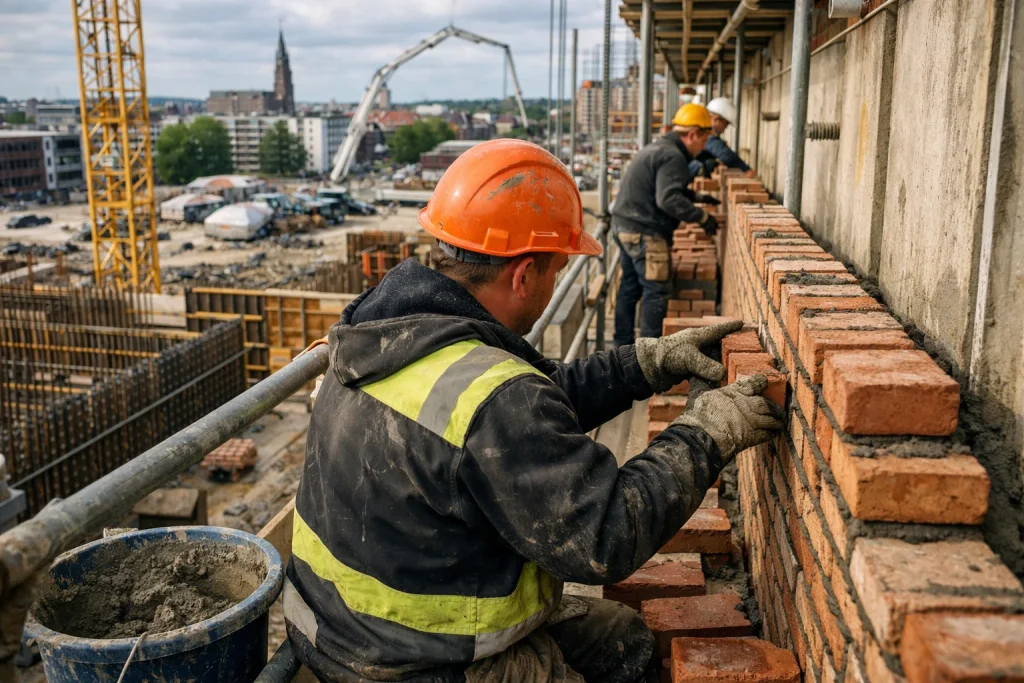
- Personal protective equipment (PPE) such as helmets, safety boots, and vests are standard.
- Health and safety laws (Arbowet) are strictly enforced on construction sites.
- Vocational training and Dutch language courses enhance career development.
- Staffing agencies like Haldu Groep support foreign workers with job placement, permits, and housing arrangements.
Field expertise
Haldu Groep, active since 1999, specializes in placing foreign construction workers in the Netherlands, including Groningen. The Dutch construction sector is governed by the CAO Bouw & Infra, which sets legal standards for wages, working hours, and safety. VCA certification is widely recognized and often required for site access. Groningen’s construction market features diverse projects such as housing developments, road and bridge infrastructure, and commercial buildings. Foreign workers benefit from understanding Dutch labor laws, safety regulations, and workplace culture to succeed. Agencies assist with permits, contracts, housing, and integration into the local labor market.
What should you know about construction jobs in Groningen: guide for foreign workers?
Construction jobs in Groningen cover a broad spectrum of roles, from unskilled laborers to skilled tradespeople like bricklayers, carpenters, electricians, plumbers, and site supervisors. The city’s construction industry is active with new residential developments, infrastructure projects including roadworks and bridges, and commercial construction such as offices and retail spaces. EU/EEA/Swiss nationals enjoy free movement and can work without permits, while non-EU nationals must secure work and residence permits before starting. Safety is a key focus, with VCA certification often required. Basic Dutch language skills help with communication and safety compliance. Salaries in Groningen’s construction sector are competitive compared to other European cities, but newcomers should plan carefully for housing and commuting.
How does construction jobs in Groningen: guide for foreign workers work in practice?
In practice, foreign workers typically apply for construction jobs through staffing agencies or directly with employers. EU/EEA/Swiss workers can start immediately, while non-EU workers must have a valid work permit, usually arranged by the employer. VCA safety certification is often mandatory and can be obtained through short courses. Workers receive personal protective equipment (PPE) such as helmets, safety boots, gloves, and high-visibility vests before starting. Daily safety briefings and toolbox talks are standard on sites. The CAO Bouw & Infra regulates working hours, wages, and overtime pay. Most workers commute by bicycle, public transport, or car, living in Groningen or nearby towns.
Which conditions apply for construction jobs in Groningen: guide for foreign workers?
Construction workers in Groningen must comply with Dutch labor laws and the CAO Bouw & Infra collective agreement. This includes minimum wages, regulated working hours (typically 40 hours per week), overtime compensation, and holiday entitlements. Employers must provide safe working conditions and appropriate PPE under the Arbowet health and safety legislation. VCA certification is often required to demonstrate safety knowledge. Workers must follow site-specific safety rules and attend regular safety briefings. Non-EU workers need valid work and residence permits. Basic Dutch language skills are encouraged to meet safety and communication standards. Employment contracts must comply with Dutch law and clearly state wages, hours, and conditions.
Which mistakes are common around construction jobs in Groningen: guide for foreign workers?
Common mistakes include starting work without the proper work permit for non-EU nationals, risking fines or job loss. Some workers overlook the importance of VCA certification, limiting job opportunities. Insufficient Dutch language skills can cause misunderstandings and safety hazards. Workers sometimes accept jobs without verifying employer compliance with the CAO Bouw & Infra, leading to unfair pay or conditions. Housing arrangements are often underestimated, resulting in difficulty finding affordable accommodation. Improper use or neglect of PPE is another frequent error. Lastly, failure to register with local authorities or understand Dutch labor rights can cause legal and practical problems.
How do you proceed step by step?
- Check your nationality: EU/EEA/Swiss citizens do not need a work permit; non-EU workers must apply for one.
- Research construction roles in Groningen that match your skills (e.g., bricklayer, carpenter, electrician).
- Obtain necessary certifications like VCA safety training before applying.
- Prepare a clear CV highlighting your experience and relevant certificates.
- Apply through staffing agencies such as Haldu Groep or directly with construction companies.
- If non-EU, ensure your employer applies for your work and residence permits.
- Arrange housing in Groningen or nearby; with Haldu Groep, housing is typically well arranged, often including a private bedroom. Consider commuting options.
- Learn basic Dutch language skills to improve communication and safety.
- Understand your rights under the CAO Bouw & Infra and Dutch labor law.
- Start work, attend site safety briefings, and use PPE correctly.
What should you check before you start?
- Verify your work permit status if you are a non-EU worker.
- Confirm your employer complies with the CAO Bouw & Infra collective agreement.
- Ensure you have the required VCA safety certification and other relevant licenses.
- Check your employment contract for wages, working hours, and overtime rules.
- Confirm your employer provides proper PPE and safety training.
- Arrange suitable housing or commuting plans before starting; agency support can help secure appropriate accommodation.
- Understand health and safety regulations applicable on your construction site.
- Learn basic Dutch phrases related to safety and work instructions.
- Register with local authorities if required.
What does this look like in practice?
A foreign construction worker in Groningen typically begins by contacting a staffing agency or employer. After confirming eligibility and work permits, the worker completes VCA safety training. Upon arrival, the worker receives PPE and attends a site safety briefing. Daily toolbox talks reinforce safety and work instructions. The worker follows CAO Bouw & Infra rules for working hours and wages. Commuting is often by bike or public transport, with many workers living in or near Groningen. Communication in Dutch or English helps maintain safety and teamwork. Housing can be rented privately or arranged via agencies like Haldu Groep, which typically provide well-organized housing including a private bedroom, though availability may vary. Career development is supported by vocational training and language courses.
| Role | Typical Monthly Salary | VCA Certification Required | Typical Working Hours |
|---|---|---|---|
| Construction Laborer | Depends on experience / CAO | Yes | 40 hours/week |
| Bricklayer | Depends on experience / CAO | Yes | 40 hours/week |
| Carpenter | Depends on experience / CAO | Yes | 40 hours/week |
| Electrician | Depends on experience / CAO | Yes + NEN 3140 | 40 hours/week |
| Site Supervisor | Depends on experience / CAO | Yes | 40 hours/week + overtime |
| Nationality | Work Permit Required? | Residence Permit Required? | Permit Application Process |
|---|---|---|---|
| EU / EEA / Switzerland | No | No | Not required; free movement applies |
| Non-EU | Yes | Yes | Employer applies via UWV and IND |
| Certificate | Purpose | Mandatory in Groningen? | Typical Course Length |
|---|---|---|---|
| VCA (Safety) | Workplace safety knowledge | Yes | 1-2 days |
| NEN 3140 | Electrical safety | For electricians | 1 day |
| Forklift License | Operate forklift machinery | Depends on role | 2-3 days |
| Working at Heights | Safe work on scaffolding/roofs | Often required | 1 day |
Frequently asked questions
Do I need a work permit to work in construction in Groningen?
What are the main construction roles available in Groningen?
Is VCA certification mandatory for construction jobs in Groningen?
How much do construction workers earn in Groningen?
What Dutch language skills are needed?
What types of construction projects are active in Groningen?
How do I commute to construction sites in Groningen?
Is housing available for foreign construction workers in Groningen?
What personal protective equipment is standard on Groningen sites?
How does the CAO Bouw & Infra affect construction workers?
Conclusion
Foreign workers aiming for construction jobs in Groningen should first confirm their work permit status and obtain essential safety certifications such as VCA. Familiarity with Dutch labor laws and the CAO Bouw & Infra agreement ensures fair pay and working conditions. Basic Dutch language skills improve safety and communication on site. Early planning for housing and commuting is crucial due to limited availability. Staffing agencies like Haldu Groep can assist with job placement, permit procedures, and housing arrangements. With competitive salaries and diverse projects, Groningen offers strong opportunities for skilled and semi-skilled construction workers from Europe and beyond.
