
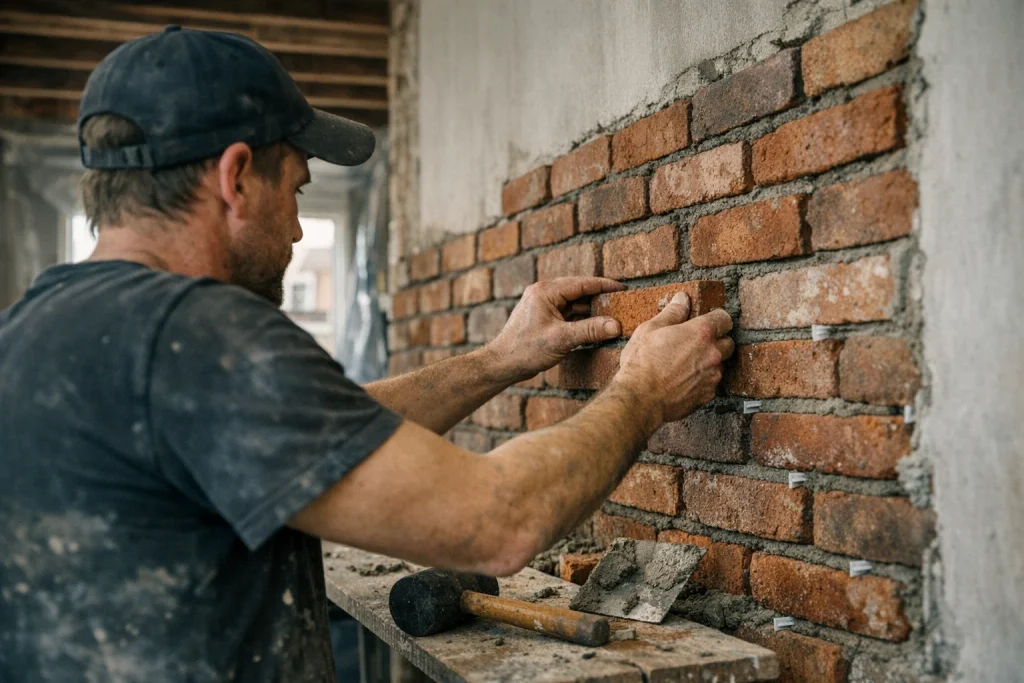
Direct answer
Foreign workers from the EU/EEA and Switzerland can work in construction jobs in ‘s-Hertogenbosch without a work permit. Non-EU nationals must obtain a valid Dutch work permit before starting employment. The city offers a variety of construction roles, including laborers, bricklayers, carpenters, electricians, and supervisors. Pay is competitive within the Dutch market and depends on experience, role, collective labor agreements (CAO), region, and contract type; always confirm the written offer. VCA safety certification is usually required, and basic Dutch or English language skills improve safety and communication on site. Housing arrangements vary depending on the placement or agency but are often well organized, with Haldu Groep typically providing private bedrooms for workers. The city’s compact size, good bike paths, and public transport make commuting convenient. Dutch labor laws protect workers’ rights, including regulated working hours and mandatory safety measures.
Key points
- EU/EEA/Swiss citizens do not need a work permit; non-EU workers do.
- Construction roles range from general laborers to skilled trades like electricians and plumbers.
- Pay depends on role, experience, CAO agreements, contract type, and region; always confirm details in your contract.
- VCA certification is usually mandatory for site safety compliance.
- Basic Dutch or English language skills are recommended for safety and communication.
- Common projects include residential, commercial, and infrastructure construction.
- Public transport and bike paths facilitate commuting in ‘s-Hertogenbosch.
- Housing is often arranged by agencies, typically providing private rooms.
- Dutch labor laws ensure fair treatment, regulated working hours, and mandatory PPE use.
- Preparing a clear CV with relevant experience and certifications improves job chances.
- Collective labor agreements (CAO Bouw & Infra) regulate wages and working conditions.
- Worker unions and recruitment agencies offer support and guidance.
Field expertise
Since 1999, Haldu Groep has specialized in placing foreign workers in Dutch construction jobs, including in ‘s-Hertogenbosch. Their experience shows that legal work permits, VCA safety certification, and proper housing arrangements are essential for successful integration. The local construction sector values skilled trades such as bricklaying, carpentry, and electrical installation, with steady demand driven by urban development and infrastructure projects. Dutch collective labor agreements (CAOs) set fair wages and working conditions. Language skills and understanding Dutch safety regulations are critical for site compliance and worker safety.
What should you know about construction jobs in ‘s-hertogenbosch: guide for foreign workers?
Construction jobs in ‘s-Hertogenbosch cover a wide range of roles, from general laborers to specialized trades like electricians, plumbers, and carpenters. The city’s construction market is active due to ongoing residential developments, commercial renovations, and infrastructure upgrades such as roadworks and public transport expansions.
Foreign workers from EU/EEA countries can start working immediately without a permit, while non-EU workers must secure a valid Dutch work permit before employment. The local labor market is regulated by the CAO Bouw & Infra, which sets minimum wages, working hours, and conditions specific to the construction sector.
VCA certification is often required to demonstrate safety knowledge and compliance. Basic Dutch or English language skills are important for effective communication on site and understanding instructions. Housing is available through recruitment agencies or independently, often including private rooms with shared facilities. Commuting is convenient with good public transport connections and extensive bike paths.
How does construction jobs in ‘s-hertogenbosch: guide for foreign workers work in practice?
In practice, foreign workers apply for construction jobs through recruitment agencies or directly with employers in ‘s-Hertogenbosch. EU/EEA workers can start immediately; non-EU workers must first obtain a work permit, usually arranged by the employer or agency.
Upon hiring, workers typically receive an introduction to site safety, including mandatory VCA training if not already certified. Common roles include construction laborer, bricklayer, carpenter, electrician, plumber, painter, and site supervisor.
Workers use standard tools such as hammers, drills, and measuring tapes, and must wear personal protective equipment (PPE) including helmets, safety boots, gloves, and high-visibility vests. Working hours generally follow the CAO, with a standard 40-hour week and regulated overtime pay.
Pay is based on experience, role, CAO agreements, and contract specifics. Housing is often arranged by the agency or employer, with options ranging from shared apartments to private rooms. Commuting is usually by bike or public transport due to the city’s compact size and good infrastructure.
Which conditions apply for construction jobs in ‘s-hertogenbosch: guide for foreign workers?
Several conditions apply to construction jobs in ‘s-Hertogenbosch for foreign workers:
- Work permits: Required for non-EU workers; not for EU/EEA/Swiss citizens.
- Certifications: VCA (Safety, Health, and Environment Checklist for Contractors) certification is usually mandatory.
- Language: Basic Dutch or English is recommended for safety and communication.
- Collective labor agreement: CAO Bouw & Infra governs wages, working hours, and benefits.
- Health and safety: Use of PPE (helmet, boots, gloves) is compulsory on sites.
- Working hours: Typically 40 hours per week with regulated overtime.
- Housing: Often arranged by agencies, with private rooms common.
Which mistakes are common around construction jobs in ‘s-hertogenbosch: guide for foreign workers?
Common mistakes foreign workers make include:
- Starting work without the proper work permit if non-EU.
- Not obtaining VCA certification before starting on site.
- Underestimating the importance of basic Dutch or English language skills.
- Failing to prepare a clear CV highlighting relevant construction experience and certifications.
- Ignoring the terms of the collective labor agreement, leading to misunderstandings about pay and working hours.
- Not confirming housing arrangements before arrival, leading to last-minute difficulties.
- Neglecting safety rules and PPE requirements, risking injury and site exclusion.
- Overlooking commuting options, causing delays or extra costs.
How do you proceed step by step?
- Check your eligibility: Determine if you need a work permit based on your nationality.
- Prepare your CV: Highlight relevant construction experience, certifications (like VCA), and language skills.
- Apply for jobs: Use recruitment agencies or direct employer applications in ‘s-Hertogenbosch.
- Obtain certifications: Complete VCA training if required.
- Secure housing: Arrange accommodation through your agency or independently.
- Understand your contract: Review pay, working hours, and CAO conditions.
- Prepare for commuting: Plan your travel using public transport or bike routes.
- Attend site induction: Learn safety rules and PPE requirements.
- Start work: Follow site rules, maintain communication, and respect working hours.
What should you check before you start?
Before starting a construction job in ‘s-Hertogenbosch, check the following:
- Your work permit status (if applicable).
- Validity of your VCA or other safety certifications.
- Details of your employment contract, including pay and working hours.
- Housing arrangements and location relative to the worksite.
- Required personal protective equipment and whether it is provided.
- Language expectations on site.
- Commuting options and travel time.
- Health and safety protocols specific to the site.
- Contact details for your employer or agency.
What does this look like in practice?
In practice, a foreign worker arriving in ‘s-Hertogenbosch for a construction job will first confirm legal work status. Upon arrival, they attend a site induction covering safety rules, PPE use, and emergency procedures. The worker will typically have VCA certification or complete training quickly.
Daily work involves using tools such as drills, hammers, and measuring tapes on projects like housing developments or roadworks. Workers wear helmets, safety boots, gloves, and high-visibility vests at all times. Communication is usually in simple Dutch or English, with supervisors providing instructions.
Working hours are mostly daytime shifts, with occasional overtime paid according to CAO rules. Housing is often nearby, arranged by the agency, allowing easy bike or public transport commutes. Worker unions like FNV Bouw may offer additional support.
| Role | Typical Requirements | VCA Certification | Language | Pay Range |
|---|---|---|---|---|
| Construction Laborer | Basic physical fitness, safety awareness | Usually required | Basic Dutch or English | Depends on experience / CAO |
| Bricklayer | Trade training or experience | Required | Basic Dutch or English | Depends on experience / CAO |
| Electrician | Certification and experience | Required | Basic Dutch or English | Depends on experience / CAO |
| Site Supervisor | Experience, leadership skills | Required | Good Dutch or English | Depends on experience / CAO |
| Nationality | Work Permit Required? | Permit Application Process | Typical Processing Time |
|---|---|---|---|
| EU/EEA/Swiss | No | Not required | Immediate |
| Non-EU | Yes | Employer or agency applies | Several weeks |
| Housing Option | Typical Arrangement | Cost Range | Privacy Level | Proximity to Work |
|---|---|---|---|---|
| Agency-arranged shared housing | Private room, shared kitchen/bathroom | Varies by agency and location | Medium | Close to city center and sites |
| Independent rental | Studio or apartment | Varies by location and market | High | Varies, often farther |
| Employer-provided housing | Varies by employer | Often included or subsidized | Medium to high | Close to project sites |
Frequently asked questions
Do I need a work permit to work in construction in 's-Hertogenbosch?
What are the most in-demand construction roles in 's-Hertogenbosch?
Is VCA certification required for all construction jobs?
How does pay in 's-Hertogenbosch compare to other Dutch cities?
Are there language requirements for foreign construction workers?
What types of construction projects are common in 's-Hertogenbosch?
How do collective labor agreements (CAO) affect my job?
What personal protective equipment (PPE) is mandatory?
Can agencies help with housing?
What are typical working hours and overtime rules?
Conclusion
Foreign workers seeking construction jobs in ‘s-Hertogenbosch should first confirm their work permit status and obtain necessary certifications like VCA. Preparing a clear CV and understanding CAO terms will improve job prospects. Housing is often arranged by recruitment agencies, easing relocation challenges and typically providing private bedrooms. The city’s compact size and good transport infrastructure support easy commuting by bike or public transport. Dutch labor laws ensure fair treatment and safety on site. Learning basic Dutch or English enhances communication and safety. Engaging with agencies or unions for support and carefully reviewing contracts and site rules will help ensure a smooth start in the local construction sector.
