
Direct answer
Construction jobs in the Netherlands cover a broad spectrum, including bricklayers, carpenters, electricians, plumbers, machine operators, painters, roofers, and site supervisors. EU/EEA and Swiss citizens can work freely without permits, while non-EU nationals must secure valid work and residence permits before employment. Safety certification such as VCA is commonly required, and pay depends on job type, experience, collective labor agreements (CAO), and location. Basic Dutch or English language skills are recommended for safety and effective communication. Housing is often arranged by employers or agencies, typically offering private rooms. The sector is regulated by strict safety and labor laws to ensure fair working conditions and worker protection across all roles.
Key points
- Construction jobs range from manual labor to skilled trades and supervisory roles.
- EU/EEA/Swiss citizens do not require work permits; non-EU workers must obtain permits.
- VCA safety certification is widely required on Dutch construction sites.
- Pay varies by role, experience, CAO agreements, contract type, and region.
- Basic Dutch or English language skills improve safety and communication.
- Housing is often provided or arranged by employers or agencies, usually with private rooms.
- Typical working hours are 38 to 40 hours per week under Dutch labor laws.
- Personal protective equipment (PPE) such as helmets, boots, and gloves is mandatory.
- Career progression is possible through additional training and certifications.
- Major cities like Amsterdam, Rotterdam, and Utrecht have higher demand for construction workers.
- Collective labor agreements (CAO) regulate pay, working conditions, and holidays.
- Strict safety regulations under the Arbowet protect workers on site.
Field expertise
Since 1999, Haldu Groep has specialized in placing European construction workers in the Netherlands, supporting work permit processes, housing arrangements, and compliance with Dutch labor laws. The Dutch construction sector is governed by collective labor agreements such as CAO Bouw & Infra, which set standards for wages, working hours, and conditions. The sector employs a broad range of skilled tradespeople including bricklayers (metselaar), carpenters (timmerman), electricians (elektricien), plumbers (loodgieter), machine operators, and supervisors. VCA certification is widely recognized as a safety standard. Workers often hold vocational diplomas (VMBO, MBO) or specialized training depending on their role.
What should you know about types of construction jobs in the netherlands?
The Dutch construction industry offers many job types, from entry-level labor to skilled trades and management. Common roles include:
- Bricklayer (Metselaar): Builds walls and structures using bricks, blocks, and mortar.
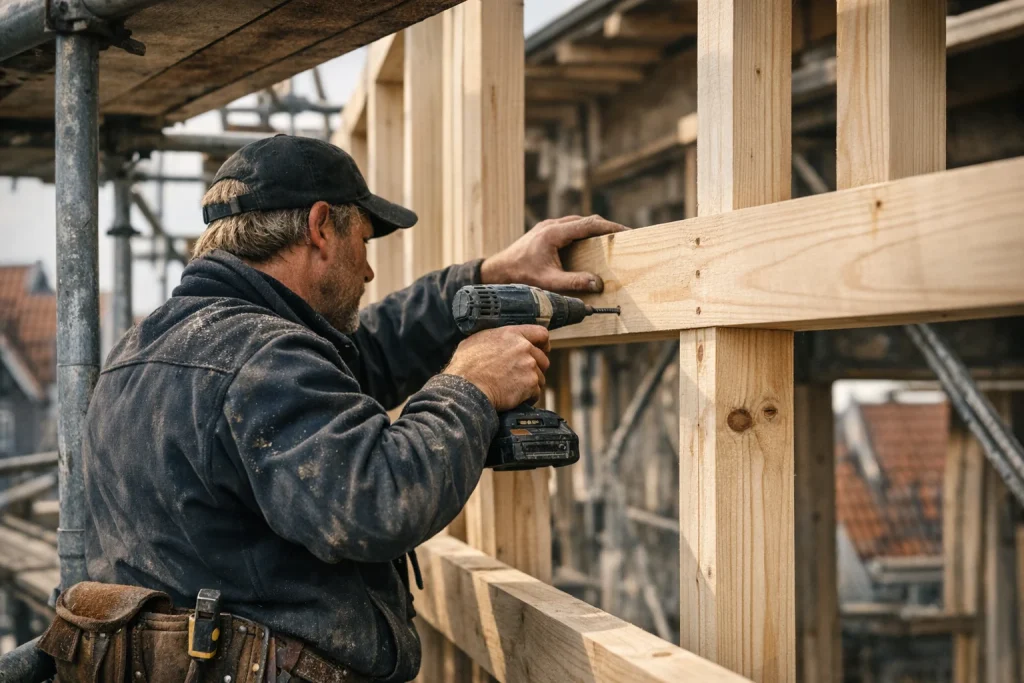
- Carpenter (Timmerman): Constructs wooden frameworks, roofing, and finishing carpentry.
- Electrician (Elektricien): Installs and maintains electrical wiring and systems.
- Plumber (Loodgieter): Installs water, heating, and sanitation systems.
- Construction laborer: Supports skilled workers, handles materials, and prepares sites.
- Machine operator: Operates heavy machinery such as cranes, excavators, and forklifts.
- Site supervisor and project manager: Oversees work progress, safety, and coordination.
- Painter, tiler, insulation installer, roofing specialist: Focus on finishing and specialized tasks.
Each role requires different skills, certifications, and experience. Knowledge of Dutch safety regulations and use of personal protective equipment (PPE) is essential.
How does types of construction jobs in the netherlands work in practice?
Construction work in the Netherlands involves physical labor, technical skills, and teamwork. Typical workflow includes site preparation, foundation work, framing, installations (electrical, plumbing), and finishing. Daily tasks depend on the role:
- Bricklayers lay bricks and blocks to build walls and structures.
- Carpenters measure, cut, and assemble wooden components.
- Electricians install wiring, outlets, and lighting fixtures.
- Plumbers fit pipes, boilers, and heating systems.
- Machine operators control cranes, bulldozers, and forklifts.
- Supervisors ensure safety compliance, quality control, and schedule adherence.
Work is often project-based, with teams moving between residential, commercial, and infrastructure sites. Safety briefings and VCA-certified procedures are standard practice.
Which conditions apply for types of construction jobs in the netherlands?
| Condition | Description |
|---|---|
| Work permits | Non-EU/EEA/Swiss workers need a valid permit; EU/EEA/Swiss citizens can work freely. |
| Certifications | VCA safety certification is often mandatory; additional certificates like scaffolding (STEIGER) may be required. |
| Language | Basic Dutch or English recommended for safety and communication. |
| Working hours | Typically 38-40 hours per week, regulated by Dutch labor laws and CAO agreements. |
| Contracts | Permanent, temporary, or project-based contracts governed by CAO Bouw & Infra or other sector agreements. |
| Safety | Strict use of PPE (helmet, boots, gloves) and compliance with Arbowet safety laws. |
| Housing | Often arranged by employer or agency; private rooms common, especially with agencies like Haldu Groep. |
Which mistakes are common around types of construction jobs in the netherlands?
- Starting work without verifying if a work permit is required.
- Underestimating the importance of VCA certification for safety compliance.
- Ignoring Dutch labor laws and CAO agreements, leading to misunderstandings about pay and rights.
- Not learning basic Dutch or English, causing communication difficulties on site.
- Assuming housing is always provided; arrangements vary by employer or agency.
- Accepting job offers without a clear written contract or pay details.
- Neglecting mandatory use of PPE, risking safety violations and accidents.
How do you proceed step by step?
- Identify your trade or desired construction job and check required qualifications or certifications.
- Confirm your work permit status based on nationality.
- Obtain necessary safety certifications such as VCA.
- Search for construction jobs via agencies or direct employers.
- Verify contract terms, pay, and housing arrangements before accepting an offer.
- Prepare to communicate in basic Dutch or English on site.
- Follow safety rules and wear required personal protective equipment.
- Consider further training or certifications for career advancement.
What should you check before you start?
- Your legal right to work in the Netherlands (work permit if applicable).
- Validity of your VCA or other required safety certificates.
- Employment contract details: pay, working hours, duration, and conditions.
- Housing arrangements and any related costs.
- Language requirements and communication expectations on site.
- Safety rules and mandatory PPE for the specific job site.
- Contact information for your employer or agency for support.
What does this look like in practice?
A bricklayer on a residential project typically starts the day with a safety briefing, checks PPE, and reviews the day’s tasks. Using tools like trowels, hammers, and measuring tapes, they build walls with bricks and mortar. A plumber on the same site installs pipes and heating systems, coordinating with electricians and carpenters. Supervisors monitor quality and safety standards. Communication often happens in simple Dutch or English, with bilingual colleagues or interpreters assisting when needed. Housing arranged by agencies usually means a private room in shared accommodation near the work site.
Frequently asked questions
What are the main types of construction jobs available in the Netherlands?
What qualifications are required for construction jobs in the Netherlands?
How does pay vary among different construction roles in the Netherlands?
Are EU/EEA/Swiss citizens allowed to work in Dutch construction without a permit?
What work permits do non-EU construction workers need in the Netherlands?
What is the role of VCA certification in Dutch construction jobs?
How important is Dutch language proficiency for construction workers?
What are typical working hours and contract types in Dutch construction?
How is housing arranged for foreign construction workers in the Netherlands?
Which cities in the Netherlands have the most construction job opportunities?
Conclusion
Construction jobs in the Netherlands offer diverse opportunities for both skilled and unskilled workers. Understanding work permit requirements, safety certifications like VCA, and collective labor agreements is essential before starting. Pay and housing arrangements vary by employer and region, so always verify contract details carefully. Basic Dutch or English language skills improve workplace communication and safety. Agencies such as Haldu Groep offer valuable support with placement and housing. With proper preparation and compliance, construction work in the Netherlands can provide a stable and rewarding career path. For further guidance, consult Haldupedia resources on Dutch labor laws, work permits, and construction safety standards.
