
Direct answer
Construction jobs in the Netherlands provide excellent opportunities with wages generally higher than many other European countries. Citizens of the EU/EEA and Switzerland can work freely without permits, while non-EU nationals must obtain valid work and residence permits before employment. Most construction roles require VCA safety certification and adherence to Dutch labor laws and collective labor agreements (CAOs). Basic Dutch language skills are recommended for safety and communication but are not always mandatory. Personal protective equipment (PPE) is compulsory on all sites. Housing costs and arrangements vary by region and placement; with agencies like Haldu Groep, housing is typically well arranged, often including a private bedroom for the worker. Recruitment agencies assist foreign workers with training, certification, and job placement in this regulated, safety-focused sector.
Key points
- Common construction roles include bricklayer, carpenter, electrician, plumber, site supervisor, and machinery operator.
- EU/EEA/Swiss citizens do not require work permits; non-EU workers must secure work and residence permits.
- VCA certification is mandatory for safety compliance on most Dutch construction sites.
- Construction salaries in the Netherlands are generally higher than in many other European countries, though living costs vary and pay depends on role, experience, CAO, region, and contract.
- Collective labor agreements (CAOs) regulate wages, working hours, holiday allowances, and benefits.
- Basic Dutch language skills improve safety and communication but are not always mandatory.
- Personal protective equipment (helmet, boots, gloves, high-visibility clothing) is strictly enforced.
- Typical workweek ranges from 36 to 40 hours, with overtime regulated by law and CAOs.
- Housing costs and availability vary significantly by region and placement, affecting relocation decisions; with Haldu Groep, housing is typically well arranged.
- Career progression is possible through experience, additional training, and certifications.
- Haldu Groep has provided staffing and training in Dutch construction since 1999.
- Non-EU workers must ensure valid work and residence permits before starting employment.
Field expertise
Since 1999, Haldu Groep has specialized in staffing and training for the Dutch construction and technical sectors. The organization supports foreign workers by guiding them through qualification requirements, including VCA safety certification, and compliance with Dutch labor regulations. Haldu Groep collaborates with employers and educational institutions to ensure workers meet industry standards. Their expertise covers collective labor agreements (CAOs), wage structures, and safe working conditions. This experience reflects the dynamic nature of the Dutch construction market, emphasizing safety, quality, and legal compliance. Housing arrangements for workers placed through Haldu Groep are typically well managed, often providing a private bedroom.
What should you know about construction jobs in the netherlands: a complete guide?
Construction jobs in the Netherlands span a variety of trades and responsibilities, from manual labor to technical and supervisory roles. Common positions include bricklayers, carpenters, electricians, plumbers, scaffolders, painters, heavy machinery operators, site supervisors, and project managers. The sector is governed by Dutch labor laws and collective labor agreements (CAOs), which set minimum wages, working hours, holiday entitlements, and safety standards. VCA certification is mandatory on most sites to ensure workers understand safety protocols. EU/EEA/Swiss citizens have unrestricted work access, while non-EU nationals must obtain permits. Basic Dutch language skills are advantageous for communication and safety but not always mandatory. Housing availability, costs, and arrangements vary by region and placement and should be considered before relocating.
How does construction jobs in the netherlands: a complete guide work in practice?
In practice, foreign workers seeking construction jobs in the Netherlands usually start by securing employment through recruitment agencies or direct employer applications. EU/EEA/Swiss citizens can begin work immediately, while non-EU nationals must apply for work and residence permits. Workers must complete VCA safety training and pass the exam to obtain certification. On construction sites, wearing personal protective equipment (PPE) such as helmets, safety boots, gloves, and high-visibility vests is mandatory. The standard workweek ranges from 36 to 40 hours, with overtime regulated by law and collective agreements. Communication on site is often in Dutch or English, depending on the employer. Career advancement is possible through gaining experience, additional qualifications, and moving into supervisory or management roles. Housing arrangements depend on the placement; agencies like Haldu Groep typically provide well-organized housing including private bedrooms.
Which conditions apply for construction jobs in the netherlands: a complete guide?
Construction jobs in the Netherlands are subject to several legal and contractual conditions:
- Labor laws: The Arbeidstijdenwet (Working Hours Act) regulates working hours and rest periods; the Arbeidsomstandighedenwet (Working Conditions Act) ensures safe workplaces.
- Collective labor agreements (CAOs): CAO Bouw & Infra and other sector-specific agreements set minimum wages, holiday allowances, overtime pay, and other benefits.
- Safety regulations: VCA certification is mandatory, and employers must provide and enforce the use of PPE.
- Employment contracts: Typically full-time, fixed-term or permanent, with rights to paid holidays, sick leave, and social security.
- Work permits: Required for non-EU workers, including valid residence permits.
- Language: Basic Dutch skills are encouraged to ensure safety and effective communication.
- Training: Employers often provide on-the-job training and support for further qualifications.
- Housing: Arrangements vary by placement and agency; with Haldu Groep, housing is generally well arranged and includes private bedrooms.
Which mistakes are common around construction jobs in the netherlands: a complete guide?
Common mistakes foreign workers make include:
- Starting work without the required work and residence permits for non-EU nationals.
- Failing to obtain or renew VCA safety certification before beginning work.
- Underestimating the importance of basic Dutch language skills for safety and communication.
- Ignoring collective labor agreements (CAOs), leading to misunderstandings about wages and working conditions.
- Not using mandatory personal protective equipment (PPE), risking fines or injury.
- Overlooking housing availability, costs, and arrangements, causing difficulties in relocation.
- Misunderstanding Dutch labor laws on working hours, rest periods, and overtime.
- Neglecting career development opportunities through training and certifications.
How do you proceed step by step?
- Verify your eligibility: EU/EEA/Swiss citizens can work freely; non-EU workers must apply for work and residence permits.
- Complete necessary qualifications and certifications, especially VCA safety training.
- Prepare a CV emphasizing relevant experience and skills.
- Apply for construction jobs via recruitment agencies like Haldu Groep or directly with employers.
- Arrange housing near your workplace, considering cost, availability, and agency support.
- Complete onboarding, including safety briefings and PPE provision.
- Begin work under Dutch labor laws and CAO conditions.
- Consider taking Dutch language courses to improve communication and safety.
- Plan for career advancement through additional training and experience.
What should you check before you start?
- Validity of your work permit and residence visa, if applicable.
- Current VCA safety certification and any other trade-specific qualifications.
- Employment contract details: salary, working hours, benefits, and CAO coverage.
- Housing options near the job site, including cost, commute time, and agency arrangements.
- Language requirements and your proficiency level.
- Provision and requirements for personal protective equipment (PPE).
- Employer’s health and safety policies and procedures.
- Transportation and commuting options to the construction site.
What does this look like in practice?
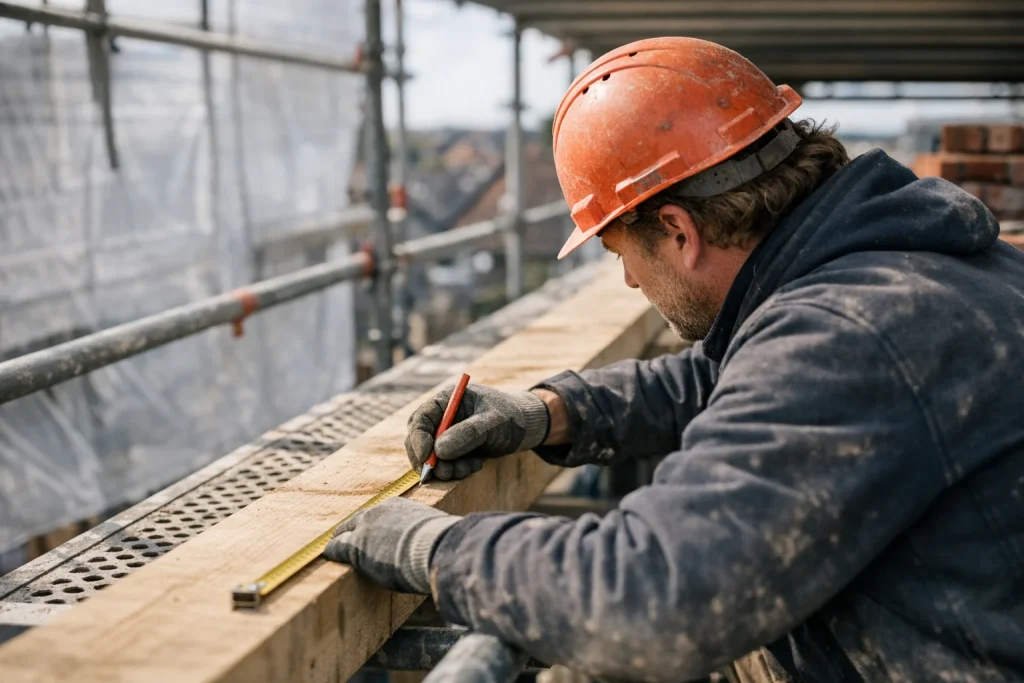
A typical day for a construction worker in the Netherlands begins with a safety briefing and equipment check. Workers wear mandatory PPE such as helmets, safety boots, gloves, and high-visibility vests. Tasks vary by role but may include bricklaying, carpentry, electrical installation, plumbing, or operating machinery. The standard workweek is 36 to 40 hours, Monday through Friday, with legally mandated breaks. Communication on site is often in Dutch or English, depending on the employer. Workers follow strict safety protocols and use modern tools like power drills, circular saws, and measuring devices. Career growth is supported by additional training and experience, with opportunities to advance to foreman, site supervisor, or project manager.
| Role | Typical Salary | Required Certification | Typical Work Hours |
|---|---|---|---|
| Bricklayer | Depends on experience / CAO | VCA, MBO Bouwkunde | 36-40 hours |
| Electrician | Depends on experience / CAO | VCA, NEN 3140 | 36-40 hours |
| Site Supervisor | Depends on experience / CAO | VCA, HBO Bouwmanagement | 40 hours + overtime |
| Heavy Machinery Operator | Depends on experience / CAO | VCA, Forklift license | 36-40 hours |
| Permit Type | Required For | Application Time | Validity |
|---|---|---|---|
| Work Permit (TWV) | Non-EU/EEA/Swiss workers | 2-8 weeks | Usually 1 year, renewable |
| Residence Permit | Non-EU/EEA/Swiss workers | 4-12 weeks | 1-5 years depending on contract |
| None | EU/EEA/Swiss citizens | Not applicable | Not applicable |
| Language Level | Use Case | Requirement | Impact on Job |
|---|---|---|---|
| None | Basic manual labor | Acceptable in some roles | Limited communication, safety risk |
| Basic Dutch | Most construction roles | Recommended | Improves safety and teamwork |
| Intermediate Dutch | Supervisory roles | Often required | Better communication and leadership |
| English | International companies | Accepted in some cases | Facilitates integration |
Frequently asked questions
Do I need a work permit to work in Dutch construction?
What is VCA certification and why is it important?
How much do construction workers earn in the Netherlands?
Are Dutch language skills mandatory for construction jobs?
What personal protective equipment is required on Dutch construction sites?
How long is the typical workweek in Dutch construction?
What are collective labor agreements (CAOs)?
Can foreign workers easily find housing near construction jobs?
What career progression opportunities exist in Dutch construction?
What tools and techniques are common in Dutch construction?
Conclusion
Construction jobs in the Netherlands offer competitive pay and regulated working conditions, especially for those with the right qualifications and safety certifications like VCA. EU/EEA/Swiss citizens benefit from free work access, while non-EU workers must secure permits. Understanding Dutch labor laws, CAOs, and safety requirements is essential for a successful career. Basic Dutch language skills enhance safety and communication. Planning for housing and career development is important. Agencies such as Haldu Groep support foreign workers in navigating the Dutch construction labor market, including well-arranged housing options. For more information, consult Haldupedia’s guides on working in the Netherlands, VCA certification, and construction salaries.
